
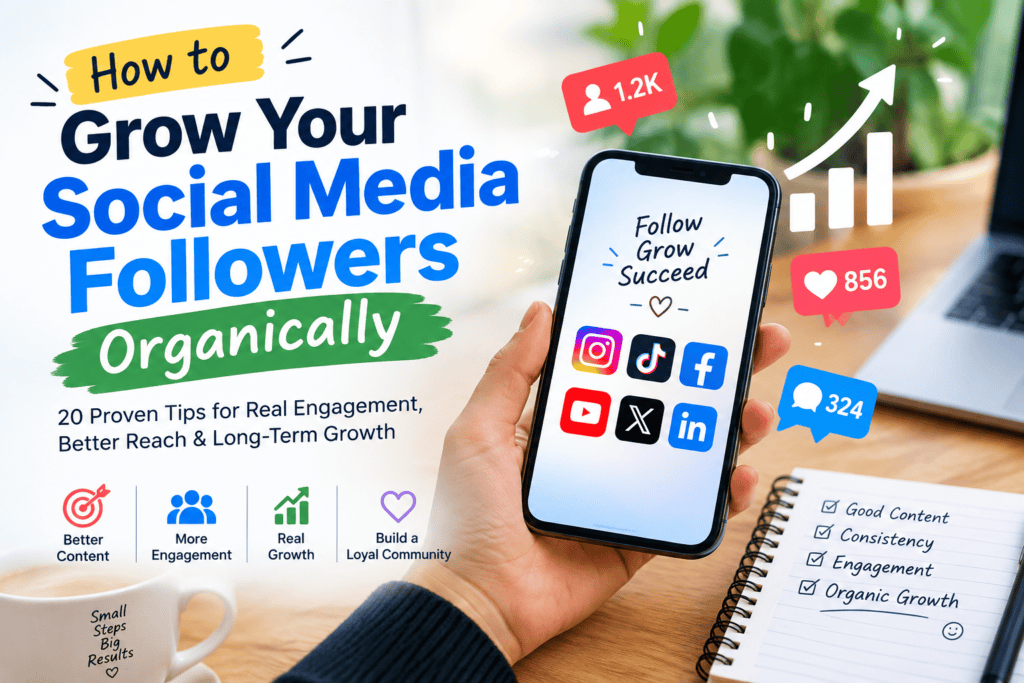
Growing social media followers organically takes time, consistency, and the right content strategy. While paid advertising can help increase reach quickly, organic growth focuses on attracting real people who are genuinely interested in your content, brand, products, or ideas.
Whether you are a small business owner, blogger, content creator, freelancer, or beginner, you can grow your social media audience without depending entirely on paid promotions. The key is to create useful content, understand your audience, stay consistent, and build real relationships with your followers.
In this guide, you will learn practical ways to grow social media followers organically, improve engagement, create better content, and build a stronger social media presence.
What Does Organic Social Media Growth Mean?
Organic social media growth means gaining followers and engagement naturally without purchasing followers or relying mainly on paid advertising.
People may discover your content through:
- Search results
- Hashtags
- Shares
- Recommendations
- Explore or discovery pages
- Comments
- Reposts
- Friends and communities
- Valuable original content
The goal is not simply to increase the follower number. A healthy social media account should attract people who are actually interested in what you publish.
For example, 1,000 relevant followers can be more useful to a small business than thousands of inactive or unrelated accounts.
Why Organic Social Media Growth Is Important
Organic growth can help you build a more meaningful relationship with your audience. When people follow you because they genuinely like your content, they are more likely to interact with future posts.
Some benefits include:
- Building audience trust
- Increasing brand awareness
- Improving engagement
- Creating a loyal community
- Generating website traffic
- Increasing content visibility
- Supporting long-term marketing
- Reaching potential customers naturally
Organic growth usually does not happen overnight. However, consistent effort can help create a stronger foundation for long-term social media success.
1. Choose the Right Social Media Platform
One of the biggest mistakes beginners make is trying to become active on every social media platform at once.
Instead, choose platforms where your target audience is most likely to spend time.
For example:
- Instagram: Visual content, lifestyle, fashion, beauty, products, and creators
- Facebook: Communities, businesses, groups, and broad audiences
- TikTok: Short-form videos, entertainment, educational content, and trends
- LinkedIn: Professional content, business networking, careers, and B2B marketing
- YouTube: Long-form videos, tutorials, reviews, education, and entertainment
You do not need to master every platform immediately. Start with one or two platforms and learn what works for your audience.
2. Understand Your Target Audience
Before creating content, understand who you are trying to reach.
Ask yourself:
- Who is my target audience?
- What problems do they have?
- What information are they searching for?
- What type of content do they enjoy?
- What questions do they frequently ask?
- What motivates them to follow an account?
For example, if your account focuses on technology, your audience might be interested in smartphone tips, useful apps, AI tools, software tutorials, and technology news.
When you understand your audience, it becomes much easier to create content that people want to save, share, and discuss.
3. Create Valuable Content
Content is one of the most important parts of organic social media growth.
Instead of posting only promotional messages, create content that provides value.
You can create:
- Educational posts
- How-to guides
- Quick tips
- Checklists
- Tutorials
- Short videos
- Infographics
- Frequently asked questions
- Industry news
- Product demonstrations
- Behind-the-scenes content
- Mistake-and-solution posts
A simple rule is:
Give people a reason to stop scrolling.
Your content should teach something, solve a problem, answer a question, entertain people, or provide useful information.
4. Post Consistently
Consistency is important when you want to grow social media followers organically.
You do not necessarily need to publish many posts every day. A realistic schedule that you can maintain is usually better than posting heavily for a few days and then disappearing.
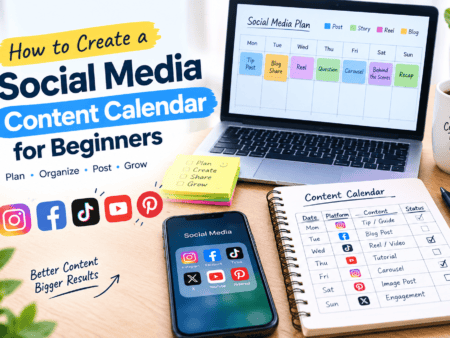
Create a simple content calendar.
For example:
| Day | Content Type |
|---|---|
| Monday | Educational tip |
| Tuesday | Short video |
| Wednesday | Question or discussion |
| Thursday | Helpful guide |
| Friday | Industry-related content |
| Saturday | Behind-the-scenes post |
| Sunday | Weekly summary |
Your schedule can be different depending on your niche and audience.
The important thing is to remain active and consistent.
5. Improve Your Social Media Profile
Your profile is often the first thing people see after discovering your content.
Make sure your profile clearly explains who you are and what you provide.
Your profile should include:
- A clear profile picture or logo
- A simple username
- A useful bio
- Your niche or topic
- A website link when appropriate
- A clear reason to follow you
For example, instead of a vague bio, explain exactly what followers can expect from your account.
A clear profile can help turn profile visitors into followers.
6. Write Better Captions
A good caption can encourage people to stop and interact with your post.
Start with a strong opening sentence that creates curiosity or immediately explains the benefit.
For example:
“Struggling to grow your social media account? Try these five simple strategies.”
Then provide useful information and finish with a natural call to action.
You can ask:
- What strategy works best for you?
- Which tip would you try first?
- What topic should we cover next?
- Have you experienced this problem?
Questions can encourage genuine conversations in the comments.
7. Use Short-Form Video
Short-form video has become an important content format across several social platforms.
You can create simple videos such as:
- Quick tutorials
- Tips and tricks
- Before-and-after explanations
- Product demonstrations
- Educational facts
- Common mistakes
- Step-by-step guides
- Frequently asked questions
You do not always need expensive equipment.
A smartphone, good lighting, clear audio, and useful information can be enough to create helpful content.
Focus on the value of the video rather than trying to make every video perfect.
8. Use Relevant Hashtags Carefully
Hashtags can help categorize your content and make it easier for interested users to discover relevant posts.
Instead of using a large number of unrelated hashtags, choose hashtags that accurately describe your topic.
For example, a social media marketing post might use relevant terms related to:
- Social media marketing
- Content marketing
- Small business marketing
- Social media tips
- Digital marketing
Avoid adding unrelated popular hashtags simply because they have a large audience.
Relevance is more important than using random high-volume hashtags.
9. Encourage People to Share Your Content
Shares can help expose your content to people outside your existing audience.
Create content that people naturally want to send to friends or colleagues.
Examples include:
- Useful checklists
- Simple tutorials
- Helpful statistics
- Practical tips
- Mistakes to avoid
- Step-by-step guides
- Industry updates
Instead of repeatedly saying “share this post,” make the content genuinely useful enough that sharing becomes natural.
10. Engage With Your Audience
Social media is not only about publishing posts.
It is also about communication.
Respond to genuine comments and questions. When someone takes the time to interact with your content, try to continue the conversation.
You can also:
- Answer questions
- Thank people for useful feedback
- Ask follow-up questions
- Participate in relevant discussions
- Reply to messages appropriately
Active engagement can help create a community around your account.
11. Engage With Other Relevant Accounts
You should not only focus on your own posts.
Find creators, businesses, communities, and accounts related to your niche and participate in relevant conversations.
Leave meaningful comments rather than generic comments such as:
“Nice post!”
Instead, add something useful to the discussion.
For example, if someone publishes a post about content marketing, you could share a relevant observation or ask a thoughtful question.
This can increase your visibility while helping you build genuine relationships.
12. Create Content Around Questions People Ask
One of the easiest ways to find content ideas is to listen to your audience.
Look at questions people ask in:
- Comments
- Social media groups
- Online communities
- Search engines
- Your direct messages
- Industry discussions
If multiple people are asking the same question, it can become a valuable piece of content.
For example:
Question: “How often should a small business post on social media?”
You could turn that question into:
“How Often Should a Small Business Post on Social Media?”
This approach helps you create content based on real audience needs.
13. Make Your Content Easy to Understand
People often scroll quickly through social media.
Avoid making every post unnecessarily complicated.
Use:
- Short paragraphs
- Clear headings
- Simple language
- Useful examples
- Easy-to-read formatting
- Strong opening lines
If your audience can understand your message quickly, they are more likely to continue reading or watching.
14. Use a Strong Content Hook
The first few seconds or first line of your content can influence whether someone continues consuming it.
Examples of hooks include:
- “Want to grow your social media account without buying followers?”
- “Here are five social media mistakes beginners should avoid.”
- “If your posts are getting low engagement, check these things.”
- “Before posting your next social media video, try this.”
The hook should accurately represent the content. Avoid misleading clickbait.
15. Avoid Buying Followers
Buying followers may increase the visible follower count, but those accounts may not represent a real interested audience.
A large follower number does not automatically mean strong engagement or business results.
Instead of focusing only on the number of followers, monitor:
- Engagement
- Shares
- Saves
- Comments
- Profile visits
- Website clicks
- Video views
- Audience relevance
Real audience growth is more valuable when your goal is to build a sustainable social media presence.
16. Study Your Analytics
Most major social media platforms provide analytics that can help you understand your content performance.
Pay attention to:
- Reach
- Impressions
- Engagement
- Follower growth
- Video views
- Watch time where available
- Link clicks
- Profile visits
Look for patterns.
If educational videos consistently receive more engagement than promotional posts, you can create more educational content.
If a particular topic performs well, consider developing it into a series.
Use analytics as feedback rather than guessing what your audience wants.
17. Repurpose Your Best Content
You do not need to create completely new content every time.
One useful blog post can become:
- An Instagram carousel
- A short video
- A Facebook post
- A LinkedIn post
- A short infographic
- A series of tips
- A discussion question
For example, a blog titled “10 Social Media Marketing Tips for Small Businesses” could become ten separate short posts.
Repurposing allows you to get more value from your existing ideas.
18. Build a Content Series
A content series gives people a reason to return.
For example:
Monday: Social Media Tip #1
Tuesday: Social Media Tip #2
Wednesday: Social Media Tip #3
You could also create weekly themes such as:
- Marketing Monday
- Technology Tuesday
- Business Tips Wednesday
- Social Media Friday
Choose a format that fits your niche and audience.
19. Collaborate With Relevant Creators
Collaboration can introduce your content to a new but relevant audience.
You could collaborate through:
- Interviews
- Joint videos
- Live discussions
- Expert Q&A sessions
- Guest content
- Educational collaborations
Choose collaborators based on relevance rather than follower count alone.
A smaller creator with an audience closely related to your niche may be more relevant to your goals than a large unrelated account.
20. Use Trends Carefully
Trends can create opportunities for additional visibility, but you should not follow every trend.
Ask:
Does this trend fit my niche and audience?
If yes, adapt it to your topic.
For example, a technology page could use a popular video format to explain a new technology feature.
The goal is to combine the trend with useful information rather than copying content without adding value.
21. Create More Saveable Content
Content that people want to return to can generate useful engagement.
Examples include:
- Checklists
- Step-by-step guides
- Tutorials
- Resource lists
- Short reference guides
- Tips
- Templates
For example:
“10 Free Tools Every Small Business Owner Should Know”
Such content can provide practical value and encourage people to save it for later.
22. Build Trust Instead of Chasing Viral Posts
A viral post can generate a sudden increase in views, but one viral post does not automatically create a strong community.
Focus on building trust over time.
Be consistent with:
- Your topic
- Your communication
- Your publishing schedule
- Your information
- Your visual identity
When followers understand what your account provides, they have a clearer reason to stay.
23. Create a Simple 30-Day Organic Growth Plan
If you are starting from zero, use a simple 30-day plan.
Week 1: Build Your Foundation
- Optimize your profile
- Define your target audience
- Choose your main platform
- Research competitors and similar accounts
- Create a list of content ideas
Week 2: Start Publishing
- Publish useful educational content
- Test different formats
- Respond to comments
- Study which posts receive attention
Week 3: Improve Your Strategy
- Review analytics
- Identify your best-performing topics
- Create more content around those topics
- Test different hooks
- Repurpose successful content
Week 4: Build Community
- Engage with relevant accounts
- Ask your audience questions
- Create a content series
- Try a collaboration
- Review your monthly results
After 30 days, use the data to decide what to continue, improve, or change.
Common Social Media Growth Mistakes to Avoid
Many beginners make mistakes that slow down their growth.
Posting Without a Strategy
Posting random content makes it difficult to build a recognizable audience.
Focusing Only on Followers
Follower count is only one metric. Engagement and audience relevance also matter.
Using Clickbait
Misleading headlines may get attention temporarily but can reduce trust.
Ignoring Comments
If people regularly comment and you never respond, you miss opportunities to build relationships.
Copying Other Creators
Study successful content, but develop your own ideas, voice, and presentation.
Giving Up Too Quickly
Organic growth often takes time. A few low-performing posts do not necessarily mean your strategy has failed.
Frequently Asked Questions
How can I grow my social media followers organically?
Create useful content consistently, understand your target audience, optimize your profile, engage with relevant communities, and use analytics to improve your strategy.
How long does organic social media growth take?
There is no fixed timeline. Growth depends on your niche, content quality, consistency, platform, audience, and engagement. Focus on building sustainable progress rather than expecting instant results.
Should I buy social media followers?
Buying followers is generally not a good substitute for building a genuine audience. Focus on attracting people who are actually interested in your content.
How often should I post on social media?
There is no universal posting frequency that works for every account. Choose a schedule you can maintain consistently and use your analytics to understand what works for your audience.
Which social media platform is best for organic growth?
There is no single platform that is best for everyone. The right platform depends on your audience, niche, content format, and goals.
What type of content gets more engagement?
Educational, useful, entertaining, relatable, and problem-solving content can encourage engagement. Your analytics can help identify which formats work best for your specific audience.
Final Thoughts
Learning how to grow your social media followers organically is a long-term process. You do not need millions of followers to build a valuable online presence. Instead, focus on attracting the right audience and providing content that genuinely helps them.
Start by choosing the right platform, understanding your audience, creating useful content, posting consistently, engaging with your community, and studying your analytics.
Avoid shortcuts such as buying followers or relying only on viral content. Build your audience step by step and improve your strategy based on real results.
With patience, consistency, and useful content, your social media account can develop into a strong community and become a valuable source of brand awareness, traffic, and long-term growth.
Remember: the goal is not just to get more followers. The goal is to build an audience that wants to hear from you.