

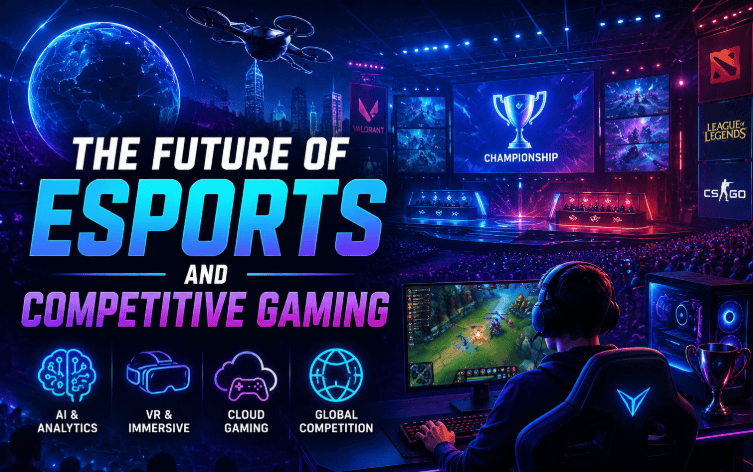
The world of eSports and competitive gaming is changing faster than ever. What was once considered a niche hobby has developed into a global entertainment industry with professional players, major tournaments, dedicated teams, streaming platforms, sponsors, and millions of fans.
As technology continues to improve, competitive gaming is entering a new era. Artificial intelligence, cloud gaming, virtual reality, improved internet connectivity, and advanced analytics are expected to influence how players train, compete, and interact with audiences.
But what does the future of eSports really look like? From professional tournaments to emerging gaming technologies, several trends could shape the industry over the next few years.
The Growing Global Popularity of eSports
eSports has become a major part of modern entertainment. Competitive games attract audiences from different countries, while professional tournaments create communities around popular titles.
Unlike traditional sports, eSports can connect players and fans across geographical boundaries. A player can compete against someone from another country without traveling, while fans can watch tournaments through digital platforms from almost anywhere.
This global accessibility is one of the biggest reasons competitive gaming continues to expand.
Artificial Intelligence Will Transform Competitive Gaming
Artificial intelligence is likely to become one of the most important technologies in the future of eSports.
AI-powered systems can analyze gameplay and identify patterns that human coaches may miss. Professional teams can use data-driven tools to study player performance, understand opponents, and develop better strategies.
AI can also help players improve their individual skills. Training systems may analyze reaction times, decision-making, movement, accuracy, and other aspects of gameplay.
However, AI is unlikely to completely replace human players. Instead, it will probably become a powerful training and analytical tool that helps competitors perform at a higher level.
Advanced Analytics Will Give Teams a Competitive Advantage
Data analytics is already important in professional gaming, but its role is expected to grow significantly.
Modern competitive games generate enormous amounts of information. Teams can analyze statistics such as player movement, accuracy, objectives completed, resource management, and team coordination.
In the future, coaches may have access to even more sophisticated dashboards that provide real-time information during training sessions.
This could make eSports increasingly similar to traditional professional sports, where analytics are used to improve tactics and player performance.
Cloud Gaming Could Expand Access
Cloud gaming could have a major impact on competitive gaming.
Traditionally, players need powerful hardware to run demanding games. Cloud technology can potentially reduce this requirement by processing games on remote servers and streaming gameplay to supported devices.
If cloud gaming infrastructure continues to improve, more people could gain access to high-quality gaming experiences without purchasing expensive gaming computers.
For eSports, however, performance and latency remain extremely important. Competitive players need fast and reliable connections, meaning cloud gaming providers will have to continue improving network infrastructure before it becomes dominant in professional competition.
Virtual Reality Could Create New Competitive Experiences
Virtual reality is another technology with potential to influence the future of eSports.
VR can create immersive gaming environments where players physically interact with digital worlds. Instead of simply using a keyboard or controller, competitors can use motion controllers and other devices to interact with games.
This could lead to completely new categories of competitive gaming.
VR-based tournaments could combine physical movement with traditional gaming skills, creating experiences that look and feel different from conventional eSports competitions.
Better Internet Connectivity Will Support Global Competition
Fast and reliable internet is essential for competitive gaming. Even small delays can affect the outcome of a professional match.
The continued development of high-speed broadband, fiber networks, 5G, and other connectivity technologies could make online competition more reliable.
Better connectivity can also help players from different regions participate in international competitions. As infrastructure improves, competitive gaming may become more accessible to players who previously struggled with connection quality.
The Rise of Professional Gaming Careers
The future of eSports is not limited to professional players.
As the industry grows, more career opportunities are emerging around competitive gaming. These include coaches, analysts, commentators, content creators, event organizers, team managers, designers, broadcasters, and marketing professionals.
Streaming and content creation have also created new opportunities for gamers to build personal brands.
For younger generations, gaming can therefore become more than entertainment. It can become a pathway toward careers in technology, media, marketing, and entertainment.
Streaming Will Remain a Major Part of eSports
Streaming platforms have played a major role in the growth of competitive gaming.
Fans no longer have to attend a physical stadium to watch their favorite teams compete. They can follow tournaments online, interact with other viewers, and communicate directly with creators and gaming communities.
The future could bring even more interactive viewing experiences. Fans may be able to choose different camera angles, access live statistics, follow individual players, or participate in digital fan experiences while watching tournaments.
This could make eSports broadcasts more personalized than traditional sports broadcasts.
Mobile eSports Will Continue to Grow
Mobile gaming is another important part of the industry’s future.
Smartphones are available to billions of people around the world, making mobile games more accessible than PC or console gaming in many markets.
Competitive mobile games can attract large communities because players do not necessarily need expensive gaming equipment.
As smartphones become more powerful and mobile networks become faster, mobile eSports could continue developing into a major competitive gaming category.
The Importance of Player Health
The growth of professional gaming also brings attention to player health and well-being.
Professional competitors often spend long periods practicing and competing. Maintaining healthy routines can therefore become increasingly important.
Teams may place greater emphasis on physical exercise, sleep, nutrition, posture, eye health, and mental well-being.
Future eSports organizations could increasingly employ fitness professionals, psychologists, nutrition specialists, and performance coaches to help players maintain sustainable careers.
More Professional eSports Leagues and Tournaments
As audiences grow, the structure of competitive gaming may become more professional.
Major tournaments can attract sponsors, advertisers, streaming audiences, and international fans. This creates opportunities for organizations to build long-term leagues and competitive ecosystems.
We could see more standardized competition formats, professional training facilities, international events, and stronger partnerships between gaming companies and entertainment organizations.
This professionalization could make eSports more attractive to investors and mainstream audiences.
Challenges Facing the Future of eSports
Despite its enormous potential, eSports still faces several challenges.
Game publishers have significant control over competitive titles because they own the games. Changes to game mechanics, licensing policies, or competitive rules can have a major impact on professional leagues.
There are also concerns about player burnout, inconsistent career paths, tournament structures, and maintaining healthy gaming habits.
Addressing these challenges will be important if eSports wants to establish itself as a sustainable long-term entertainment industry.
What Does the Future Hold?
The future of eSports and competitive gaming looks increasingly connected to technology, entertainment, and digital communities.
Artificial intelligence could improve training and analysis. Cloud gaming could increase accessibility. Virtual reality could introduce new forms of competition. Better connectivity could support international tournaments, while streaming platforms could make competitions more interactive.
At the same time, professional organizations will need to focus on player health, fair competition, sustainable careers, and responsible industry growth.
Conclusion
The future of eSports and competitive gaming is likely to be more advanced, global, and interactive than ever before. Technology will continue changing how players train, how teams compete, and how fans experience tournaments.
As gaming becomes increasingly integrated with entertainment, technology, and digital culture, eSports has the potential to become one of the most influential forms of modern competitive entertainment.
For players, fans, businesses, and technology companies, the next generation of eSports could offer opportunities that extend far beyond the traditional gaming industry.