
Social media has become one of the most useful tools for small businesses that want to reach new customers, build brand awareness, and increase sales. Platforms such as Instagram, Facebook, TikTok, LinkedIn, Pinterest, and YouTube allow businesses to connect directly with potential customers without needing a huge marketing budget.
However, simply creating a social media account is not enough. To get meaningful results, a small business needs a clear strategy, useful content, consistent posting, and regular interaction with its audience.
In this guide, you will learn how to use social media to promote a small business, attract potential customers, build trust, and create a stronger online presence.
Why Social Media Is Important for Small Businesses
Social media can help small businesses compete for attention online without relying entirely on expensive traditional advertising.
A strong social media presence can help you:
- Increase brand awareness
- Reach potential customers
- Showcase products and services
- Build relationships with customers
- Generate website traffic
- Collect customer feedback
- Promote special offers
- Increase online sales
- Establish credibility and trust
The key is to focus on the platforms and content types that match your target audience rather than trying to be everywhere at once.
1. Choose the Right Social Media Platforms
The first step is choosing the right social media platforms for your business.
Different platforms attract different audiences and work better for different types of content.
Instagram can be useful for businesses that depend on visual content. Fashion, beauty, food, travel, home products, and lifestyle brands can use photos, Reels, Stories, and carousels to showcase their products.
Facebook can help small businesses build a community, share updates, answer customer questions, and promote products or services.
TikTok
TikTok is useful for short-form video content. Businesses can create educational videos, product demonstrations, behind-the-scenes clips, and entertaining content.
LinkedIn can be valuable for B2B companies, freelancers, agencies, consultants, and professional service providers.
Pinterest can work particularly well for visual industries such as home decor, fashion, recipes, crafts, and lifestyle products.
Instead of opening accounts on every platform, start with one or two platforms where your potential customers are most active.
2. Define Your Target Audience
Before creating content, understand who you want to reach.
Ask yourself:
- Who are my ideal customers?
- What problems do they have?
- What products or services do they need?
- What type of content do they enjoy?
- Which social media platforms do they use?
- What questions do they frequently ask?
For example, a small skincare business may target people interested in skincare routines, beauty tips, product recommendations, and common skincare problems.
Understanding your audience makes it easier to create content that people actually want to see.
3. Create a Professional Social Media Profile
Your social media profile is often the first interaction a potential customer has with your business.
Make sure your profile includes:
- A clear business name
- A recognizable profile picture or logo
- A short and useful bio
- Your website link
- Contact information
- Your location if relevant
- A clear description of your products or services
Your profile should immediately tell visitors what your business does and how it can help them.
4. Create Valuable Content
One of the most important parts of social media marketing for small businesses is creating valuable content.
Avoid making every post a sales advertisement.
Instead, create a mixture of content such as:
- Educational posts
- Product demonstrations
- Customer reviews
- Behind-the-scenes content
- How-to videos
- Frequently asked questions
- Industry tips
- Product comparisons
- Before-and-after examples where appropriate
- Business stories
- Special offers
For example, instead of simply posting a photo of a skincare product, you could create a post explaining how to choose the right face wash for different skin needs.
This provides value while naturally introducing your product.
5. Use Short-Form Video Content
Short-form videos have become an important part of social media marketing.
Small businesses can use short videos to show:
- How a product works
- How an order is prepared
- A quick tutorial
- Common customer questions
- New products
- Behind-the-scenes activities
- Tips related to the business
You don’t always need expensive equipment. A smartphone, good lighting, clear audio, and a useful idea can be enough to create engaging content.
Focus on helping or entertaining your audience rather than making every video feel like an advertisement.
6. Post Consistently
Consistency is more important than posting a large number of times for a short period and then disappearing.
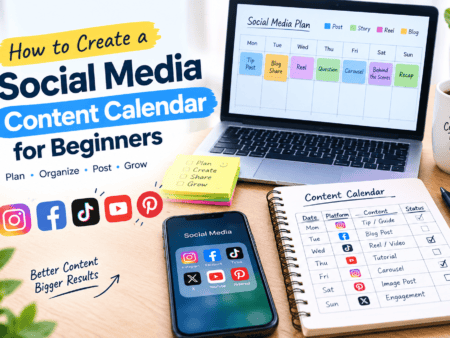
Create a simple social media content calendar.
For example:
Monday: Educational tip
Tuesday: Product or service feature
Wednesday: Short video
Thursday: Customer question or FAQ
Friday: Behind-the-scenes content
Saturday: Helpful industry tip
Sunday: Community or business story
You can adjust this schedule according to your audience and available time.
The goal is to develop a realistic posting routine that you can maintain.
7. Use Relevant Keywords and Hashtags
Keywords can help make your social media content easier to understand and discover.
Use relevant phrases naturally in:
- Captions
- Video titles
- Profile descriptions
- Post text
- Hashtags where appropriate
For example, a local bakery might use phrases such as:
small bakery, fresh cakes, custom cakes, birthday cakes, local bakery
Avoid adding unrelated or excessive hashtags simply to make a post look popular. Relevance is more important.
8. Engage With Your Audience
Social media is not just about publishing posts.
You also need to interact with people.
Respond to:
- Comments
- Direct messages
- Questions
- Product inquiries
- Customer feedback
You can also ask questions in your posts to encourage conversations.
For example:
“Which product would you like us to introduce next?”
Simple questions can help you understand your audience while encouraging engagement.
9. Showcase Customer Reviews and Experiences
Customer feedback can help build trust with potential buyers.
With permission, businesses can share:
- Customer reviews
- Testimonials
- Product photos from customers
- Feedback screenshots
- User-generated content
Real customer experiences can give potential buyers additional information before making a purchase.
Always make sure customer information is shared appropriately and with permission.
10. Use Social Media Stories
Stories can be useful for sharing quick, timely updates without creating a full permanent post.
You can use Stories for:
- New arrivals
- Limited-time offers
- Polls
- Questions
- Behind-the-scenes moments
- Product demonstrations
- Customer feedback
- Daily updates
Stories can also make a small business feel more personal and approachable.
11. Promote Your Website Through Social Media
Social media can also be used to bring visitors to your website.
For example, you can share:
- Blog posts
- Product pages
- New services
- Special offers
- Helpful guides
- Landing pages
Instead of posting only a link, explain why people should click it.
For example:
“Want to learn how to build a simple skincare routine? Read our complete beginner’s guide on our website.”
This gives the audience a clear reason to visit.
12. Consider Paid Social Media Advertising
Organic social media can help build an audience, while paid advertising can help businesses reach specific groups of potential customers.
Before spending money on ads, define:
- Your advertising goal
- Target audience
- Budget
- Ad creative
- Landing page
- Call to action
Start with a controlled budget and measure the results before increasing spending.
Don’t assume that spending more money automatically produces better results. The quality of your offer, audience targeting, creative, and landing page can all affect performance.
13. Track Your Social Media Performance
You cannot improve your strategy if you don’t measure its results.
Important metrics can include:
- Reach
- Impressions
- Engagement
- Video views
- Profile visits
- Website clicks
- Leads
- Sales
- Follower growth
Look at which content receives the most meaningful engagement and website activity.
If educational videos consistently perform better than promotional posts, you may want to create more educational content.
14. Build a Simple Social Media Content Strategy
A simple strategy can make social media marketing easier.
Use the following formula:
Educate + Entertain + Engage + Promote
For example:
- Educate: Share useful tips.
- Entertain: Create interesting or relatable content.
- Engage: Ask questions and respond to comments.
- Promote: Introduce products, services, and offers.
This approach helps prevent your social media account from becoming a constant stream of advertisements.
15. Avoid Common Social Media Marketing Mistakes
Small businesses often make avoidable mistakes when starting social media marketing.
Posting Without a Strategy
Random posts can make it difficult to build a recognizable brand.
Focusing Only on Sales
If every post asks customers to buy something, people may lose interest.
Ignoring Comments
Not responding to customers can make your business appear inactive.
Using Poor-Quality Content
Blurry images, unclear videos, and difficult-to-read graphics can reduce the professionalism of your profile.
Trying Every Platform
Managing too many platforms can become overwhelming. Start small and focus on quality.
Giving Up Too Early
Building an audience and trust usually takes time. Review your performance and improve your strategy instead of expecting immediate results.
A Simple 30-Day Social Media Plan
If you are just starting, you can use this basic plan.
Week 1: Set up your profiles and introduce your business.
Week 2: Publish educational content and answer common customer questions.
Week 3: Showcase products, services, customer experiences, and behind-the-scenes content.
Week 4: Review your analytics and identify the content that performed best.
At the end of the month, use these insights to create your next content calendar.
Final Thoughts
Learning how to use social media to promote a small business does not require a huge marketing budget. What matters most is having a clear target audience, choosing suitable platforms, creating useful content, engaging with customers, and consistently measuring your results.
Start with one or two platforms, create content that solves real customer problems, and gradually improve your strategy based on what your audience responds to.
With patience and consistent effort, social media can become an important channel for building brand awareness, connecting with customers, and supporting the growth of a small business.