
Playing sports is a great way to stay active, build fitness, and improve physical skills. Whether you enjoy cricket, football, basketball, running, tennis, or another sport, recovery is an important part of staying active. After a demanding game or training session, your body needs time and proper care to recover.
Many beginners focus only on training harder and forget about what happens after exercise. However, good recovery habits can help you feel ready for your next activity and support your overall fitness routine.
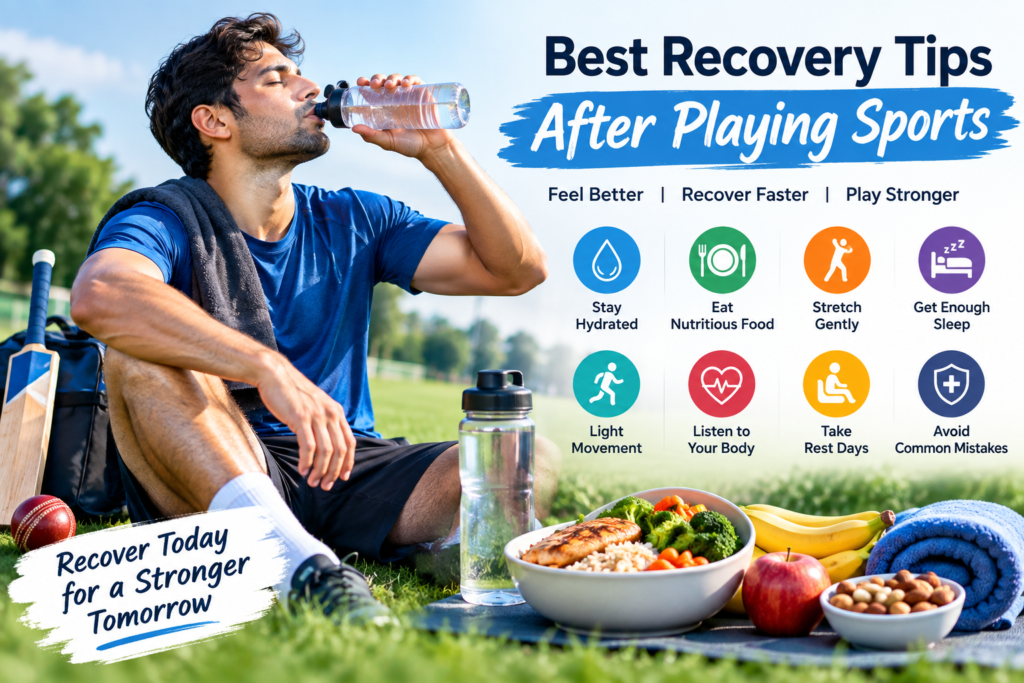
In this guide, we will discuss the best recovery tips after playing sports, including hydration, nutrition, stretching, sleep, rest, and simple recovery habits.
Why Is Recovery Important After Playing Sports?
Sports and exercise place demands on your muscles, joints, and energy systems. After a game or workout, your body needs time to return to its normal state.
A good recovery routine can help you:
- Reduce normal post-exercise muscle soreness
- Restore energy
- Replace fluids lost through sweating
- Support normal muscle repair
- Prepare for your next training session
- Maintain a consistent exercise routine
- Reduce the chance of training while overly tired
Recovery does not mean doing nothing all day. It means giving your body the right combination of movement, nutrition, hydration, sleep, and rest.
1. Cool Down After Your Game
One of the simplest recovery tips after playing sports is to include a cool-down period.
Instead of stopping suddenly after intense activity, spend a few minutes walking slowly or performing other gentle movements. This allows your body to gradually transition from exercise to rest.
For example, after a cricket match, you could walk slowly for several minutes. After football or basketball, light walking can also be a simple way to finish the session.
A cool-down does not need to be complicated. The goal is simply to reduce activity gradually and give yourself time to relax.
2. Drink Enough Water
Hydration is an important part of sports recovery.
When you play sports, especially in hot or humid weather, you may lose fluids through sweating. Drinking water after exercise helps replace some of the fluid you have lost.
Try to drink water regularly rather than waiting until you become extremely thirsty.
Your hydration needs can depend on factors such as:
- How long you played
- How intense the activity was
- The weather
- How much you sweat
- Your individual needs
For longer or particularly sweaty activities, a balanced sports drink may sometimes be useful, but for many everyday workouts and games, water is a practical choice.
3. Eat a Balanced Meal After Sports
Food provides the energy and nutrients your body needs after physical activity.
Instead of focusing on one specific “recovery food,” aim for a balanced meal containing carbohydrates, protein, healthy fats, fruits or vegetables, and fluids.
Good post-sports meal ideas include:
- Rice with chicken and vegetables
- Eggs with whole-grain bread and fruit
- Yogurt with fruit and oats
- Beans with rice and vegetables
- A sandwich with a protein source and vegetables
- Milk or yogurt with fruit and a balanced meal
Carbohydrate-containing foods can help replenish energy stores, while protein provides amino acids needed for normal muscle repair and maintenance.
4. Include Protein in Your Meals
Protein is an important nutrient for active people.
Your muscles use protein as part of normal repair and maintenance processes. Instead of relying on expensive supplements, most people can get protein from everyday foods.
Examples include:
- Eggs
- Chicken
- Fish
- Milk
- Yogurt
- Beans
- Lentils
- Chickpeas
- Nuts and seeds
You do not need to make every meal complicated. A balanced diet that regularly includes protein can support an active lifestyle.
5. Eat Carbohydrate-Rich Foods to Restore Energy
Carbohydrates are an important source of energy during many sports.
After a long or intense game, eating carbohydrate-containing foods can help replenish the body’s energy stores.
Examples include:
- Rice
- Potatoes
- Oats
- Whole-grain bread
- Pasta
- Bananas
- Other fruits
- Beans and lentils
Combining carbohydrates with protein can make a balanced post-sports meal.
For example, rice with chicken and vegetables provides a combination of carbohydrates, protein, and other nutrients.
6. Get Enough Sleep
Sleep is one of the most important parts of sports recovery.
During sleep, your body has time to rest and carry out normal repair processes. Poor sleep can also leave you feeling tired and make it harder to concentrate during your next training session.
Try to maintain a regular sleep schedule and create a comfortable sleep environment.
Helpful habits include:
- Going to bed at a consistent time
- Limiting unnecessary screen use before bed
- Keeping your bedroom comfortable and quiet
- Avoiding very heavy meals immediately before sleeping
- Giving yourself enough time to sleep
Good recovery is not only about what you do immediately after a game. What you do overnight matters too.
7. Try Gentle Movement on Recovery Days
Rest does not always mean staying completely still.
If you are feeling generally tired or sore after sports, gentle activities such as walking can help you stay mobile without adding another demanding workout.
For example, you might take an easy walk the day after a difficult match.
The key is intensity. A recovery activity should feel easy rather than like another hard training session.
If movement increases pain rather than simply causing mild discomfort from normal activity, stop and consider getting advice from a qualified healthcare professional.
8. Stretch Gently
Gentle stretching can be included in a post-sports routine if it feels comfortable.
You can perform simple stretches for the major muscle groups used during your activity. Avoid forcing a stretch or bouncing aggressively.
For example, after running, you might gently stretch your legs. After sports involving the upper body, you might include comfortable shoulder and arm movements.
Stretching should feel controlled and comfortable. It should not cause sharp pain.
9. Take Rest Days When Needed
Training every day at maximum intensity is not necessary for most recreational athletes.
Rest days give your body an opportunity to recover from demanding exercise. They can also help you return to your next session feeling more prepared.
Your recovery needs may change depending on:
- Your training schedule
- The intensity of your sport
- Your fitness level
- Sleep
- Nutrition
- Stress
- How your body feels
A good sports routine balances training with appropriate recovery.
10. Listen to Your Body
Learning to recognize how you feel after exercise is an important skill.
Normal tiredness after a challenging activity can happen. However, persistent or unusual pain should not simply be ignored.
Pay attention to symptoms such as:
- Pain that does not improve
- Significant swelling
- Severe weakness
- Dizziness
- Difficulty breathing
- Chest pain
- Loss of normal movement
If you experience concerning symptoms, stop exercising and seek appropriate medical advice.
11. Avoid Immediately Starting Another Hard Workout
If you have just completed a demanding match or training session, jumping straight into another intense workout may not give your body enough time to recover.
Instead, consider using the following sequence:
Sports → Cool Down → Hydration → Balanced Meal → Relaxation → Sleep
This simple approach can make recovery easier to manage.
12. Pay Attention to Hydration in Hot Weather
Weather can make a significant difference to sports recovery.
Playing cricket, football, or another outdoor sport in hot weather can increase sweating and fluid loss. This means hydration becomes especially important.
Before, during, and after activity, make sensible efforts to stay hydrated.
If you are playing outdoors in hot conditions, also consider taking appropriate breaks and avoiding unnecessary exposure to extreme heat.
13. Replace Lost Energy After Long Sessions
A short recreational session may not require a special recovery meal. However, after a long match or demanding training session, your body may need more food and fluids.
A balanced meal can provide:
- Carbohydrates for energy
- Protein for normal muscle maintenance
- Fruits and vegetables for vitamins and minerals
- Fluids for hydration
- Healthy fats as part of a balanced diet
The goal is not to follow a complicated diet. It is to provide your body with enough nutritious food to support your activity.
14. Don’t Rely Too Much on Supplements
Sports supplements are heavily marketed online, but they are not necessary for everyone.
For many recreational athletes, a balanced diet, adequate hydration, regular sleep, and sensible training provide the foundation of recovery.
If you are considering supplements, especially if you are young or have a medical condition, it is better to discuss them with a qualified healthcare professional or registered dietitian rather than taking products based only on advertising or social media recommendations.
15. Keep a Consistent Recovery Routine
The best recovery strategy is often one that you can follow consistently.
Instead of trying dozens of complicated recovery techniques, build a simple routine.
Simple post-sports recovery routine:
Step 1: Finish the game or workout.
Step 2: Walk gently for several minutes.
Step 3: Drink water according to your needs.
Step 4: Eat a balanced meal or snack.
Step 5: Do gentle mobility or stretching if comfortable.
Step 6: Relax and avoid unnecessary intense activity.
Step 7: Get adequate sleep.
Step 8: Return to training when you feel ready.
Best Recovery Foods After Playing Sports
There is no single perfect recovery food. A variety of nutritious foods can fit into a sports recovery routine.
Here are some practical options:
Banana and Yogurt
A banana provides carbohydrates, while yogurt can provide protein and other nutrients.
Eggs and Whole-Grain Toast
Eggs provide protein, while whole-grain toast provides carbohydrates and other nutrients.
Rice, Chicken, and Vegetables
This is a simple balanced meal containing carbohydrates, protein, and vegetables.
Oatmeal With Fruit and Milk
Oats provide carbohydrates and milk provides protein and other nutrients.
Beans and Rice
Beans and rice can provide a combination of carbohydrates and plant-based protein.
The best option depends on your preferences, dietary needs, and what foods are available to you.
Common Recovery Mistakes to Avoid
Some habits can make recovery more difficult.
Skipping Meals
After a demanding game, some people forget to eat. Regular nutritious meals can help support your body’s energy needs.
Not Drinking Enough Fluids
Ignoring hydration after heavy sweating can leave you feeling tired and uncomfortable.
Training Hard Every Day
More training is not always better. Your body needs recovery time.
Ignoring Persistent Pain
Normal post-exercise soreness is different from an injury or persistent pain. Ongoing or severe symptoms deserve appropriate attention.
Sacrificing Sleep
Staying up late after hard training can interfere with your overall recovery.
Recovery Tips for Different Sports
Different sports place different demands on the body, so your recovery routine can be adjusted accordingly.
Cricket Recovery Tips
After cricket, focus on hydration, a balanced meal, gentle movement, and sufficient sleep. Bowlers and players who have spent many hours on the field may need additional recovery time after demanding matches.
Football Recovery Tips
Football involves repeated running and changes of direction. After a match, a gradual cool-down, fluids, nutritious food, and adequate rest can support recovery.
Basketball Recovery Tips
Basketball involves jumping, running, and quick movements. A balanced meal, hydration, gentle mobility, and sleep are useful parts of a recovery routine.
Running Recovery Tips
After a long run, gradually reduce activity, hydrate, eat a balanced meal, and give yourself enough time to recover before another demanding run.
How Long Should You Recover After Sports?
There is no universal recovery time that applies to every person or every sport.
Recovery can depend on the duration and intensity of your activity, your training experience, sleep, nutrition, and how you feel afterward.
A short, easy workout may require relatively little recovery, while a long and intense match may require more time.
Rather than following a fixed number of hours, pay attention to your overall condition and training schedule.
Frequently Asked Questions About Sports Recovery
What should I do immediately after playing sports?
Start with a gradual cool-down, drink fluids, and have a balanced meal or snack. After that, prioritize relaxation and adequate sleep.
What is the best drink after sports?
For many normal workouts, water is a practical choice. After prolonged or very sweaty activity, other drinks containing electrolytes may sometimes be useful depending on individual needs.
What should I eat after playing sports?
A balanced meal containing carbohydrates and protein is a good general option. Foods such as rice and chicken, eggs and whole-grain bread, or yogurt with fruit can work well.
Is sleep important for sports recovery?
Yes. Sleep provides important time for your body to rest and carry out normal recovery processes.
Should I exercise when I am sore?
It depends on how you feel and why you are sore. Gentle movement may be comfortable for normal post-exercise soreness, but significant or persistent pain should not be ignored.
How can I recover faster after a game?
Focus on the basics: hydration, nutritious food, gentle cool-down activity, appropriate rest, and adequate sleep. Consistency is more important than complicated recovery techniques.
Final Thoughts
Recovery is an important part of playing sports safely and consistently. Whether you play cricket, football, basketball, tennis, or simply enjoy regular exercise, your body needs time and resources to recover.
The most useful recovery tips after playing sports are simple: cool down gradually, stay hydrated, eat balanced meals, include protein and carbohydrates, get enough sleep, use gentle movement when appropriate, and take rest when your body needs it.
You do not need an expensive recovery routine. Building healthy everyday habits can provide a strong foundation for staying active and preparing for your next game or workout.