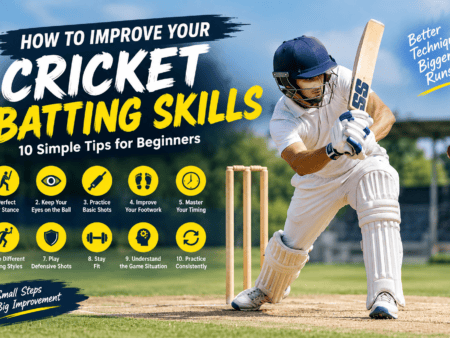

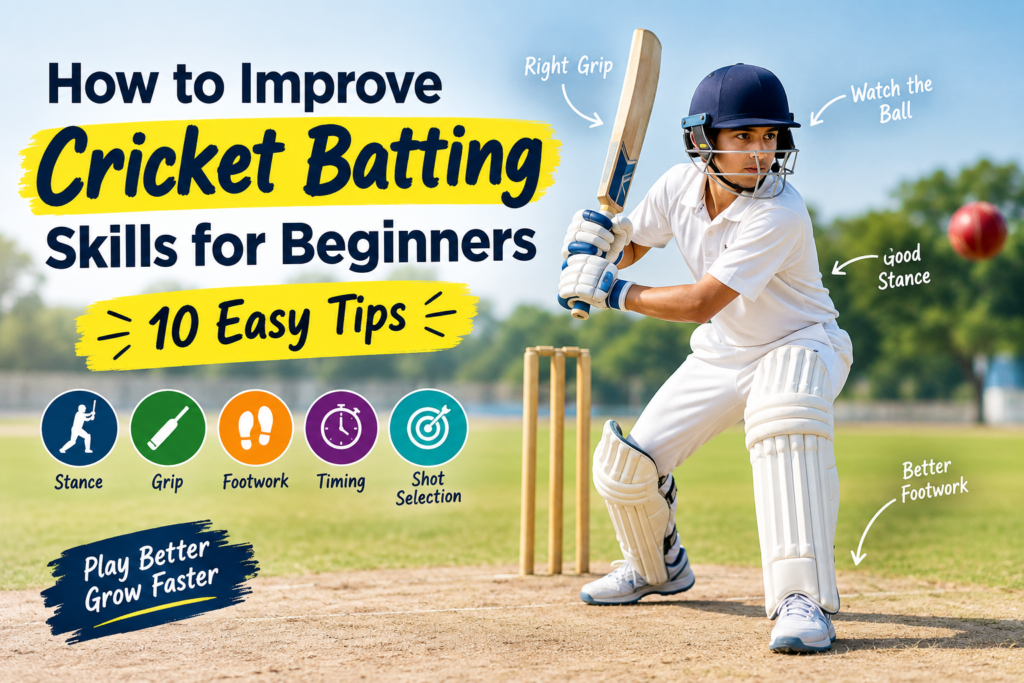
Cricket batting can look difficult when you are just starting, but with the right technique and regular practice, you can improve your skills step by step. Whether you play cricket casually or want to become a better batsman, focusing on your stance, grip, footwork, timing, and shot selection can make a big difference.
In this guide, we will explain how to improve cricket batting skills for beginners with simple and practical tips that you can use during your training sessions.
1. Learn the Correct Batting Stance
A good batting stance gives you balance and helps you react quickly to the ball.
Stand with your feet approximately shoulder-width apart and keep your knees slightly bent. Your body should feel relaxed rather than stiff. Keep your head steady and watch the bowler carefully.
A balanced stance makes it easier to move forward or backward depending on the delivery.
2. Hold the Cricket Bat Correctly
Your grip plays an important role in controlling the bat.
Hold the bat comfortably with both hands. Keep your hands close together and avoid gripping the handle too tightly. A relaxed grip can help you control your shots and play the ball with better timing.
Spend some time practicing your grip before moving on to more advanced batting drills.
3. Focus on Footwork
Good footwork is one of the most important cricket batting skills for beginners.
Try to move your feet toward the ball instead of reaching for it with your hands. For a fuller delivery, practice moving your front foot forward. For a shorter delivery, learn to move back and create enough space to play the shot.
Simple shadow-batting exercises can help you develop better movement.
4. Watch the Ball Carefully
One of the easiest ways to improve batting is to watch the ball from the bowler’s hand.
Avoid looking at the field or trying to guess the shot too early. Keep your eyes on the ball and focus on its line and length.
Better observation can help you make better decisions about which shot to play.
5. Practice Your Defensive Shots
Beginners often want to hit every ball for a boundary, but learning defense is equally important.
Practice playing straight defensive shots against good-length deliveries. Keep your head over the ball and maintain control of the bat.
A strong defensive technique can help you stay at the crease for longer and build confidence.
6. Improve Your Batting Timing
Timing is often more important than hitting the ball with maximum power.
Start with controlled shots and focus on meeting the ball at the right moment. Practice with gentle throwdowns before facing faster bowling.
As your timing improves, you can gradually work on stronger attacking shots.
7. Practice Basic Cricket Shots
Beginners should first learn the basic shots before trying advanced techniques.
Some useful shots to practice include:
- Straight drive
- Cover drive
- Square cut
- Pull shot
- Leg glance
- Defensive stroke
Practice each shot slowly and concentrate on your technique. Quality practice is more useful than simply hitting as many balls as possible.
8. Use Simple Batting Drills
Regular batting drills can improve coordination, balance, and confidence.
Try these beginner-friendly exercises:
Shadow Batting
Practice your stance, footwork, and shots without a ball. Repeat the movements slowly and focus on correct technique.
Throwdown Practice
Ask a partner to throw the ball toward you at a comfortable speed. Concentrate on timing and shot placement.
Front-Foot Drill
Practice moving forward and playing controlled straight shots.
Back-Foot Drill
Practice moving backward against shorter deliveries while maintaining balance.
9. Improve Hand-Eye Coordination
Good hand-eye coordination helps you connect the bat with the ball more consistently.
You can practice with simple catching exercises, tennis-ball drills, and controlled throwdowns. Start slowly and increase the difficulty as your coordination improves.
10. Learn to Choose the Right Shot
Good batting is not only about technique; it is also about decision-making.
Before playing a shot, consider the ball’s line and length. A full delivery may allow a front-foot shot, while a short delivery may require a different response.
Avoid trying to hit every delivery aggressively. Learning when to defend and when to attack is an important part of becoming a better batsman.
11. Practice Regularly
Consistency is essential when learning cricket batting.
Instead of practicing only occasionally, create a simple routine that you can follow regularly. Even short, focused sessions can help you develop better habits.
For example, a beginner could spend time on:
- 10 minutes of batting stance and grip
- 15 minutes of footwork drills
- 20 minutes of throwdowns
- 15 minutes of basic shots
- 10 minutes reviewing mistakes
Adjust the routine according to your age, experience, and available training time.
12. Learn From Your Mistakes
Making mistakes is a normal part of learning cricket.
After each practice session, think about what went wrong. Did you lose balance? Were you playing the ball too early? Did you move your feet enough?
Identifying small problems can help you improve your technique over time.
Common Cricket Batting Mistakes Beginners Should Avoid
Here are some common mistakes that can slow down your progress:
- Gripping the bat too tightly
- Standing too stiffly
- Not watching the ball properly
- Using only the hands instead of moving the feet
- Trying to hit every ball hard
- Ignoring defensive shots
- Practicing without focusing on technique
- Changing your batting technique too frequently
Work on one or two problems at a time instead of trying to change everything at once.
Frequently Asked Questions
How can I improve my cricket batting at home?
You can practice shadow batting, footwork, grip, balance, and basic batting movements at home. If you have enough safe space, simple tennis-ball drills can also help.
How long does it take to improve cricket batting?
Improvement depends on your starting skill level, practice frequency, coaching, and technique. Regular, focused practice can help you make gradual progress.
What is the most important batting skill for beginners?
Beginners should focus on a balanced stance, correct grip, watching the ball, footwork, and timing before concentrating heavily on power.
How can I improve my batting timing?
Practice controlled throwdowns and focus on watching the ball closely. Try to meet the ball at the correct moment rather than swinging as hard as possible.
Final Thoughts
Learning how to improve cricket batting skills for beginners takes patience and regular practice. Start with the basics: develop a balanced stance, use a comfortable grip, improve your footwork, watch the ball carefully, and practice your basic shots.
Don’t worry about hitting every ball for a boundary. Build your technique first, then gradually develop your timing, shot selection, and confidence.
With consistent practice and a focus on fundamentals, beginners can steadily become more confident and capable cricket batsmen.