

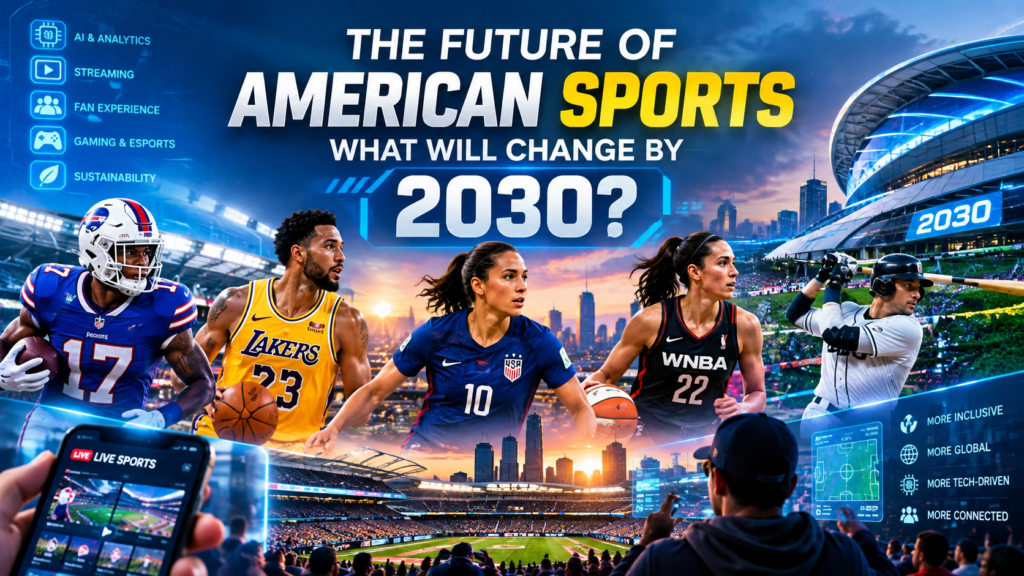
American sports are entering a new era. The way people watch games, follow athletes, interact with teams, and participate in sports is changing rapidly. Technology, social media, younger audiences, women’s sports, artificial intelligence, streaming platforms, and the growing popularity of soccer are all influencing the future of sports in the United States.
By 2030, American sports could look very different from today. Traditional leagues such as the NFL, NBA, MLB, and NHL will remain important, but the overall sports landscape is likely to become more digital, interactive, global, and personalized.
Here are some of the biggest changes that could shape American sports by 2030.
1. Streaming Will Become the Main Way Fans Watch Sports
Television has traditionally been the center of American sports broadcasting. However, streaming services are becoming increasingly important.
Younger fans are comfortable watching content on smartphones, tablets, computers, and smart TVs rather than relying only on traditional cable television. Sports organizations are also experimenting with digital platforms and direct-to-consumer viewing options.
By 2030, fans may have more choices about how they watch a game. Instead of subscribing to a large cable package, viewers could select specific leagues, teams, or events through streaming services.
This could make sports more accessible while also creating more competition among broadcasters.
2. Artificial Intelligence Will Transform Sports
Artificial intelligence is likely to become one of the most important technologies in sports.
Teams can use AI and advanced analytics to study player performance, identify patterns, evaluate opponents, and improve strategies. Coaches may receive increasingly detailed information about player workload, movement, and game performance.
AI could also change the fan experience.
Imagine watching a game and receiving personalized statistics based on your favorite player. An AI-powered system could explain important plays, summarize the game in real time, or answer questions while you watch.
By 2030, AI may become a normal part of both professional sports and sports media.
3. The Rise of Personalized Sports Content
Not every fan wants to watch an entire three-hour game.
Some people want highlights. Others want statistics, player interviews, short clips, or analysis of specific moments.
Future sports platforms are likely to become more personalized. Fans could receive content based on their favorite teams, athletes, leagues, and interests.
For example, an NBA fan could automatically receive highlights from their favorite team, while an NFL fan could receive only the most important plays from several games.
This personalization could make sports content more convenient and engaging.
4. Soccer Could Become Even More Important in America
Soccer has been growing in popularity across the United States.
The sport has a younger and increasingly diverse fan base, while major international tournaments and the growth of Major League Soccer have helped increase interest.
The 2026 FIFA World Cup hosted in North America is also expected to contribute to the sport’s visibility in the United States.
By 2030, soccer could have an even stronger position in American sports culture. More young athletes may choose soccer, more American fans may follow international leagues, and professional soccer could attract larger audiences.
The growth of soccer does not necessarily mean traditional American sports will disappear. Instead, the U.S. sports market may become more diverse.
5. Women’s Sports Will Continue to Grow
Women’s sports are becoming an increasingly important part of the American sports industry.
The WNBA, NWSL, women’s college basketball, and other women’s competitions are attracting more attention from fans, sponsors, broadcasters, and advertisers.
By 2030, women’s sports could have significantly larger audiences and stronger commercial opportunities.
More investment could lead to improved facilities, better media coverage, larger sponsorship deals, and greater visibility for female athletes.
This growth could also inspire more young girls to participate in organized sports.
6. Social Media Will Change How Fans Follow Athletes
Athletes are no longer dependent entirely on newspapers, television networks, or traditional sports media to communicate with fans.
Platforms such as TikTok, Instagram, YouTube, and other social networks allow athletes to build personal brands and communicate directly with millions of followers.
By 2030, social media could become even more important to sports.
Fans may follow an athlete’s life, training, opinions, behind-the-scenes content, and career journey almost as closely as their actual game performances.
This means athletes will increasingly function as both sports professionals and digital creators.
7. Young Fans Will Shape the Sports Industry
The next generation of American sports fans will have different expectations from previous generations.
Younger audiences have grown up with smartphones, short-form video, gaming, streaming, and social media. They often expect fast, interactive, and easily accessible content.
Sports organizations that successfully attract younger audiences may have a major advantage by 2030.
Teams could use interactive broadcasts, creator partnerships, gaming experiences, short-form videos, and social media communities to connect with younger fans.
The future of sports will therefore depend heavily on understanding what younger audiences want.
8. Sports and Gaming Will Become More Connected
Gaming and sports are already closely connected, but this relationship could become much stronger.
Sports video games allow fans to control teams and players, while esports creates another form of competitive entertainment.
By 2030, sports organizations could create more connections between live games, video games, fantasy sports, and digital communities.
A fan might watch an NFL game, participate in a fantasy competition, play a related video game, and interact with other fans through one connected digital ecosystem.
This could create new opportunities for teams and leagues to keep fans engaged throughout the year.
9. Stadiums Will Become More Technological
The stadium of 2030 could provide a very different experience from the stadium of today.
Technology may improve everything from ticketing and food ordering to navigation and entertainment.
Fans could use mobile devices for digital tickets, cashless purchases, instant replays, interactive statistics, and personalized experiences.
Smart stadium technology could also improve crowd management and security.
The goal will be to make attending a live game more convenient while giving fans experiences that they cannot get from watching at home.
10. Sports Analytics Will Become Even More Important
Data has already become a major part of professional sports.
Teams use statistics to evaluate players and make strategic decisions. As technology improves, the amount of available sports data will continue to increase.
Wearable devices, cameras, tracking systems, and advanced analytics could provide teams with deeper insights into performance.
By 2030, data-driven decision-making may influence everything from player recruitment to training and game strategy.
However, teams will still need experienced coaches and human judgment. Data can provide information, but understanding players and making decisions under pressure will remain important.
11. Athlete Health and Recovery Will Receive More Attention
The future of sports will not only be about performance. Athlete health is likely to become an even bigger priority.
Technology can help teams monitor workload, recovery, sleep, movement, and other performance indicators.
Better information could help coaches identify when athletes need additional recovery or when their workload should be adjusted.
By 2030, professional teams may have even more sophisticated systems for helping athletes remain healthy throughout long seasons.
12. American Sports Will Become More Global
American sports leagues already have international audiences.
The NFL has expanded its international presence, the NBA has a huge global following, and Major League Baseball has strong international connections.
This trend is likely to continue.
American teams and leagues may host more international events, create additional global partnerships, and reach new audiences through digital media.
At the same time, American fans will have easier access to sports from around the world.
This could create a two-way exchange in which American sports become more global while international sports become more influential in the United States.
13. Sports Betting and Fan Engagement Will Continue to Evolve
Sports betting has become an increasingly visible part of the American sports industry.
By 2030, technology could make sports-related entertainment even more interactive. Fans may have access to more real-time statistics, personalized information, and interactive features while watching games.
However, responsible gambling and consumer protections will remain important issues as this industry develops.
The sports industry will need to balance new commercial opportunities with responsible fan experiences.
14. Sustainability Will Become More Important
Sports organizations are also facing growing pressure to consider environmental sustainability.
Large stadiums and sporting events consume significant amounts of energy and resources.
By 2030, more teams and venues may invest in renewable energy, efficient buildings, recycling programs, sustainable transportation, and reduced waste.
Sustainability could become part of the identity of modern sports organizations.
Fans may increasingly expect their favorite teams and leagues to demonstrate environmental responsibility.
15. The Definition of a Sports Fan Will Change
Perhaps the biggest change by 2030 will be how people define themselves as sports fans.
A fan may no longer simply watch games on television.
They might follow athletes on social media, watch highlights on a phone, participate in fantasy sports, attend games, play sports video games, join online communities, and interact with other fans around the world.
Sports fandom will become more connected and interactive.
Instead of simply consuming sports, fans will increasingly participate in the sports ecosystem.
What Will American Sports Look Like in 2030?
By 2030, American sports are likely to be more digital, personalized, global, and technology-driven.
Traditional sports such as football, basketball, baseball, and hockey will continue to have strong fan bases. At the same time, soccer and women’s sports could gain even more influence.
Artificial intelligence, streaming, social media, wearable technology, data analytics, gaming, and smart stadiums could fundamentally change the way fans experience sports.
The most successful sports organizations will probably be those that combine tradition with innovation. Fans will continue to value the excitement of live competition, but they will expect technology to make that experience faster, easier, and more interactive.
Final Thoughts
The future of American sports is not simply about new technologies or bigger stadiums. It is about how sports connect people.
By 2030, fans could have more control over what they watch, how they watch it, and how they interact with their favorite teams and athletes.
The biggest leagues will continue to shape American culture, but the definition of sports entertainment will expand. Soccer, women’s sports, digital creators, gaming, AI, and global competitions will all play important roles.
One thing is certain: American sports will continue to evolve. The teams and organizations that understand changing fan expectations and embrace innovation will be best positioned for the next generation of sports.