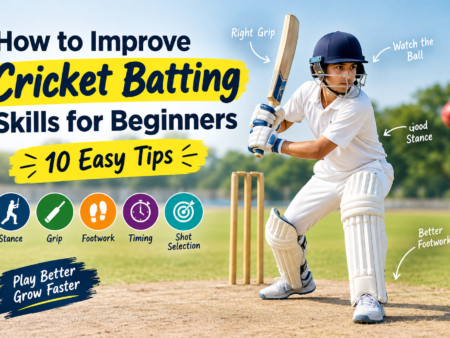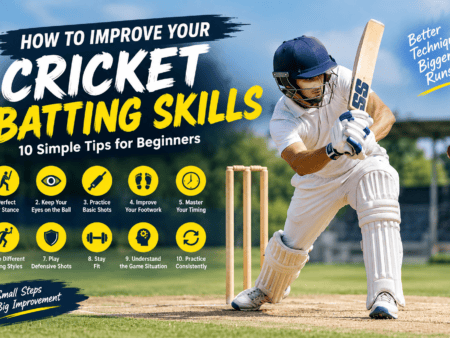

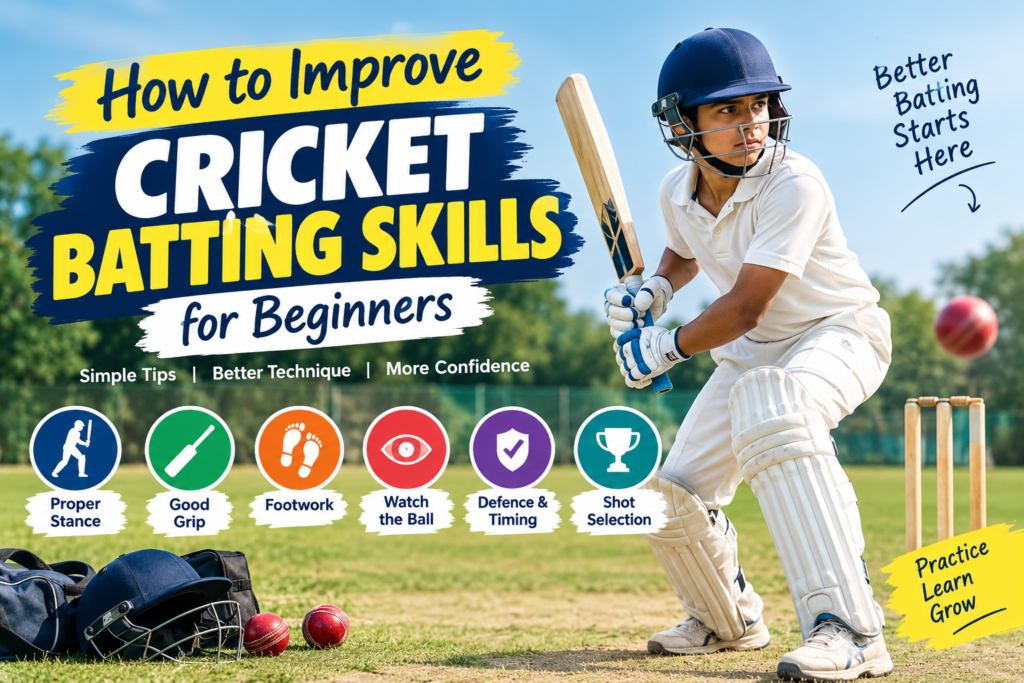
Cricket batting is a skill that improves with regular practice, patience, and a good understanding of the basics. Beginners often focus on hitting the ball hard, but successful batting is about much more than power. Good technique, balance, timing, footwork, shot selection, and concentration all play an important role.
If you are learning cricket and want to improve your batting skills, you do not need expensive equipment or complicated training methods. Consistent practice with the right techniques can help you become a more confident batter.
In this guide, we will cover some of the most useful cricket batting tips for beginners, including how to improve your stance, grip, footwork, timing, defense, and shot selection.
1. Learn the Correct Batting Stance
A good batting stance gives you a strong starting position.
Stand with your feet approximately shoulder-width apart and keep your body balanced. Your knees should be slightly relaxed rather than completely straight.
Keep your head steady and your eyes focused toward the bowler. Your weight should be balanced so that you can move forward or backward quickly.
A comfortable stance allows you to react to different types of deliveries.
Key points for a good batting stance:
- Keep your feet balanced.
- Relax your knees.
- Keep your head steady.
- Look toward the bowler.
- Hold the bat comfortably.
- Stay relaxed rather than tense.
Do not worry about copying a professional batter’s exact stance. Find a comfortable position that allows you to move naturally.
2. Improve Your Bat Grip
The way you hold the bat can affect your control and shot execution.
Hold the bat firmly enough to control it, but avoid gripping it extremely tightly. A relaxed grip can help you move the bat more naturally.
Your hands should work together rather than one hand doing all the work.
Practice your grip while standing in your batting stance. Make sure you can move the bat comfortably in different directions.
3. Focus on Footwork
Footwork is one of the most important cricket batting skills for beginners.
Good footwork helps you get into a better position to play the ball. Instead of standing in one place and swinging the bat, learn to move your feet according to the delivery.
For a shorter delivery, you may need to move backward or across. For a fuller delivery, moving forward can help you get closer to the ball.
Simple footwork practice
Ask a partner to gently throw balls toward you at different lengths. Instead of immediately trying to hit every ball, practice moving your feet into position first.
This teaches you to connect your movement with the length of the delivery.
4. Keep Your Eyes on the Ball
Watching the ball carefully is a basic but extremely important batting skill.
Try to follow the ball from the bowler’s hand until it reaches your bat. Avoid looking away too early.
When beginners become nervous, they may focus too much on where they want to hit the ball instead of watching the delivery.
Make watching the ball a habit during every practice session.
5. Practice Your Batting Defense
Every beginner wants to hit boundaries, but learning how to defend the ball is equally important.
A defensive shot can help you protect your wicket when a delivery is difficult to attack.
Practice playing straight defensive shots with a controlled bat. Focus on balance and keeping your head close to the line of the ball.
The objective is not to hit the ball as hard as possible. The objective is to control the delivery safely.
6. Improve Your Batting Timing
Good timing can be more useful than simply trying to hit the ball with maximum power.
A well-timed shot can travel quickly even when you do not use excessive force.
To improve timing, practice with controlled throws. Concentrate on meeting the ball at the correct moment rather than swinging as hard as possible.
A simple timing drill
Have a partner throw the ball gently from a short distance.
Start by playing straight shots. Focus on:
- Watching the ball.
- Moving your feet.
- Keeping your head steady.
- Meeting the ball with control.
- Following through naturally.
Repeat the drill regularly and gradually increase the difficulty.
7. Learn Basic Cricket Shots
Beginners should first focus on learning the fundamental shots instead of trying complicated techniques.
Some basic cricket shots include:
- Straight drive
- Cover drive
- Square cut
- Pull shot
- Hook shot
- Defensive stroke
- On drive
- Leg glance
You do not need to master all of these immediately.
Start with straight shots and defensive techniques. Once your basic technique improves, gradually practice other shots.
8. Practice the Straight Drive
The straight drive is one of the fundamental cricket shots.
It is generally played to a fuller delivery in front of the batter. The shot requires balance, controlled footwork, and a straight bat.
When practicing, focus on keeping your head steady and moving toward the ball.
Do not focus only on hitting the ball hard. Work on your technique and direction.
9. Improve Your Shot Selection
Knowing which ball to hit and which ball to leave is an important part of batting.
Beginners sometimes try to attack almost every delivery. This can result in unnecessary mistakes.
Instead, learn to judge the line and length of the ball.
Ask yourself:
- Is the ball too far away from me?
- Is it short or full?
- Is it close enough to attack?
- Can I play it safely?
- Should I defend or leave it?
Good shot selection develops with practice and match experience.
10. Practice Against Different Deliveries
A batter should learn how to respond to different types of bowling.
Practice against:
- Full deliveries
- Good-length deliveries
- Short deliveries
- Straight deliveries
- Balls outside off stump
- Deliveries on the leg side
You can begin with slower practice throws and gradually increase the challenge.
The goal is to become comfortable responding to different situations.
11. Improve Your Reaction Time
Cricket can require quick decisions, especially when facing faster bowling.
Simple reaction drills can help you practice responding to moving objects.
For example, a partner can throw tennis balls from different angles while you focus on watching and reacting to them.
Always keep drills controlled and appropriate for your skill level.
12. Use a Tennis Ball for Practice
Tennis-ball cricket can be a convenient way for beginners to practice batting.
You can practice basic movements in a safe and controlled environment, provided you have enough space and appropriate safety precautions.
Tennis-ball drills can help you work on:
- Timing
- Hand-eye coordination
- Footwork
- Shot control
- Reaction speed
Focus on technique rather than simply trying to hit the ball as far as possible.
13. Practice Batting Against a Wall
If you do not have a regular training partner, wall drills can provide a simple practice option.
Using an appropriate ball and safe space, gently play the ball toward a wall and prepare for its return.
You can practice controlling the ball with the bat and maintaining your stance.
Make sure the area is suitable for practice and that people or breakable objects are not nearby.
14. Improve Hand-Eye Coordination
Hand-eye coordination is essential for batting.
Simple ball-catching and controlled throwing exercises can help you develop coordination.
For example, practice catching a tennis ball with one hand and then the other. You can also ask a partner to throw balls at different heights and speeds.
These exercises can make it easier to track the ball while batting.
15. Work on Your Batting Balance
Balance helps you maintain control during a shot.
After playing a shot, you should ideally remain stable rather than losing your balance.
Practice slowly at first. Play each shot while focusing on your body position.
If you consistently fall away from the ball or lose your balance, reduce the speed of the drill and focus on your basic movement.
16. Develop a Regular Cricket Practice Routine
Random practice can be less useful than a structured routine.
You can divide your practice session into different sections.
Example beginner batting routine
10 minutes — Warm-up
Light movement and mobility exercises.
15 minutes — Stance and grip
Practice your setup and bat movement.
20 minutes — Front-foot shots
Practice controlled shots against fuller deliveries.
20 minutes — Back-foot movement
Practice responding to shorter deliveries.
15 minutes — Defense
Practice defensive shots and leaving difficult balls.
10 minutes — Reaction drills
Use controlled ball drills to improve coordination.
Adjust the routine according to your age, fitness level, experience, and available training space.
17. Practice With a Partner
Training with a partner can make batting practice more realistic.
One person can bowl or throw while the other practices batting. You can then switch roles.
Your partner can also provide simple feedback about:
- Head position
- Footwork
- Balance
- Shot selection
- Bat control
However, feedback should focus on specific technical points rather than trying to change everything at once.
18. Learn From Your Mistakes
Mistakes are a normal part of learning cricket.
If you repeatedly get out playing a particular shot, try to understand why it is happening.
For example, you may be:
- Playing the shot too early.
- Playing the shot too late.
- Moving your feet incorrectly.
- Losing balance.
- Trying to hit the ball too hard.
- Choosing the wrong delivery to attack.
Identifying the problem allows you to make your practice more focused.
19. Stay Patient During Practice
Batting skills do not usually improve overnight.
Some days your timing may feel excellent, while other days your shots may not work as expected.
Do not become frustrated by individual mistakes. Focus on gradual improvement.
Consistent practice is more useful than practicing intensely for one day and then stopping for several weeks.
20. Build Confidence Through Match Practice
Practice sessions and real matches are different experiences.
During a match, you may face pressure, fielders, changing bowling strategies, and different game situations.
Playing regular friendly matches can help you become more comfortable making decisions under pressure.
Start by focusing on simple goals, such as watching the ball carefully and choosing sensible shots.
Common Batting Mistakes Beginners Should Avoid
Trying to Hit Every Ball
Not every delivery needs an attacking shot. Learn to defend or leave balls when appropriate.
Holding the Bat Too Tightly
An extremely tight grip can make your bat movement feel restricted. Keep your grip controlled and comfortable.
Ignoring Footwork
Standing in one place can make it difficult to play different deliveries. Practice moving your feet toward the ball.
Watching the Ball Too Late
Try to track the delivery from the bowler’s hand rather than reacting only when the ball is close.
Focusing Only on Power
Power is useful, but timing, balance, and placement are also important.
Changing Technique Too Often
Constantly changing your stance or grip can make it harder to develop consistency. Make changes gradually and preferably with qualified coaching when possible.
How Long Does It Take to Improve Cricket Batting?
There is no fixed amount of time required to improve batting skills.
Your progress can depend on your current ability, practice frequency, coaching, physical development, and experience.
Instead of asking how quickly you can become an excellent batter, focus on measurable improvements.
For example:
- Better balance
- More controlled shots
- Improved footwork
- Better timing
- Fewer unnecessary attacking shots
- Greater confidence against different deliveries
Small improvements can add up over time.
Tips for Improving Cricket Batting at Home
If you cannot visit a cricket academy every day, you can still practice basic skills at home when you have a safe and suitable space.
Try:
- Shadow batting
- Grip practice
- Stance practice
- Controlled tennis-ball drills
- Reaction exercises
- Wall-ball exercises
- Footwork movements
Always make sure your practice area is safe and that your equipment is appropriate.
Frequently Asked Questions
How can a beginner improve cricket batting?
A beginner can improve by practicing the basics consistently, including stance, grip, footwork, watching the ball, defensive technique, timing, and shot selection.
How can I improve my batting timing?
Practice controlled throws and focus on watching the ball, moving into position, and meeting the ball at the correct moment. Avoid trying to hit every ball with maximum power.
Which cricket shots should beginners learn first?
Beginners can start with defensive strokes and basic straight-bat shots before gradually learning more advanced shots.
How often should I practice cricket batting?
The ideal practice schedule depends on your age, fitness, experience, and goals. Regular, manageable practice is generally more useful than occasional intense sessions.
Can I improve cricket batting at home?
Yes. Basic skills such as stance, grip, footwork, coordination, and shadow batting can be practiced at home if you have a safe and appropriate space.
Final Thoughts
Improving cricket batting skills takes time, practice, and patience. Beginners should focus on building a strong foundation rather than trying to copy advanced techniques immediately.
Start with your batting stance, grip, footwork, balance, and ability to watch the ball. Then gradually work on timing, shot selection, and different cricket shots.
Most importantly, practice consistently and learn from your mistakes. With regular training and a positive approach, you can steadily develop better cricket batting skills and become more confident at the crease.