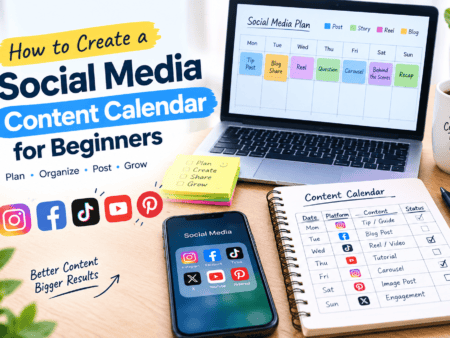

Social media has become an important part of how people discover brands, businesses, creators, products, and useful information. Whether you are a small business owner, freelancer, blogger, student, content creator, or online entrepreneur, having a strong social media presence can help you reach the right audience and build trust over time.
However, simply creating accounts on Instagram, Facebook, TikTok, LinkedIn, or other platforms is not enough. A successful social media presence requires a clear strategy, consistent content, audience understanding, and regular improvement.
In 2026, users are exposed to a huge amount of content every day. This makes it important to create content that is useful, authentic, easy to understand, and relevant to your target audience.
This guide explains how to build a strong social media presence in 2026, even if you are starting from zero.
What Is a Social Media Presence?
A social media presence is the way a person, business, website, or brand appears and interacts on social media platforms.
It includes:
- Your social media profiles
- Your profile picture and bio
- The content you publish
- Your posting frequency
- Your interaction with followers
- Your brand voice
- Comments and replies
- Videos, images, and other content
- How people recognize your brand online
A strong social media presence is not necessarily about having millions of followers. It is about building a recognizable and trustworthy presence among the people who are interested in what you offer.
Why Is Social Media Presence Important in 2026?
Social media can help businesses and creators communicate directly with their audiences.
A well-managed social media account can help you:
- Increase brand awareness
- Build relationships with your audience
- Drive visitors to your website
- Promote products or services
- Share educational content
- Generate leads
- Build credibility
- Understand customer interests
- Develop a community around your brand
For bloggers and website owners, social media can also provide another channel for distributing articles and reaching people who may not discover the website through search engines alone.
1. Define Your Social Media Goals
Before creating content, decide what you want to achieve.
Different people have different goals. For example, a blogger may want website traffic, while an online store may want product awareness or sales.
Your goals could include:
- Getting more website visitors
- Increasing brand awareness
- Building an online community
- Generating leads
- Promoting products
- Growing an audience
- Improving engagement
- Establishing expertise in a niche
Try to choose a few clear goals instead of trying to achieve everything at once.
For example:
Goal: Increase website traffic.
Strategy: Publish useful short-form content and share relevant blog posts that encourage interested users to visit the website.
Clear goals make it easier to decide what type of content you should create.
2. Choose the Right Social Media Platforms
You do not need to be active on every social media platform.
Instead, focus on platforms where your target audience is most likely to spend time.
For example:
- Instagram: Visual content, short videos, lifestyle, beauty, fashion, and brands
- Facebook: Communities, businesses, groups, and general audiences
- TikTok: Short-form videos and entertaining or educational content
- LinkedIn: Professional content, business, careers, and networking
- Pinterest: Visual discovery, ideas, guides, design, fashion, food, and lifestyle
- YouTube: Long-form videos, tutorials, reviews, and educational content
Your choice should depend on your audience, content type, and goals.
It is usually better to manage two or three platforms consistently than to create many profiles that you rarely update.
3. Optimize Your Social Media Profiles
Your profile is often the first thing people see when they discover you.
Make sure your profile clearly explains who you are and what you provide.
Important profile elements include:
Profile picture: Use a clear and recognizable image or logo.
Username: Keep it simple and consistent across platforms when possible.
Bio: Explain what your page is about and who it helps.
Website link: Add your website or an appropriate landing page where available.
Contact information: Businesses can provide relevant contact options.
For example, instead of a vague bio such as:
“Welcome to my page.”
You could write:
“Practical technology, business, and digital marketing tips for beginners.”
This immediately tells visitors what they can expect.
4. Understand Your Target Audience
One of the most important parts of social media marketing is understanding your audience.
Ask yourself:
- Who am I creating content for?
- What problems do they have?
- What questions do they ask?
- What information do they want?
- What type of content do they enjoy?
- What language and communication style do they prefer?
For example, if your audience consists of beginner bloggers, content about SEO basics, keyword research, content writing, backlinks, and website growth may be more useful than highly advanced technical topics.
The better you understand your audience, the easier it becomes to create relevant content.
5. Create a Clear Content Strategy
A content strategy is a plan for what you will publish and why.
Without a strategy, you may publish random posts without building a recognizable theme.
Start by selecting several content categories, also called content pillars.
For example, a digital marketing page could use these pillars:
- SEO tips
- Social media tips
- Blogging advice
- Content marketing
- Online business tips
These categories give you a framework for creating content consistently.
6. Create Different Types of Content
Posting the same type of content repeatedly can become boring.
Experiment with different formats.
Educational Content
Teach your audience something useful.
Examples:
- “5 SEO Mistakes Beginners Should Avoid”
- “How to Write a Better Blog Introduction”
- “What Is Keyword Research?”
Short Videos
Short-form videos can be used to explain tips quickly.
For example:
“3 Social Media Mistakes Small Businesses Make”
Keep the message focused on one useful idea.
Carousels
Carousel posts can break a topic into several easy-to-read slides.
For example:
Slide 1: How to Improve Your Social Media Profile
Slide 2: Use a clear profile picture
Slide 3: Write a useful bio
Slide 4: Add your website
Slide 5: Create consistent content
Behind-the-Scenes Content
People often enjoy seeing how something is created.
You could show:
- Your workspace
- Content creation process
- Product packaging
- Blog writing process
- Website updates
- Planning sessions
Questions and Polls
Interactive content can encourage people to participate.
For example:
“Which social media platform do you use most?”
This can also help you understand your audience.
7. Focus on Providing Value
One of the biggest mistakes on social media is focusing only on promotion.
If every post tells people to buy something, visit a website, or contact you, followers may lose interest.
Instead, balance promotional posts with useful content.
A simple approach is to create content that:
- Educates
- Answers questions
- Solves problems
- Entertains
- Inspires
- Starts conversations
When people consistently find your content useful, they have a reason to follow your account.
8. Be Consistent With Your Posting
Consistency is more important than posting a huge amount of content for a short period and then disappearing.
Create a realistic schedule that you can maintain.
For example:
Monday: Educational post
Tuesday: Short video
Wednesday: Tip or checklist
Thursday: Question or poll
Friday: Blog or product-related content
Saturday: Short video
Sunday: Weekly recap or community post
You can adjust this schedule according to your available time and the platforms you use.
The key is to create a system that you can realistically maintain.
9. Create Strong Captions
A good caption can provide context and encourage people to interact with your post.
A simple caption structure is:
Hook → Value → Call to Action
For example:
Hook: “Struggling to get engagement on social media?”
Value: “Start by creating content that answers specific questions your audience is already asking.”
Call to Action: “Which social media platform are you focusing on?”
Your opening line should give people a reason to continue reading.
10. Use Strong Visuals
Visual quality matters because social media is highly visual.
Your images and videos should be:
- Clear
- Easy to understand
- Relevant to the topic
- Consistent with your brand
- Easy to read on mobile devices
You do not always need expensive equipment.
A smartphone, good lighting, simple design, and clear messaging can be enough to create useful content.
11. Use AI as a Content Assistant
AI tools can help with parts of your social media workflow.
For example, you can use AI to:
- Brainstorm content ideas
- Create content outlines
- Rewrite captions
- Generate headline ideas
- Organize a content calendar
- Suggest questions for your audience
- Repurpose existing content
However, AI-generated content should be reviewed and customized before publishing.
Add your own experience, examples, opinions where appropriate, and brand personality. This helps make your content more useful and authentic.
12. Engage With Your Audience
Social media is not only about publishing posts.
You also need to communicate with your audience.
Try to:
- Reply to comments
- Answer questions
- Respond to relevant messages
- Thank people for useful feedback
- Participate in appropriate conversations
- Ask your followers questions
For example, if someone comments with a question about your post, provide a helpful answer instead of simply replying with an emoji.
Genuine interaction can help create a stronger online community.
13. Build a Recognizable Brand Style
Consistency can make your social media profile easier to recognize.
Consider using consistent:
- Logo
- Profile picture
- Typography
- Visual style
- Writing style
- Content themes
Your brand does not need to look identical on every platform, but people should still be able to recognize your content.
For example, a technology blog could use a clean, modern visual style and consistently publish practical technology tips.
14. Use Hashtags Carefully
Hashtags can help categorize content and make it easier for users to discover relevant posts on platforms where hashtags remain useful.
Instead of adding a huge number of unrelated hashtags, use hashtags that are genuinely connected to your content.
For example, a post about beginner SEO could use relevant terms such as:
- #SEO
- #SEOTips
- #DigitalMarketing
- #BloggingTips
- #ContentMarketing
The exact hashtag strategy should be adapted to the platform and your audience.
15. Repurpose Your Existing Content
Creating completely new content every day can take a lot of time.
One useful strategy is content repurposing.
For example, one detailed blog post can become:
- One LinkedIn post
- One Facebook post
- Several short tips
- A carousel
- A short video
- A list of questions
- A social media infographic
This allows you to get more value from content you have already created.
For bloggers, content repurposing can be particularly useful because one article can become multiple social media posts that point interested users back to the original article.
16. Track Your Social Media Performance
Do not rely only on follower numbers.
Look at different performance indicators, depending on your goals.
These can include:
- Reach
- Impressions
- Engagement
- Comments
- Shares
- Saves
- Profile visits
- Link clicks
- Website traffic
- Leads
For example, if your goal is website traffic, link clicks and website visits may be more useful indicators than simply counting followers.
Review your performance regularly and identify which content receives meaningful responses from your audience.
17. Learn From Your Best-Performing Content
When a post performs well, analyze why.
Ask:
- What topic did I cover?
- What was the opening hook?
- Was the format different?
- Did the post answer a common question?
- Did people share or save it?
- Was the caption easy to understand?
You can then create more content around related topics.
This does not mean copying the same post repeatedly. Instead, use successful content as a signal about what your audience finds useful.
18. Avoid Buying Followers
Buying followers may make an account appear larger, but follower count alone does not create a genuine community.
A strong social media presence is built through real people who are interested in your content.
Focus on:
- Useful content
- Consistent publishing
- Authentic engagement
- Relevant topics
- Community building
Organic growth may take time, but it gives you a better opportunity to build meaningful relationships with your audience.
19. Avoid Posting Without a Purpose
Before publishing a post, ask:
“Why should my audience care about this?”
If the answer is unclear, improve the content before posting it.
Every post does not need to sell something. But it should ideally provide some kind of value, information, entertainment, inspiration, or conversation.
20. Build a Simple 30-Day Social Media Plan
If you are starting from zero, do not try to create a complicated strategy.
Here is a simple 30-day approach.
Week 1: Setup
- Choose your main platforms
- Optimize your profiles
- Define your audience
- Select content categories
- Create a basic content calendar
Week 2: Start Publishing
Publish useful educational content.
Test different formats such as images, short videos, text posts, and carousels.
Week 3: Focus on Engagement
Ask questions, respond to comments, and learn which topics attract the most interest.
Week 4: Analyze and Improve
Review your performance.
Identify:
- Most useful topics
- Strongest formats
- Posts with meaningful engagement
- Content that generated website visits
- Questions from your audience
Then use these insights to plan the next month.
Social Media Content Ideas for 2026
If you need ideas for your content calendar, try these:
- Beginner tips
- Common mistakes
- Step-by-step tutorials
- Frequently asked questions
- Industry news and updates
- Helpful checklists
- Before-and-after processes
- Behind-the-scenes posts
- Short educational videos
- Customer or audience questions
- Useful tools
- Myths and facts
- Beginner guides
- Quick tips
- Weekly summaries
The best topics will depend on your niche and audience.
Frequently Asked Questions
How long does it take to build a strong social media presence?
There is no fixed timeline. It depends on your niche, content quality, consistency, audience, platform, and strategy. Focus on building useful content and meaningful engagement rather than expecting instant results.
How often should I post on social media?
There is no single posting frequency that works for everyone. Start with a schedule you can maintain consistently and adjust it based on your results.
Should I use every social media platform?
No. Choose platforms that fit your audience and content. Managing a smaller number of platforms consistently can be easier than trying to maintain every platform.
Can AI help with social media marketing?
Yes. AI can assist with brainstorming, planning, writing drafts, and repurposing content. However, review AI-generated material and add your own knowledge and perspective before publishing.
How can a small business grow on social media?
A small business can focus on a specific audience, publish useful content, show products or services clearly, interact with customers, and maintain a consistent brand presence.
Are followers the most important social media metric?
Not necessarily. The most useful metric depends on your goal. Reach, engagement, shares, saves, clicks, website traffic, and leads can all provide useful information.
Final Thoughts
Building a strong social media presence in 2026 is not about posting as much as possible. It is about creating a clear strategy and consistently providing something useful to the people you want to reach.
Start by defining your goals, choosing the right platforms, optimizing your profiles, understanding your audience, and creating a practical content strategy.
Then focus on useful content, consistent publishing, genuine engagement, and regular performance analysis.
You do not need millions of followers to create a valuable social media presence. A focused audience that trusts your content can be much more meaningful than a large audience with little interest in what you offer.
Start small, stay consistent, learn from your results, and improve your strategy over time.