

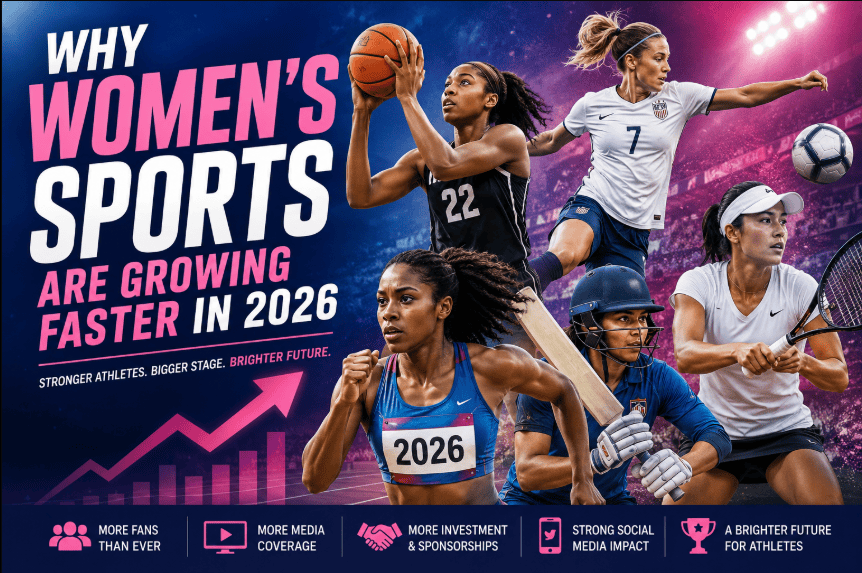
Women’s sports are entering one of the most exciting periods in their history. In 2026, more fans are watching women’s competitions, more brands are investing in female athletes, and sports organizations are giving greater attention to women’s leagues and tournaments.
What was once treated as a secondary part of the sports industry is becoming an important and rapidly growing market. From basketball and soccer to tennis, cricket, volleyball, and emerging sports, female athletes are attracting larger audiences and creating new opportunities.
But why are women’s sports growing so quickly in 2026? Several important factors are driving this change.
Rising Interest in Women’s Sports
One of the biggest reasons for the growth of women’s sports is the increasing interest from fans. Sports audiences are no longer limited to traditional men’s competitions. Millions of people are actively following female athletes, teams, leagues, and major tournaments.
Fans can now watch games through television, streaming platforms, social media, and sports websites. This easier access has helped women’s sports reach audiences that may not have followed them in the past.
Younger fans are particularly important to this growth. Many younger viewers discover athletes through short-form videos, social media posts, interviews, and behind-the-scenes content.
More Media Coverage
Media coverage has a major influence on the popularity of sports. In the past, women’s competitions often received significantly less coverage than men’s sports.
That situation is changing.
Sports networks, digital publishers, streaming services, and social media platforms are giving women’s competitions more visibility. Major games and tournaments are increasingly promoted before they take place, while highlights and analysis are shared after competitions.
Greater coverage creates a positive cycle. More coverage brings more viewers, more viewers attract sponsors, and stronger sponsorship opportunities help sports organizations invest in better competitions.
Social Media Is Helping Female Athletes Build Personal Brands
Social media has become one of the most powerful tools for women athletes.
Platforms such as Instagram, TikTok, YouTube, and other digital channels allow athletes to communicate directly with fans. They can share training sessions, match highlights, personal stories, interviews, and everyday experiences.
This creates a stronger connection between athletes and their audiences.
A successful athlete no longer needs to depend entirely on traditional sports media to become recognizable. A single viral video can introduce an athlete to millions of people around the world.
Social media also gives female athletes greater control over their public image and personal brands. This can create additional opportunities with sponsors and businesses.
Growing Sponsorship and Investment
Money is another major factor behind the growth of women’s sports.
As audiences become larger, brands see greater opportunities to connect with sports fans through female athletes and competitions. Sponsorships can provide leagues and teams with additional resources for marketing, facilities, player development, events, and professional operations.
Investment can also improve the overall quality of competition.
Better facilities, coaching, training programs, medical support, technology, and professional management can help athletes perform at higher levels.
This creates another growth cycle: better investment can lead to better competitions, which can attract more fans and generate even greater commercial interest.
Professional Leagues Are Becoming More Important
Professional women’s leagues are also playing an important role in the expansion of women’s sports.
Strong professional competitions give talented athletes a clear pathway from youth and college sports into professional careers. They also provide fans with teams and players they can follow throughout an entire season.
In the United States, women’s basketball and soccer have received significant attention, while other sports are also developing new audiences.
The growth of professional leagues can create more jobs for athletes, coaches, broadcasters, analysts, trainers, and other sports professionals.
Female Athletes Are Becoming Role Models
Another important reason for the growth of women’s sports is the influence of female athletes on younger generations.
Successful athletes can inspire young girls to participate in sports and develop their skills. Seeing women compete at professional levels can help demonstrate that sports can provide opportunities for competition, education, careers, leadership, and personal development.
Female athletes are also increasingly recognized beyond their performances. Their stories, personalities, achievements, and community work can make them influential figures both inside and outside sports.
Technology Is Changing the Fan Experience
Technology is making women’s sports easier to follow and understand.
Streaming services allow fans to watch competitions from almost anywhere. Mobile devices make it possible to follow scores, highlights, statistics, and breaking sports news throughout the day.
Sports technology is also improving athlete performance. Teams can use data analysis, wearable devices, video technology, and performance tracking to understand training and competition more effectively.
As technology becomes more accessible, it can help women’s sports organizations improve both the athlete experience and the fan experience.
More Opportunities for Young Athletes
The development of women’s sports is also creating more opportunities at the grassroots level.
Youth programs, school competitions, academies, colleges, and community sports organizations are providing more opportunities for girls to participate in organized sports.
When more young athletes have access to coaching and competition, the talent pool becomes larger.
Over time, this can lead to more highly skilled athletes entering professional competitions.
Global Growth of Women’s Sports
The growth of women’s sports is not limited to one country.
Women’s competitions are attracting audiences across Europe, Asia, North America, Africa, Australia, and other regions. International tournaments allow athletes to reach global audiences and create new fan communities.
Sports such as soccer, basketball, tennis, cricket, athletics, volleyball, and many others are benefiting from increased international attention.
Global digital platforms make this growth even easier because fans can follow athletes and teams regardless of where they live.
Why 2026 Could Be an Important Year
The year 2026 represents an important stage in the development of women’s sports.
The foundations have already been built through increasing participation, improved professional leagues, stronger media coverage, digital communities, and growing commercial interest.
The next stage is about maintaining that momentum.
Sports organizations will need to continue investing in athletes, facilities, broadcasting, marketing, youth development, and professional opportunities. Brands will also need to recognize that women’s sports audiences are valuable and diverse.
If this momentum continues, women’s sports could become an even larger part of the global sports industry.
The Future of Women’s Sports
The future looks promising.
More young girls are participating in sports, more fans are following female athletes, and more organizations are recognizing the commercial and social value of women’s competitions.
However, continued growth will require long-term investment rather than short-term attention. Sustainable leagues, fair opportunities, strong leadership, quality facilities, and consistent media coverage will all be important.
The biggest opportunity may be that women’s sports are no longer simply being introduced to new audiences. They are developing their own loyal fan bases, stars, rivalries, communities, and sporting traditions.
Conclusion
Women’s sports are growing faster in 2026 because several forces are working together. Rising fan interest, stronger media coverage, social media, sponsorships, professional leagues, technology, and increased opportunities for young athletes are helping transform the industry.
The growth of women’s sports is about more than larger audiences. It represents a broader change in how athletes, fans, brands, and sports organizations view women’s competition.
As investment and interest continue to increase, 2026 could become another important chapter in the continuing rise of women’s sports.