
Introduction
Sports play an important role in maintaining an active lifestyle, developing physical skills, and building confidence. Whether you enjoy soccer, basketball, football, cricket, tennis, or running, improving your performance requires regular practice and healthy habits.
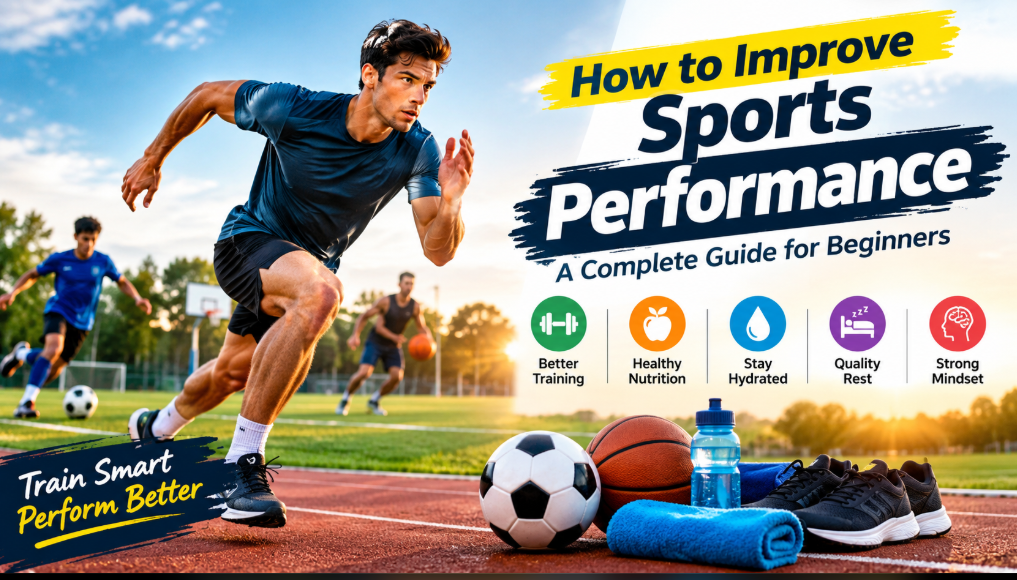
Many beginners believe that becoming a successful athlete depends entirely on natural talent. However, consistent training, proper nutrition, sufficient sleep, and mental preparation are also important factors. Even small improvements in daily habits can help athletes develop their skills over time.
In the United States, people of different ages participate in sports at schools, colleges, recreational clubs, and professional organizations. Regardless of your experience level, learning the fundamentals can help you enjoy sports while working toward your personal goals.
In this guide, we will explain how beginners can improve sports performance through practical and sustainable methods.
1. Create a Consistent Training Schedule
Consistency is one of the most important parts of improving sports performance. Practicing occasionally may help you become familiar with a sport, but a regular schedule allows you to develop skills and understand your strengths and weaknesses.
Start by choosing specific days and times for your practice sessions. Your schedule should match your experience, school or work responsibilities, and recovery needs.
For example, a beginner soccer player might spend one session practicing passing, another working on ball control, and another participating in a friendly game.
Avoid training intensely every day without enough recovery. A balanced schedule should include easier sessions and rest days when necessary.
Pro tip: Set a small goal for every practice session. Working on one or two skills at a time can make training more organized and productive.
2. Focus on the Fundamentals of Your Sport
Every sport has basic techniques that help players perform effectively. Learning these fundamentals is especially important for beginners because good habits can support long-term development.
Soccer players should practice passing, dribbling, shooting, and positioning. Basketball players can focus on ball handling, shooting technique, footwork, and teamwork. Cricket players can improve their batting stance, bowling technique, catching, and fielding.
You do not need advanced equipment to practice many basic skills. A suitable open space, a ball, and a regular practice routine may be enough to get started.
Pay attention to technique instead of trying to perform difficult movements too quickly. If possible, ask a qualified coach or experienced instructor to help you identify areas for improvement.
3. Develop Strength and Endurance
Strength and endurance can support athletic performance in many sports. Strength helps you perform movements that require force, while endurance helps you remain active during longer periods of exercise.
Beginners can build a balanced fitness routine with activities such as walking, cycling, swimming, and age-appropriate bodyweight exercises.
Depending on your sport and experience, exercises may include squats, modified push-ups, controlled lunges, and basic balance activities. Learn the correct technique before increasing the difficulty.
Endurance can be developed gradually through activities that raise your heart rate at a manageable intensity.
Avoid copying demanding training routines designed for professional athletes. Your exercise plan should reflect your current abilities, and you should stop if you experience unusual symptoms or significant pain.
4. Eat Balanced Meals for Better Performance
Nutrition provides the energy and nutrients your body needs for exercise, growth, and recovery. Athletes benefit from eating a variety of foods rather than depending on a single food group.
Carbohydrates, including rice, oats, potatoes, whole-grain bread, and fruit, provide an important source of energy. Protein-rich foods such as eggs, beans, lentils, fish, chicken, and yogurt support normal muscle maintenance and repair.
Healthy fats from nuts, seeds, and suitable oils also contribute to a balanced diet. Fruits and vegetables provide vitamins, minerals, and fiber.
Try to eat regular, balanced meals and snacks according to your hunger and activity level. Avoid skipping meals to improve performance or following restrictive diets without appropriate professional guidance.
There is no single perfect diet for every athlete. Food choices can vary according to personal preferences, culture, availability, and individual nutritional needs.
5. Stay Hydrated Before, During, and After Exercise
Hydration is essential for normal body functions, especially when exercising in warm weather or participating in demanding sports.
Drink water regularly throughout the day. During training, take appropriate water breaks and pay attention to thirst, temperature, and exercise intensity.
Athletes practicing outdoors in hot parts of the United States may need to be particularly careful about heat and fluid loss. Whenever possible, schedule demanding outdoor activities during cooler periods and take breaks in shaded areas.
For most everyday exercise sessions, water is an appropriate choice. Longer or particularly demanding activities may require a more individualized hydration plan.
Do not ignore symptoms such as dizziness, confusion, or feeling unusually unwell in the heat. Stop exercising and seek appropriate help if concerning symptoms occur.
6. Make Sleep and Recovery a Priority
Training is only one part of athletic development. Recovery allows your body and mind to prepare for future activities.
Insufficient sleep may affect concentration, reaction time, mood, and physical performance. Establishing a consistent bedtime and creating a comfortable sleeping environment can support better rest.
Recovery also involves balancing demanding practices with lighter activities and rest days. Walking gently or performing comfortable mobility exercises may be suitable on easier days, depending on your needs.
Avoid believing that more training always produces better results. Exercising excessively without adequate recovery can contribute to fatigue and increase the risk of injury.
If you experience persistent pain, unusual exhaustion, or a noticeable decline in performance, reduce the intensity of your activities and consider consulting a qualified healthcare professional.
7. Improve Mental Focus and Confidence
Sports performance is not only physical. Concentration, communication, patience, and emotional control can influence how athletes respond during practice and competition.
Set realistic goals that focus on improvement rather than perfection. For example, a basketball player might aim to improve passing decisions, while a soccer player might work on communicating more effectively with teammates.
Visualization can also be useful. Before a practice session, imagine yourself performing a familiar skill with good technique and making thoughtful decisions.
Mistakes are a normal part of learning. Instead of becoming discouraged after a poor performance, identify one thing you can learn and apply during your next session.
Remember that progress looks different for everyone. Focus on your own development rather than constantly comparing yourself with professional athletes or other players.
8. Warm Up Properly Before Playing
A warm-up gradually prepares your body for more demanding physical activity. It can help you transition from rest to exercise and practice movements relevant to your sport.
Start with several minutes of comfortable movement, such as brisk walking or light jogging. Follow this with dynamic movements, including gentle arm circles, controlled leg swings, and sport-specific footwork.
For example, soccer players can practice short passes and controlled changes of direction before a game. Basketball players can begin with gentle movement and easy shooting practice.
After exercise, slow down gradually. Comfortable stretching may help maintain flexibility, but never force your body into painful positions.
A warm-up should be appropriate for the activity you are about to perform. More demanding sports may require additional preparation.
9. Use Feedback to Measure Your Progress
Tracking your development helps you understand whether your training habits are working.
You do not need expensive equipment or complicated software. A simple notebook can help you record practice sessions, skills worked on, personal goals, and how you felt after exercising.
For example, a tennis beginner might record serving practice and note which technique needs more attention. A runner could track distance and how comfortable the session felt.
Review your progress every few weeks instead of expecting major changes after every practice. Some skills improve quickly, while others require patience and repeated effort.
If you work with a coach, ask for specific feedback. Clear suggestions can help you identify the next skill to develop.
10. Avoid Common Sports Training Mistakes
Beginners sometimes make avoidable mistakes when trying to improve quickly. Recognizing these habits can help make sports safer and more enjoyable.
Common mistakes include:
- Increasing training intensity too quickly.
- Ignoring proper technique.
- Skipping warm-ups before demanding activities.
- Neglecting food, hydration, and sleep.
- Continuing intense exercise despite significant pain.
- Comparing personal progress with professional athletes.
- Following training advice that does not match individual needs.
A better approach is to build skills gradually, seek reliable guidance, and adjust your routine when necessary.
Remember that sports should support your overall well-being. Consistency and safe training are more valuable than trying to achieve immediate results.
Conclusion
Learning how to improve sports performance starts with simple habits that can be maintained over time. Regular practice, strong fundamentals, balanced nutrition, proper hydration, adequate sleep, and mental preparation all contribute to athletic development.
Beginners should focus on gradual improvement rather than expecting instant results. Choose a sport you enjoy, establish realistic goals, and make time for both training and recovery.
Whether you play soccer, basketball, cricket, football, or another sport, a balanced approach can help you develop skills and confidence. With patience, consistency, and appropriate guidance, you can continue improving while enjoying the benefits of an active lifestyle.
Frequently Asked Questions
What is the best way to improve sports performance?
The best starting point is consistent, sport-specific practice combined with balanced nutrition, hydration, sufficient sleep, and appropriate recovery.
Can beginners improve sports performance at home?
Yes. Many basic skills, mobility activities, and suitable bodyweight exercises can be practiced at home, provided there is enough safe space and the activities match your ability.
How does nutrition affect athletic performance?
Food provides energy and essential nutrients that support exercise, normal muscle function, and recovery. A varied, balanced diet is a useful foundation for most recreational athletes.
Why is recovery important in sports?
Recovery helps your body adapt to physical activity and prepares you for future training. Adequate rest can also support concentration and help reduce the risk associated with excessive training.
How can athletes stay motivated?
Set achievable goals, keep track of your progress, celebrate small improvements, and choose activities you enjoy. Remember that learning new skills takes time.