

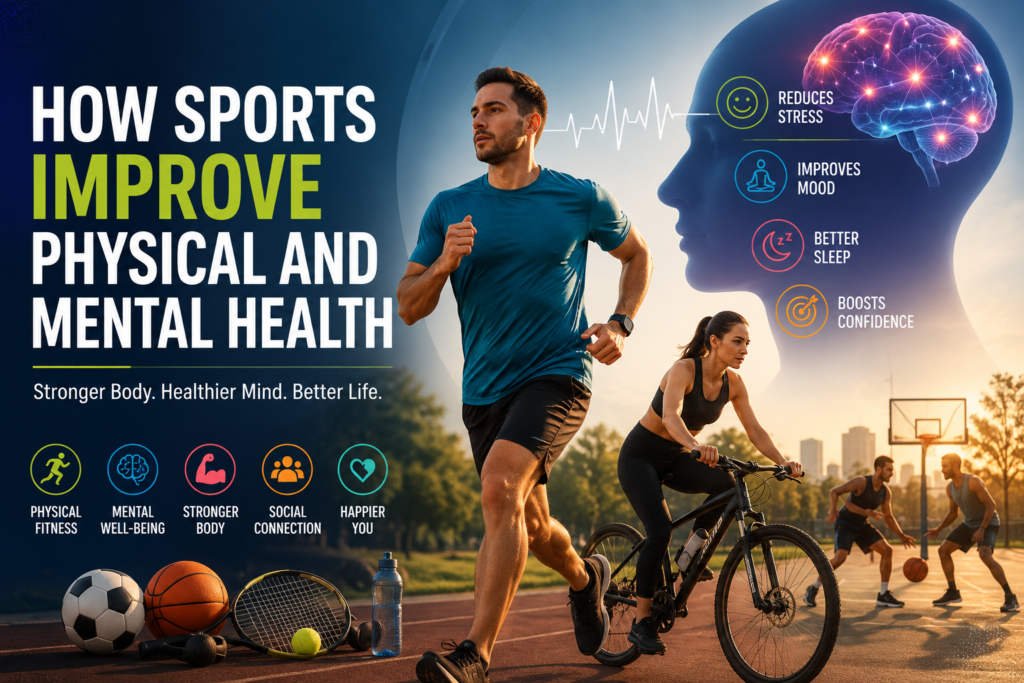
Sports are an important part of a healthy and active lifestyle. Whether you enjoy football, cricket, basketball, running, swimming, cycling, or simply going to the gym, regular physical activity can have a positive impact on both your body and mind.
In today’s busy lifestyle, many people spend long hours sitting, working, studying, or using their phones. Playing sports provides a simple and enjoyable way to stay active, reduce stress, and improve overall well-being.
1. Sports Improve Physical Fitness
One of the biggest benefits of sports is improved physical fitness. Regular exercise helps strengthen muscles, improve flexibility, and increase overall body strength.
Activities such as running, football, swimming, and cycling can also improve cardiovascular fitness. A stronger heart and better circulation can help your body perform daily activities more efficiently.
2. Sports Help Maintain a Healthy Weight
Regular physical activity helps the body burn calories and maintain a healthy weight. Combining sports with a balanced diet can support healthy weight management.
Being physically active can also help reduce the risks associated with a sedentary lifestyle.
3. Sports Strengthen Muscles and Bones
Many sports involve movements that strengthen different muscle groups. Activities such as football, basketball, tennis, and strength training can help improve muscular strength.
Regular physical activity can also support stronger bones, which is particularly important as people get older.
4. Sports Reduce Stress
Sports are not only beneficial for the body—they can also help the mind.
Physical activity can help reduce everyday stress and tension. After playing a sport or completing a workout, many people feel more relaxed and refreshed.
Even a short walk, jog, or casual game with friends can be a great way to take a break from work or study.
5. Sports Can Improve Mood
Exercise can have a positive effect on mood. Physical activity is associated with the release of chemicals in the brain that can contribute to feelings of well-being.
This is one reason people often feel happier and more energetic after exercising.
6. Sports Improve Sleep
Regular physical activity can support better sleep habits. People who stay active during the day may find it easier to relax and maintain a consistent sleep schedule.
However, very intense exercise immediately before bedtime may not be comfortable for everyone, so finding a routine that works for you is important.
7. Sports Build Confidence
Learning a new skill and improving your performance can increase self-confidence.
Whether you score your first goal, improve your running time, learn a new swimming technique, or simply become more consistent with exercise, small achievements can motivate you to keep going.
8. Sports Encourage Teamwork and Social Connection
Team sports such as football, cricket, basketball, and volleyball provide opportunities to communicate and cooperate with other people.
Working toward a common goal can help develop important skills such as:
- Communication
- Leadership
- Teamwork
- Discipline
- Responsibility
- Problem-solving
Sports can also help people make new friends and develop stronger social connections.
9. Sports Improve Discipline
Success in sports often requires regular practice and commitment. Athletes learn that improvement takes time and consistent effort.
This discipline can also be useful in other areas of life, including education, work, and personal goals.
10. Sports Support a Healthier Lifestyle
People who regularly participate in sports may become more aware of other healthy habits, such as eating nutritious foods, drinking enough water, getting adequate rest, and maintaining a regular routine.
Sports can therefore become more than just a hobby—they can be part of a balanced lifestyle.
Conclusion
Sports can provide many benefits for both physical and mental health. Regular physical activity can help improve fitness, strengthen muscles and bones, support healthy weight management, reduce stress, improve mood, and encourage better sleep.
You don’t have to be a professional athlete to enjoy these benefits. Start with an activity you enjoy and make it part of your regular routine. Even small amounts of physical activity can be a positive step toward a healthier and more active life