

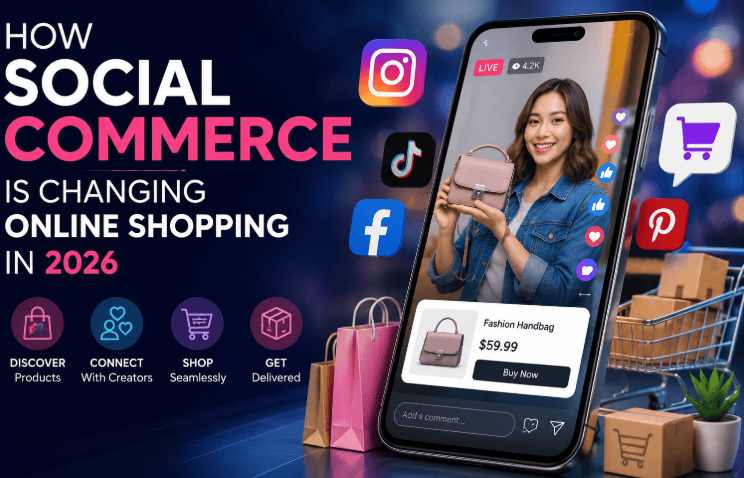
Online shopping is no longer limited to traditional e-commerce websites. In 2026, social media platforms are becoming powerful shopping destinations where people can discover products, watch demonstrations, read recommendations, and make purchasing decisions without leaving the platforms they already use.
This growing trend is known as social commerce. It combines social media, content, influencers, and online shopping into one digital experience. Platforms such as TikTok, Instagram, YouTube, Facebook, and Pinterest are helping brands reach consumers in new ways, while creators are becoming an increasingly important part of the buying journey.
As social commerce continues to develop, it is changing how consumers discover and purchase products online.
What Is Social Commerce?
Social commerce refers to buying products directly through social media platforms or using social content to guide consumers toward a purchase.
Traditional online shopping usually starts when a customer visits a search engine or e-commerce website and looks for a specific product. Social commerce works differently.
A consumer may watch a short video, see a product recommendation from a creator, discover a brand through a social media post, and then purchase the product through an integrated shopping feature.
This makes the buying process more connected to everyday online activity.
Instead of searching for products, consumers can discover products while they are watching videos, scrolling through posts, or interacting with creators.
Social Media Is Becoming a Product Discovery Engine
One of the biggest changes brought by social commerce is the way consumers discover products.
People increasingly find new brands through videos, posts, stories, livestreams, and recommendations rather than traditional advertisements.
A short video showing how a product works can generate interest much faster than a standard product advertisement. If the product is linked directly to a shopping page, consumers can move from discovery to purchase within minutes.
This is particularly important for fashion, beauty, technology accessories, home products, food, and lifestyle brands.
For smaller businesses, social media can also provide an opportunity to compete for attention without having the same advertising budgets as large companies.
Influencers Are Changing Buying Decisions
Creators and influencers have become an important part of social commerce.
Consumers often follow creators because they trust their opinions, personalities, or expertise. When a creator demonstrates a product or explains how they use it, the recommendation can feel more personal than a traditional advertisement.
Influencer marketing is therefore becoming increasingly connected to direct sales.
For brands, the most valuable creator may not always be the person with the largest following. Smaller creators with highly engaged communities can sometimes provide stronger connections with specific audiences.
This has contributed to the growth of micro-influencer marketing, where brands work with creators who have smaller but highly targeted audiences.
Short-Form Videos Are Driving Product Discovery
Short-form video has become one of the most effective formats for social commerce.
Platforms such as TikTok, Instagram Reels, and YouTube Shorts allow brands and creators to demonstrate products quickly.
For example, a beauty creator can show a skincare routine, a technology creator can demonstrate a gadget, or a fashion creator can show how an outfit looks.
These videos combine entertainment with product information.
The result is a shopping experience that feels less like traditional advertising and more like content consumption.
Livestream Shopping Is Expanding
Another major development in social commerce is livestream shopping.
During a livestream, creators or brand representatives can demonstrate products, answer questions, and interact with viewers in real time.
Viewers can ask about product features, sizes, colors, prices, and availability while watching the demonstration.
This creates a sense of interaction that traditional online shopping cannot easily provide.
Livestream commerce is particularly popular in markets where consumers are comfortable combining entertainment and shopping in the same digital experience.
As social platforms improve their shopping features, livestream shopping could become an even bigger part of online retail.
Artificial Intelligence Is Making Social Commerce Smarter
Artificial intelligence is also changing social commerce.
AI can help businesses understand customer behavior, recommend products, create personalized content, generate product descriptions, and improve advertising campaigns.
Recommendation algorithms can analyze what users watch, like, search for, and interact with. Based on these signals, platforms can show products that are more relevant to individual users.
For consumers, this can make product discovery faster.
For businesses, AI can provide valuable information about what customers want and which types of content generate the strongest engagement.
However, personalization also creates questions about privacy and how consumer data is collected and used.
Social Commerce Is Creating New Opportunities for Small Businesses
Small businesses are among the biggest potential beneficiaries of social commerce.
A small brand can create a video, reach thousands of users, and potentially generate sales without opening a physical store or spending huge amounts on traditional advertising.
Social media also allows businesses to communicate directly with customers.
Comments, direct messages, livestreams, and community posts can help brands build relationships with consumers.
This is especially valuable for new businesses trying to establish their identity and gain their first customers.
Customer Reviews and User-Generated Content Matter
Trust remains one of the most important factors in online shopping.
Consumers want to know whether a product actually works before spending money. Social commerce provides several ways to answer that question.
Customer reviews, unboxing videos, tutorials, product demonstrations, and user-generated content can all influence purchasing decisions.
User-generated content is particularly powerful because it shows products being used by real customers rather than only appearing in professionally produced advertisements.
Brands are increasingly encouraging customers to share their experiences because this type of content can increase credibility.
The Shopping Experience Is Becoming More Personalized
Traditional e-commerce websites often show customers similar product categories. Social commerce can provide a much more personalized experience.
A user interested in fitness may see workout equipment, sportswear, nutrition-related products, and fitness creators.
Someone interested in beauty may see skincare routines, makeup tutorials, beauty products, and recommendations from creators in that niche.
This personalized approach can make online shopping feel more relevant.
However, consumers should still compare prices, read reviews, and research products instead of making purchases based only on social media recommendations.
Challenges Facing Social Commerce
Despite its rapid growth, social commerce also has challenges.
One concern is misleading advertising. Some influencers may promote products without clearly explaining their relationship with a brand.
Fake reviews and manipulated content can also make it difficult for consumers to determine whether a product is genuinely good.
Privacy is another important issue. Social platforms collect large amounts of information about user behavior, and this data can influence the advertisements and products users see.
There are also concerns about impulsive purchases. Because social commerce makes buying extremely convenient, consumers may purchase products without doing enough research.
What Social Commerce Means for the Future
The future of online shopping is likely to become even more connected to social media.
Consumers may increasingly discover products through videos, creators, livestreams, recommendations, and online communities.
At the same time, artificial intelligence could make product recommendations more personalized and improve the overall shopping experience.
Brands that succeed in this environment will likely be those that focus on useful content, authenticity, customer relationships, and strong products rather than simply pushing advertisements.
Final Thoughts
Social commerce is changing online shopping by bringing product discovery, entertainment, creators, and purchasing into one digital experience.
Consumers no longer have to visit an e-commerce website first to find something they want. A product can appear while they are watching a video, reading a post, following a creator, or participating in a livestream.
For businesses, this creates new opportunities to reach customers and build communities around their products.
As social media and e-commerce continue to become more closely connected, social commerce is likely to remain one of the most important trends shaping the future of online shopping in 2026 and beyond.