
Social media is changing faster than ever. What started as a way to connect with friends and share photos has become a powerful ecosystem for communication, entertainment, business, shopping, news, and digital marketing. As technology continues to evolve, social platforms are expected to become even more personalized, interactive, and intelligent.
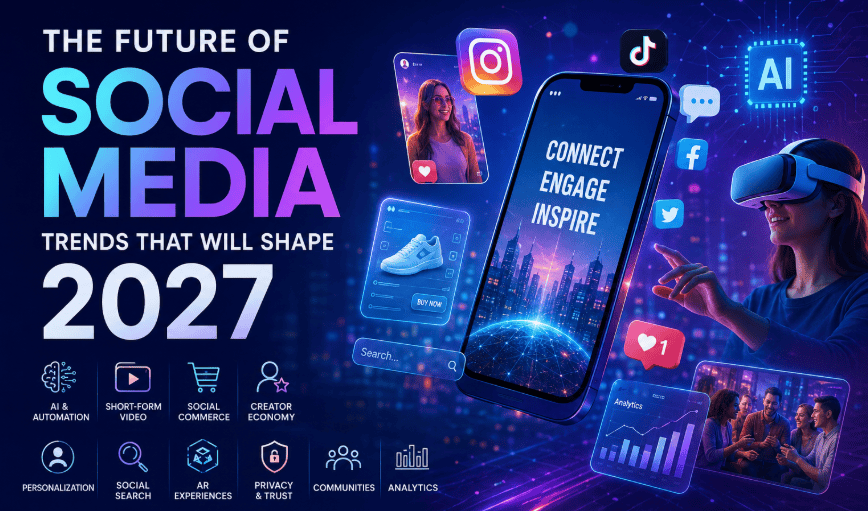
Looking ahead to 2027, artificial intelligence, short-form video, social commerce, immersive experiences, creator economies, and privacy-focused technologies are likely to influence how people and businesses use social media.
For brands, creators, and marketers, understanding these changes early can provide a major advantage. Here are the most important social media trends that could shape 2027.
1. AI-Powered Social Media Will Become Mainstream
Artificial intelligence is already being used across social platforms, but its role is expected to become much larger by 2027.
AI can help businesses generate captions, create images and videos, analyze audiences, identify trends, answer customer questions, and personalize content. Social platforms are also increasingly using AI to recommend posts based on individual interests.
In the future, marketers may rely on AI tools to analyze large amounts of audience data and automatically suggest what type of content should be created.
However, human creativity will remain important. Successful brands will likely combine AI efficiency with authentic human storytelling.
2. Short-Form Video Will Continue to Dominate
Short-form video has transformed social media. Platforms such as Instagram, TikTok, and YouTube have made short videos one of the most popular formats for discovering entertainment, products, brands, and information.
This trend is unlikely to disappear in 2027.
Instead, short-form videos may become more personalized and interactive. Brands could create different versions of the same video for different audiences, while AI-powered recommendation systems determine which version is most relevant to each viewer.
Businesses that learn how to create useful, entertaining, and authentic short videos will have a better opportunity to attract attention.
3. Social Commerce Will Become More Important
Social media is increasingly becoming a shopping destination.
Users can already discover products through videos, influencers, advertisements, and shopping features without leaving their favorite platforms. By 2027, this connection between social media and e-commerce could become even stronger.
Businesses may use social platforms to showcase products, answer questions, build trust, and complete purchases in fewer steps.
This means social media marketing will increasingly focus not only on gaining followers but also on turning attention into measurable sales.
4. Creator Economy Will Keep Expanding
Creators have become an important part of digital marketing. Consumers often trust creators because their content can feel more personal than traditional advertising.
By 2027, the creator economy is expected to become even more diverse. Large influencers will continue to have significant audiences, but smaller creators with highly engaged communities may become increasingly valuable to brands.
Micro-influencers and niche creators can offer businesses access to specific audiences while maintaining a more authentic connection.
Brands may also develop long-term partnerships with creators instead of relying only on one-time sponsored posts.
5. Personalized Content Will Shape User Experiences
One of the biggest changes in social media will likely be increased personalization.
Instead of showing everyone the same popular content, platforms can use AI and recommendation systems to create highly individualized feeds.
Two users following the same accounts could potentially see very different content based on their interests, behavior, location, viewing history, and interactions.
For marketers, this creates both an opportunity and a challenge. Creating generic content may become less effective, while highly relevant content could receive stronger engagement.
6. Social Search Will Become More Popular
People increasingly use social platforms to discover information, products, restaurants, travel ideas, tutorials, and recommendations.
Younger audiences in particular may search directly within platforms rather than relying entirely on traditional search engines.
This means businesses will need to think about social SEO.
Using relevant keywords in captions, video titles, profiles, descriptions, and spoken content could help users discover brands through social search.
By 2027, optimizing social content for search may become just as important as creating attractive visuals.
7. Augmented Reality Could Transform Social Experiences
Augmented reality, or AR, allows digital elements to appear within the real world through a smartphone or other device.
Social platforms have already used AR for filters, effects, and virtual try-ons. Future applications could become much more sophisticated.
For example, shoppers could virtually see how furniture looks in their homes or try different products before purchasing. Brands could also create interactive campaigns that allow customers to participate rather than simply watch advertisements.
This could make social media experiences more immersive and engaging.
8. Authenticity Will Become More Valuable
AI-generated content will make it easier to produce large amounts of digital material. However, this may also create a new problem: audiences could become tired of content that feels artificial or repetitive.
As AI-generated posts become more common, genuine human experiences may become more valuable.
Behind-the-scenes videos, personal stories, customer experiences, live conversations, and transparent communication can help brands build trust.
In 2027, authenticity may become one of the strongest competitive advantages on social media.
9. Privacy and Data Protection Will Matter More
Social media companies collect enormous amounts of user information. As concerns about online privacy continue, users and regulators are likely to demand greater transparency.
Businesses will need to pay closer attention to how they collect, store, and use customer information.
Privacy-focused marketing could become an important part of brand reputation. Companies that clearly explain their data practices and respect user preferences may build stronger relationships with their audiences.
10. Social Media Communities Will Grow
While viral content can generate millions of views, smaller online communities can create deeper relationships.
Brands may increasingly focus on private groups, niche communities, memberships, and direct conversations with customers.
Instead of simply asking, “How many followers do we have?” businesses may ask, “How engaged is our community?”
This shift could make meaningful interaction more important than follower numbers.
11. Social Media Will Become More Interactive
The future of social media is likely to be less about simply scrolling and more about participating.
Polls, live shopping, interactive videos, games, augmented reality, AI chatbots, and community discussions can turn passive audiences into active participants.
For brands, interactive content provides opportunities to understand customers while keeping audiences engaged.
12. Businesses Will Focus More on Social Media Analytics
As competition increases, businesses will need better ways to measure their social media performance.
Simple metrics such as likes and followers will not always tell the full story. Companies will increasingly examine engagement quality, customer conversions, retention, website traffic, sales, and audience sentiment.
AI-powered analytics could make it easier to identify successful content and understand why audiences respond to it.
This could help marketers make faster and more informed decisions.
What Will Social Media Look Like in 2027?
The social media landscape of 2027 may look very different from today’s platforms. Artificial intelligence could influence content creation and recommendations, while social commerce may bring shopping closer to everyday entertainment.
Video will remain important, creators will continue influencing purchasing decisions, and personalized experiences may become the standard.
At the same time, users are likely to value privacy, authenticity, and meaningful communities more than ever.
The biggest change may not be a single new platform or technology. Instead, it will be the way different technologies work together.
AI, video, commerce, search, AR, analytics, and creator marketing could combine to create a much more personalized social media experience.
Final Thoughts
The future of social media in 2027 will be shaped by technology, creativity, and changing consumer expectations. Businesses that adapt early will have more opportunities to connect with audiences and build stronger digital brands.
AI-powered content, short-form video, social commerce, creator marketing, personalized recommendations, social search, AR, privacy, and online communities are among the trends worth watching.
However, technology alone will not guarantee success. People still want useful information, entertainment, trust, and genuine connections.
For brands and creators, the best strategy for 2027 may be simple: use new technology while keeping the human side of social media at the center.