
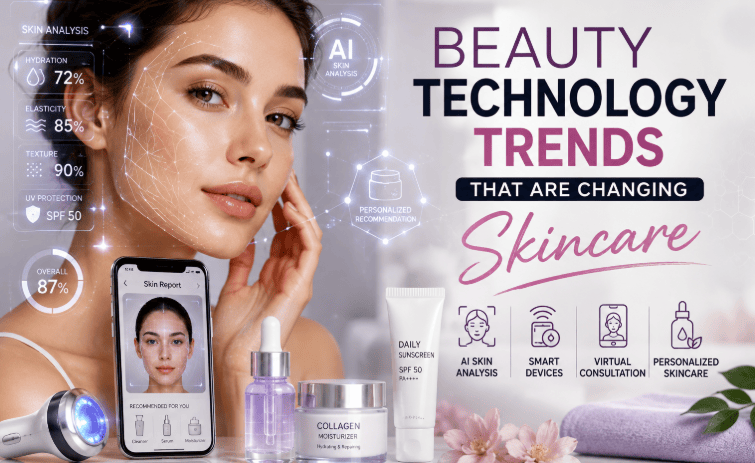
The beauty industry is changing rapidly as technology becomes a bigger part of everyday skincare. From artificial intelligence and personalized recommendations to smart skincare devices and virtual consultations, new technologies are helping consumers understand their skin and choose products more efficiently.
In 2026, beauty technology is no longer limited to professional salons and dermatology clinics. Many innovations are becoming accessible to everyday consumers through smartphones, apps, wearable devices, and at-home skincare tools.
For beauty brands, technology is also creating new ways to understand customers, develop products, and deliver personalized experiences.
1. Artificial Intelligence Is Transforming Skincare
Artificial intelligence is one of the biggest technologies influencing the beauty industry.
AI-powered skincare platforms can analyze information about a person’s skin and provide personalized recommendations. Some systems use photographs, questionnaires, and user preferences to identify potential skincare concerns and suggest suitable routines.
AI can also help beauty companies analyze customer feedback and identify changing skincare preferences.
Instead of offering the same routine to everyone, brands can use technology to create more personalized experiences.
2. Personalized Skincare Is Becoming More Popular
Everyone’s skin is different. Factors such as age, lifestyle, environment, skin type, and personal preferences can influence skincare needs.
Technology is making personalized skincare easier to access.
Digital skin assessments can collect information about a consumer’s skin and recommend products based on individual needs. Some beauty companies are also developing customized formulas and product recommendations.
This shift toward personalization can make skincare routines more relevant and convenient for consumers.
3. Smart Skincare Devices Are Growing
At-home skincare devices are becoming increasingly popular.
Consumers can now find devices designed to support different parts of their skincare routines. Depending on the technology, these devices may use LED light, microcurrent, cleansing systems, or other approaches.
Smart devices can also connect with mobile applications, allowing users to track their routines and receive reminders or recommendations.
The growing popularity of these products shows how technology is bringing more beauty experiences into the home.
4. Smartphone Skin Analysis
Smartphones are becoming useful tools for beauty and skincare.
With a smartphone camera and specialized applications, users can capture images of their skin and receive technology-assisted analysis.
Some platforms are designed to help users track visible changes over time, such as dryness, texture, or the appearance of imperfections.
However, consumers should understand that smartphone-based analysis is not the same as professional medical evaluation. Technology can provide useful information, but persistent or serious skin concerns should be discussed with a qualified healthcare professional.
5. Virtual Beauty Consultations
Technology has also changed how consumers communicate with beauty professionals.
Virtual consultations allow customers to speak with skincare specialists or beauty professionals without visiting a physical location.
Through video calls, online questionnaires, and digital skin assessments, consumers can discuss their routines and product preferences remotely.
This can be particularly convenient for people who live far from beauty stores or professionals.
6. Augmented Reality Is Changing Product Testing
Augmented reality (AR) is another important technology in the beauty industry.
Although AR is especially popular in makeup, it can also influence skincare shopping experiences. Beauty platforms can use interactive tools to help customers explore products, routines, and personalized recommendations before making a purchase.
Virtual try-on technology can also allow consumers to see how certain makeup products might look before buying them.
This creates a more interactive online shopping experience and can help consumers make more informed purchasing decisions.
7. Wearable Technology and Skin Monitoring
Wearable technology is expanding beyond fitness and health tracking.
New beauty technologies are exploring ways to monitor factors that may affect the skin, including environmental conditions and daily habits.
Wearable devices and connected applications can potentially help consumers understand how lifestyle and environmental factors relate to their skincare routines.
For example, information about UV exposure, temperature, or humidity can encourage users to adjust their skincare habits.
8. Technology Is Helping Beauty Brands Develop Products
Technology is not only changing how consumers use skincare products. It is also changing how companies develop them.
Beauty companies can use data analytics and AI-assisted research to understand consumer preferences and identify emerging trends.
Large amounts of customer feedback can be analyzed to determine which ingredients, product formats, textures, and benefits consumers are interested in.
This allows companies to respond more quickly to changing market demand.
9. Social Media Is Accelerating Beauty Technology Trends
Social media plays a major role in how consumers discover new beauty products and technologies.
Platforms such as Instagram, TikTok, YouTube, and Pinterest allow beauty brands and creators to demonstrate new products and skincare devices.
A new beauty technology can quickly gain attention when creators share tutorials, reviews, demonstrations, or personal experiences.
However, consumers should be careful when evaluating viral skincare advice. Not every trending product or technique is appropriate for every skin type.
10. AI-Powered Beauty Recommendations
Online shopping platforms are increasingly using AI to improve product discovery.
Instead of browsing hundreds of skincare products, consumers may answer questions about their skin type, concerns, preferences, and routine.
An AI-powered recommendation system can then suggest products that may be more relevant to those answers.
This can make online beauty shopping easier and more personalized.
11. Digital Skin Tracking
Consistency is an important part of many skincare routines.
Digital tracking tools can help users monitor their routines and observe changes over time. Mobile applications can provide reminders, record product usage, and allow users to document their skincare journey.
Taking regular photos under similar lighting conditions can also help consumers compare visible changes more consistently.
Digital tracking does not replace professional assessment, but it can help users become more aware of their skincare habits.
12. The Importance of Data Privacy
As beauty technology becomes more personalized, privacy becomes increasingly important.
Some skincare applications may collect photographs, personal preferences, or other information to provide recommendations.
Consumers should understand what information an application collects, how it is stored, and how it may be used.
Beauty companies should also be transparent about their data practices and take appropriate steps to protect customer information.
Trust will remain an important factor as technology becomes more deeply integrated into personal beauty routines.
13. Sustainable Beauty Technology
Technology is also influencing the sustainability conversation in the beauty industry.
Digital product development and data analysis can help companies understand consumer demand and improve product development processes.
Smart packaging and connected technologies may also provide consumers with additional information about products and usage.
At the same time, beauty brands are exploring ways to reduce waste, improve packaging, and create more efficient production processes.
Technology alone cannot solve the industry’s environmental challenges, but it can support companies as they work toward more sustainable practices.
What Does the Future of Beauty Technology Look Like?
The future of skincare is likely to become even more personalized and technology-driven.
AI, smart devices, digital consultations, skin analysis, augmented reality, and data-driven recommendations could become increasingly common.
Consumers may eventually have access to highly personalized skincare experiences that combine information from different digital tools.
However, technology should remain a support system rather than a replacement for professional advice when medical concerns are involved.
The beauty industry will likely continue to combine science, technology, creativity, and personalization to create new skincare experiences.
Conclusion
Beauty technology is changing skincare by making routines more personalized, interactive, and data-driven. AI-powered recommendations, smart skincare devices, smartphone analysis, virtual consultations, augmented reality, and digital tracking are giving consumers new ways to explore and manage their beauty routines.
For beauty brands, these technologies provide opportunities to better understand customers and develop more personalized products and experiences.
As technology continues to advance in 2026 and beyond, the future of skincare will likely focus on personalization, convenience, innovation, and smarter beauty experiences.
Consumers should still approach new beauty technologies carefully, research products before using them, and seek professional advice for persistent or serious skin concerns. The combination of technology and informed skincare choices can help create a more effective and personalized beauty experience.