
Introduction
Athletic performance is an important part of sports and physical fitness. Whether you play football, basketball, cricket, tennis, or enjoy running, improving your physical abilities can help you become a better athlete.
Many people believe that improving sports performance requires expensive gym equipment, supplements, or professional training. However, several natural methods can help improve strength, speed, stamina, flexibility, and endurance.
The key is to develop healthy habits and follow a consistent fitness routine. Proper nutrition, regular exercise, quality sleep, hydration, and recovery all play an important role in athletic development.
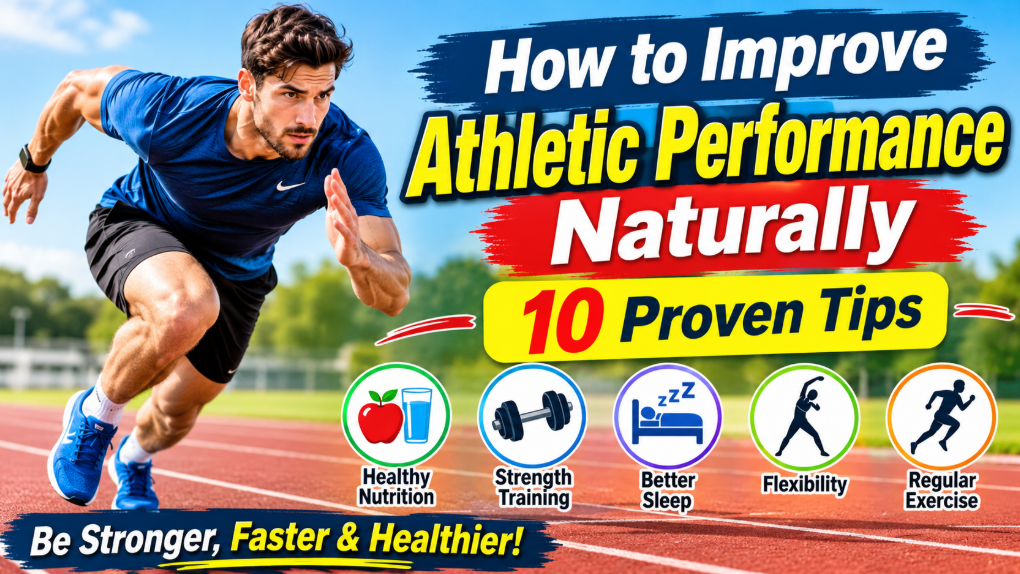
In this article, we will explore 10 effective ways to improve athletic performance naturally and build a healthier lifestyle.
1. Eat a Balanced and Nutritious Diet
Nutrition is one of the most important factors affecting athletic performance. Your body needs enough energy and essential nutrients to perform physical activities and recover after exercise.
A balanced diet should include carbohydrates, proteins, healthy fats, vitamins, and minerals.
Some excellent food choices for athletes include:
- Eggs and chicken for protein.
- Brown rice and oatmeal for energy.
- Bananas and apples for natural carbohydrates.
- Nuts and seeds for healthy fats.
- Spinach and broccoli for essential vitamins.
- Milk and yogurt for calcium and protein.
Eating healthy meals regularly can support muscle recovery and help maintain energy during training.
2. Drink Enough Water Every Day
Hydration is essential for maintaining physical performance. During exercise, your body loses water through sweating. If you do not replace these fluids, you may experience fatigue and reduced exercise capacity.
Athletes should drink water throughout the day, especially before and after physical activities.
Follow these simple hydration tips:
- Drink water before starting exercise.
- Take regular water breaks during training.
- Replace fluids after sweating.
- Drink additional water during hot weather.
- Include fruits with high water content in your diet.
Proper hydration supports normal muscle function and helps regulate body temperature.
3. Develop a Consistent Exercise Routine
Consistency is essential for improving athletic performance. Regular exercise helps your body adapt to physical challenges and gradually develop better fitness.
A good exercise routine should include strength training, cardiovascular workouts, flexibility exercises, and sport-specific practice.
For example, football players can practice sprinting, ball control, and agility drills. Basketball players can focus on jumping, coordination, and shooting exercises.
Start with a manageable routine and increase the intensity gradually as your fitness improves.
4. Improve Your Strength Through Bodyweight Exercises
Strength is an important part of athletic performance. Strong muscles help athletes perform movements such as running, jumping, lifting, and changing direction.
You do not always need an expensive gym membership to develop strength. Several effective exercises can be performed at home.
Try these exercises:
- Push-ups for upper-body strength.
- Squats for leg strength.
- Lunges for balance and coordination.
- Planks for core stability.
- Calf raises for lower-leg strength.
Practice these movements with proper technique and increase repetitions gradually.
5. Get Enough Sleep and Rest
Sleep plays an important role in physical recovery. During sleep, your body performs essential processes that support muscle repair, energy regulation, and overall health.
Most adults need approximately seven to nine hours of sleep each night. Teenagers generally need eight to ten hours.
To improve sleep quality:
- Follow a regular sleeping schedule.
- Avoid using electronic devices immediately before bedtime.
- Keep your bedroom quiet and comfortable.
- Avoid excessive caffeine late in the day.
- Give your body enough time to recover after intense training.
Good sleep habits can help athletes feel more energetic and focused.
6. Practice Speed and Agility Training
Speed and agility are important skills in many sports. Football, basketball, tennis, and other competitive activities require athletes to move quickly and change direction efficiently.
You can improve these abilities through regular practice.
Some useful training activities include:
- Short-distance sprinting.
- Side-to-side movements.
- Cone drills.
- Jumping exercises.
- Quick-footwork drills.
- Direction-changing exercises.
Always warm up before intense speed training and allow enough recovery between challenging sessions.
7. Improve Flexibility and Body Movement
Flexibility allows your muscles and joints to move through their available range of motion. Good mobility can make sports movements more comfortable and efficient.
Athletes should include flexibility exercises in their regular training schedules.
Useful exercises include:
- Hamstring stretches.
- Shoulder rotations.
- Hip mobility exercises.
- Calf stretches.
- Gentle yoga movements.
Dynamic movements are useful before exercise, while gentle static stretching can be included after workouts.
8. Focus on Cardiovascular Fitness
Cardiovascular fitness helps your heart and lungs support physical activity. It is especially important for athletes who participate in running, football, basketball, swimming, and cycling.
You can improve endurance through activities such as:
- Jogging.
- Cycling.
- Swimming.
- Brisk walking.
- Jump rope.
- Interval training.
Begin with shorter sessions and increase the duration gradually. Balance intense workouts with lighter activities and rest days.
9. Allow Proper Recovery Between Workouts
Training regularly is important, but exercising too intensely without enough recovery can negatively affect performance.
Your body needs time to adapt to training. Ignoring recovery may lead to excessive fatigue, persistent soreness, and an increased risk of injury.
Follow these recovery habits:
- Schedule regular rest days.
- Eat balanced meals.
- Stay hydrated.
- Get sufficient sleep.
- Avoid exercising through significant pain.
- Include light movement on recovery days.
Remember that recovery is an important part of every successful training program.
10. Set Realistic Fitness Goals
Setting realistic goals helps athletes remain motivated and measure their progress.
Instead of trying to improve everything immediately, focus on one or two specific areas at a time.
For example, you might aim to improve your running endurance, increase your push-up repetitions, or develop better football skills.
Track your progress by recording:
- Workout duration.
- Running distance.
- Exercise repetitions.
- Training consistency.
- Recovery habits.
Review your progress regularly and make gradual changes to your training routine.
Best Daily Habits for Better Athletic Performance
Developing healthy daily habits can make a significant difference in your fitness journey.
Here are some habits worth following:
- Eat nutritious meals throughout the day.
- Drink enough water.
- Follow a regular exercise schedule.
- Warm up before physical activity.
- Practice sport-specific skills.
- Get enough quality sleep.
- Take recovery days when needed.
- Maintain a positive mindset.
These habits can support long-term athletic development and overall physical fitness.
Common Mistakes Athletes Should Avoid
Even dedicated athletes can make mistakes that slow down their progress.
Some common mistakes include:
Skipping meals: Not eating enough can affect energy levels and training performance.
Overtraining: Exercising too intensely without proper recovery can lead to fatigue.
Ignoring hydration: Insufficient fluid intake can negatively affect physical performance.
Poor exercise technique: Incorrect movements can increase the risk of injuries.
Lack of consistency: Frequently changing routines or skipping workouts can make progress difficult.
Avoiding these mistakes can help you build a healthier and more effective training routine.
Conclusion
Improving athletic performance naturally requires dedication, patience, and healthy lifestyle choices. A balanced diet, proper hydration, consistent exercise, strength training, flexibility, and quality sleep can all contribute to better physical fitness.
Whether you are a beginner or an experienced athlete, focus on developing healthy habits and improving your abilities gradually.
There is no instant solution to becoming a better athlete. Consistency and proper recovery are essential for sustainable progress. Start with small changes today, stay committed to your goals, and continue working toward becoming stronger, faster, and healthier.