
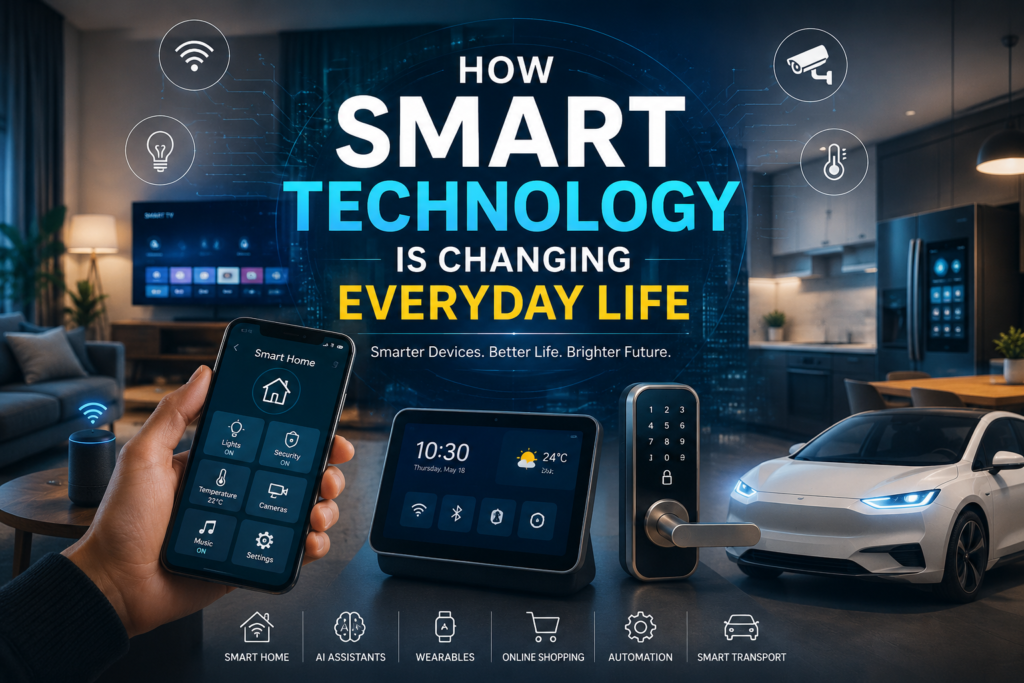
Technology has become an important part of our everyday lives. From smartphones and smartwatches to smart home devices and artificial intelligence, modern technology is making daily activities faster, easier, and more convenient.
What once seemed like futuristic technology is now becoming normal in homes, workplaces, schools, and businesses. Smart devices can connect to the internet, collect information, learn from our habits, and help us make better decisions.
As technology continues to develop, the way we communicate, work, shop, travel, and manage our daily routines is changing rapidly.
What Is Smart Technology?
Smart technology refers to electronic devices and systems that can connect, communicate, collect data, and perform tasks with little human effort.
Examples include:
- Smartphones and tablets
- Smartwatches and fitness trackers
- Smart TVs
- Smart speakers
- Smart lighting
- Smart security cameras
- Smart appliances
- Artificial intelligence-powered applications
- Connected cars
Many of these devices use internet connectivity, sensors, software, and artificial intelligence to provide a more personalized experience.
1. Smartphones Have Changed Everyday Communication
Smartphones are one of the biggest examples of smart technology. A modern smartphone is much more than a device for making calls.
People can use smartphones to communicate with family and friends, work remotely, watch videos, shop online, manage finances, take photos, navigate unfamiliar places, and access information within seconds.
Messaging applications and video calls have also made communication easier across long distances. Instead of waiting for a traditional phone call or email, people can communicate instantly from almost anywhere.
2. Smart Homes Are Making Life More Convenient
Smart home technology is becoming increasingly popular. Devices such as smart bulbs, smart plugs, security cameras, thermostats, and smart speakers can be controlled using smartphones or voice commands.
For example, users can turn lights on or off without physically touching a switch. Smart security systems can send notifications when unusual activity is detected, while smart appliances can help automate everyday household tasks.
The biggest advantage of smart home technology is convenience. Multiple devices can work together to create a connected home environment that can be managed from a single device.
3. Wearable Technology Helps People Stay Connected
Smartwatches and fitness trackers have become popular examples of wearable technology.
These devices can provide notifications, track physical activity, monitor sleep patterns, measure heart rate, and provide reminders. They can also allow users to check messages or control certain smartphone functions without taking their phones out of their pockets.
Wearable technology is becoming more useful because it combines convenience with real-time information.
4. Artificial Intelligence Is Becoming Part of Daily Life
Artificial intelligence is one of the most important technological developments of recent years.
AI-powered technology can help people search for information, write content, translate languages, organize information, recommend products, generate images, and automate repetitive tasks.
Many people interact with AI without even realizing it. Recommendation systems on entertainment and shopping platforms, voice assistants, navigation applications, and customer-service chatbots can all use AI technologies.
As AI continues to improve, it is likely to become even more integrated into everyday applications.
5. Smart Technology Is Changing Online Shopping
Shopping has also been transformed by technology.
Today, customers can discover products, compare prices, read reviews, make payments, and order products without visiting a physical store.
Smart recommendation systems can also suggest products based on browsing behavior and previous interests. This can make it easier for customers to discover products that match their needs.
Mobile shopping is another major development. With smartphones becoming more powerful, customers can shop from almost anywhere at any time.
6. Technology Is Making Work More Flexible
Smart technology has changed the modern workplace as well.
Cloud-based applications, video conferencing, collaboration platforms, and mobile devices allow people to work from different locations.
Businesses can communicate with employees and customers remotely, share files online, manage projects digitally, and automate repetitive tasks.
This flexibility has created new opportunities for freelancers, entrepreneurs, remote workers, and online businesses.
7. Smart Technology Is Improving Transportation
Technology is also changing the way people travel.
Navigation applications can provide directions, traffic information, estimated arrival times, and alternative routes. Ride-sharing platforms allow people to request transportation through their smartphones.
Modern vehicles are also becoming smarter. Features such as parking assistance, driver alerts, navigation systems, and connected services are becoming more common.
In the future, transportation is expected to become even more connected and automated.
8. Smart Technology Is Changing Entertainment
Entertainment has become more personalized because of smart technology.
Streaming platforms can recommend movies, shows, music, and videos based on user interests. Smart TVs and connected devices allow people to access entertainment services without traditional broadcasting systems.
Gaming has also evolved through smartphones, cloud technology, virtual reality, and connected multiplayer platforms.
As internet speeds and device capabilities improve, digital entertainment will continue to become more interactive.
9. Technology Helps Save Time
One of the biggest benefits of smart technology is automation.
Tasks that once required several steps can now be completed quickly. People can set reminders, automate payments, control devices remotely, schedule appointments, and manage information digitally.
Automation allows people to spend less time on repetitive tasks and more time focusing on important activities.
10. The Importance of Using Technology Responsibly
Although smart technology provides many benefits, it is important to use it responsibly.
People should protect their accounts with strong passwords, use security updates, avoid suspicious links, and be careful about sharing personal information online.
Privacy is also becoming increasingly important because many smart devices collect data to provide personalized services.
Understanding how technology works and learning basic digital security can help users enjoy its benefits while reducing potential risks.
The Future of Smart Technology
The future of smart technology looks exciting. Devices are expected to become more connected, intelligent, and personalized.
Artificial intelligence, smart homes, wearable devices, connected vehicles, robotics, and other emerging technologies may become even more common in everyday life.
Instead of using technology only when we need it, future devices may increasingly work in the background and automatically respond to our needs.
The goal of smart technology is not simply to create more advanced devices. It is to make technology more useful, convenient, and integrated into everyday life.
Conclusion
Smart technology is changing everyday life in ways that were difficult to imagine only a few years ago. Smartphones help us communicate, smart homes improve convenience, wearable devices keep us connected, AI helps us complete tasks, and online shopping makes products easier to discover and purchase.
As technology continues to evolve, these changes will become even more noticeable.
The future of technology is not just about powerful devices—it is about creating smarter systems that make everyday life easier, faster, and more connected.