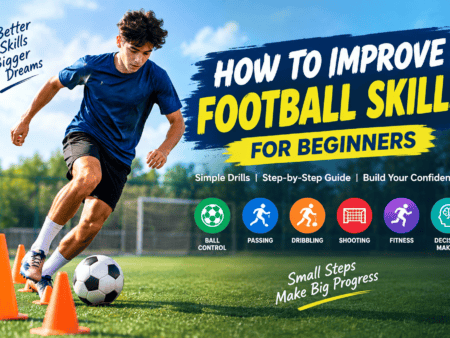

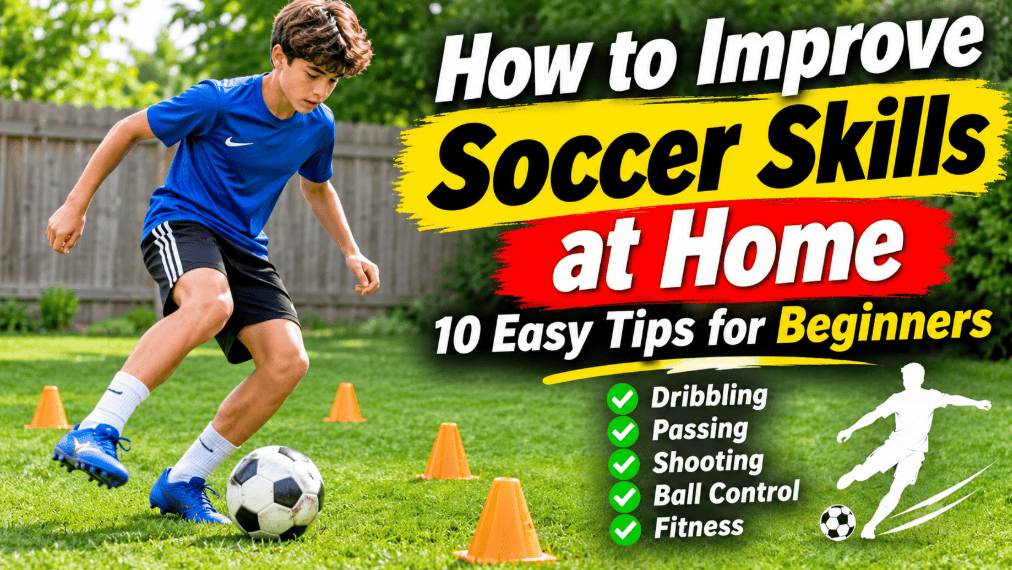
Soccer is one of the most exciting and popular sports in the world. Millions of people enjoy playing soccer because it improves physical fitness, develops teamwork, and builds confidence. However, becoming a better soccer player requires regular practice, patience, and dedication.
Many beginners believe they need a professional football ground or an expensive training academy to improve their soccer skills. In reality, you can develop several important skills at home with a soccer ball and a small amount of practice space.
Whether you are a young player, a beginner, or someone who wants to improve their performance, home training can help you become more confident and comfortable with the ball.
In this guide, we will explore practical ways to improve soccer skills at home and develop better playing techniques.
1. Start With Basic Ball Control
Ball control is the foundation of becoming a good soccer player. It helps you manage the ball while moving, receiving passes, and playing against opponents.
Start by practicing simple touches using the inside and outside of both feet. Move the ball slowly from one side to another while maintaining balance.
You can also practice keeping the ball close to your feet while walking around your practice area.
Try spending 10 minutes every day improving your ball control. As your confidence increases, gradually make your movements faster.
2. Improve Your Dribbling Technique
Dribbling is an essential soccer skill that allows players to move past defenders while maintaining possession.
To practice at home, place a few cones, plastic bottles, or other safe markers in a straight line. Move the ball between them using both feet.
Follow these tips:
- Keep the ball close to your feet.
- Use both the inside and outside of your feet.
- Keep your body balanced.
- Practice changing direction quickly.
- Gradually increase your speed.
Regular dribbling practice can improve coordination and help you become more comfortable with the ball.
3. Practice Passing Accuracy
Passing is important because soccer is a team sport. Good passing allows players to maintain possession and create scoring opportunities.
If you do not have a training partner, you can practice against a suitable wall in a safe location.
Pass the ball gently against the wall and control it when it returns. Start with short passes before gradually increasing the distance.
Practice using both feet to develop better accuracy and confidence.
4. Develop Better First Touch
First touch is the ability to control the ball immediately after receiving it. A good first touch gives you more time to make decisions during a match.
You can improve this skill by passing the ball against a wall and controlling its return.
Try receiving the ball with different parts of your feet. Instead of stopping the ball directly underneath you, practice moving it into an open space.
This technique can help you prepare for your next pass, dribble, or shot.
5. Strengthen Your Weak Foot
One common mistake among beginners is depending only on their dominant foot.
Professional players develop both feet because it gives them more options during a match.
Start by passing the ball with your weaker foot. Then practice slow dribbling and controlled shooting when you have a safe practice area.
Spend at least 10 minutes focusing on your weak foot during each training session.
With patience and consistency, you can become more comfortable using both feet.
6. Improve Shooting Skills
Shooting is one of the most important attacking skills in soccer. Players need good technique to send the ball accurately toward the goal.
To practice shooting, find a safe outdoor area with enough space.
Focus on these basic techniques:
- Keep your eyes on the ball.
- Place your supporting foot beside the ball.
- Maintain proper body balance.
- Use the inside of your foot for accurate shots.
- Use your laces when practicing powerful shots.
Start with short-distance shooting and gradually increase the distance.
7. Build Speed and Agility
Speed and agility help soccer players react quickly, change direction, and move around opponents.
You can improve these abilities with simple exercises at home.
Some useful exercises include:
- High knees.
- Side shuffles.
- Short sprints.
- Jumping jacks.
- Quick foot movements.
Start slowly and increase the intensity according to your fitness level. Always warm up before performing intense exercises.
8. Watch and Learn From Professional Players
Watching professional soccer matches can help beginners understand how experienced players approach the game.
Pay attention to how midfielders control possession, how defenders position themselves, and how attackers create opportunities.
You can also watch professional training videos to learn different techniques.
However, watching alone is not enough. Choose one technique and practice it yourself.
Learning through observation and practical training can help you understand soccer more effectively.
9. Follow a Consistent Training Schedule
Consistency is one of the most important factors in improving soccer skills.
Instead of practicing for several hours on one day, create a simple training routine that you can follow regularly.
Here is an example of a beginner training schedule:
| Training Activity | Duration |
|---|---|
| Warm-up | 5 minutes |
| Ball control | 10 minutes |
| Dribbling practice | 10 minutes |
| Passing exercises | 10 minutes |
| Speed and agility | 5 minutes |
| Cool-down | 5 minutes |
This 45-minute routine provides a balanced starting point for beginners. Adjust it according to your fitness level and take rest days when needed.
10. Improve Your Physical Fitness
Soccer requires more than technical ability. Players also need strength, stamina, balance, and endurance.
You can support your soccer performance by including basic fitness exercises in your routine.
Bodyweight squats, lunges, planks, and light jogging can help develop general fitness.
Remember to increase exercise intensity gradually. Proper recovery is important for avoiding unnecessary injuries.
11. Eat Healthy and Stay Hydrated
Nutrition plays an important role in sports performance. Your body needs sufficient energy to support training and recovery.
Include different types of healthy foods in your daily meals, such as:
- Fruits and vegetables.
- Whole grains.
- Eggs and other protein sources.
- Milk or suitable alternatives.
- Healthy sources of fats.
Drink enough water before and after training, especially during hot weather.
Getting enough sleep also supports muscle recovery and overall physical performance.
12. Set Small Goals and Track Your Progress
Improving soccer skills takes time. Setting realistic goals can help you stay motivated.
For example, you can set weekly goals such as improving your dribbling speed, completing more accurate passes, or becoming more comfortable with your weaker foot.
Record your training progress and identify the areas that need more attention.
Small improvements can eventually make a significant difference in your overall performance.
Common Soccer Training Mistakes to Avoid
Beginners sometimes make mistakes that slow down their progress.
Here are some habits to avoid:
- Practicing only with one foot.
- Ignoring warm-up exercises.
- Training without a proper routine.
- Focusing on speed instead of technique.
- Skipping recovery and rest.
- Expecting immediate results.
- Practicing in unsafe or unsuitable spaces.
Focus on learning correct techniques instead of trying to improve everything at once.
Frequently Asked Questions
1. Can I improve my soccer skills at home?
Yes. You can improve ball control, dribbling, passing, first touch, and general fitness through regular home practice.
2. How long should beginners practice soccer?
Beginners can start with 30 to 45 minutes of focused training. The duration should depend on their fitness level and recovery.
3. How can I improve soccer dribbling?
Practice moving the ball around cones, controlling it with both feet, and changing directions without losing possession.
4. What equipment do I need for soccer practice at home?
You mainly need a soccer ball, comfortable sports shoes, and a safe practice area. Training cones are optional.
5. How can I become a better soccer player?
Focus on regular practice, improve your technical skills, develop physical fitness, and learn from experienced players.
Conclusion
Improving soccer skills at home is possible when you follow the right training routine and remain consistent. You do not need expensive equipment or a professional football academy to start developing your abilities.
Focus on ball control, dribbling, passing, shooting, and physical fitness. Practice with both feet and set realistic goals to measure your progress.
Remember that becoming a skilled soccer player takes patience and dedication. Every training session is an opportunity to learn something new and become a better player.
Start practicing today, stay motivated, and continue improving your soccer skills one step at a time.