
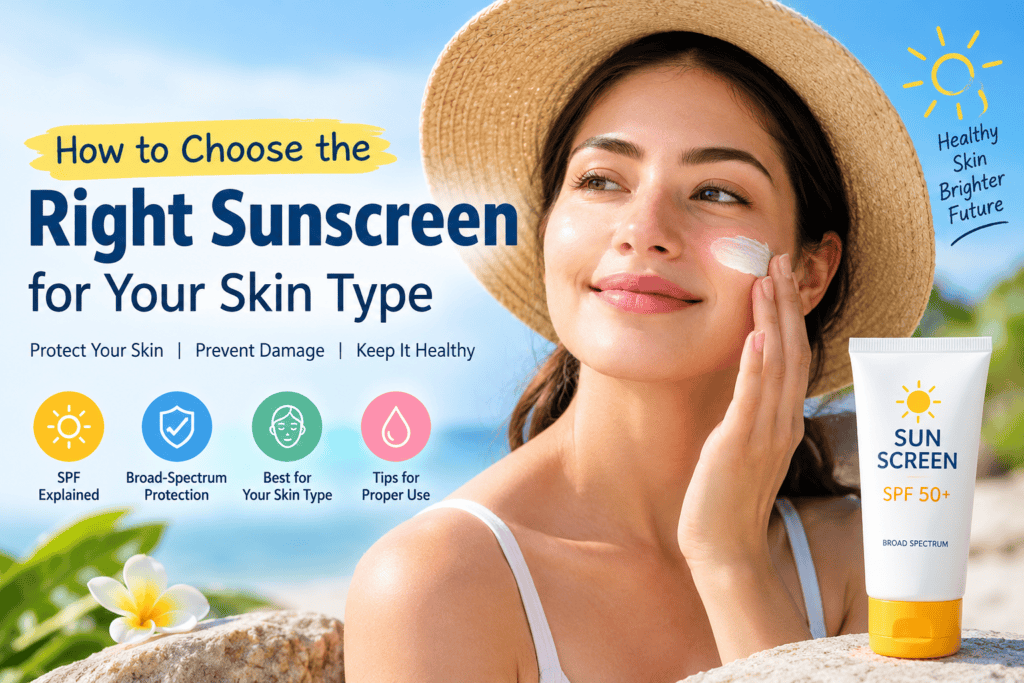
Choosing the right sunscreen is an important part of a daily skincare routine. Sunscreen helps protect your skin from ultraviolet (UV) radiation, which can contribute to sunburn, premature skin aging, and other skin damage. However, with so many sunscreens available, choosing the right one can feel confusing.
Different skin types have different needs. Someone with oily skin may prefer a lightweight, non-greasy formula, while someone with dry skin may prefer a moisturizing sunscreen. Sensitive skin may benefit from a simpler formula with fewer potential irritants.
In this guide, we will explain how to choose the right sunscreen for your skin type, what SPF means, why broad-spectrum protection matters, and how to use sunscreen correctly.
Why Is Sunscreen Important?
Sunlight contains ultraviolet radiation, mainly UVA and UVB rays. These rays can affect the skin in different ways.
UVB rays are strongly associated with sunburn, while UVA rays can contribute to longer-term skin changes and premature visible aging. Regular sun protection can help reduce unnecessary UV exposure.
Using sunscreen is especially important when you spend time outdoors, but UV exposure can also happen during everyday activities such as walking, commuting, or sitting near windows.
For this reason, sunscreen can be a useful part of a consistent daytime skincare routine.
What Does SPF Mean?
SPF stands for Sun Protection Factor. It mainly indicates the level of protection a sunscreen provides against UVB radiation.
For everyday use, many dermatology organizations recommend choosing a sunscreen with SPF 30 or higher.
A higher SPF does not mean you can apply sunscreen once and forget about it. Proper application and reapplication are still important.
Remember that SPF is only one part of choosing sunscreen. You should also look for broad-spectrum protection.
What Is Broad-Spectrum Sunscreen?
Broad-spectrum sunscreen is designed to protect against both UVA and UVB radiation.
When shopping for sunscreen, look for the words “broad spectrum” on the label.
Choosing a broad-spectrum product is a simple way to make sure your sunscreen is designed to provide more comprehensive UV protection.
How to Choose Sunscreen for Your Skin Type
Your skin type can help you choose a sunscreen texture that feels comfortable enough to use regularly.
1. Sunscreen for Oily Skin
If your skin becomes oily or shiny during the day, a heavy sunscreen may feel uncomfortable.
Look for products described as:
- Lightweight
- Oil-free
- Non-comedogenic
- Gel-based
- Fluid or lotion formulas
A lightweight sunscreen can be easier to incorporate into an everyday skincare routine.
If you have oily skin, avoid choosing a sunscreen only because it has attractive packaging or a high SPF number. The most important thing is finding a product that you will actually use consistently.
2. Sunscreen for Dry Skin
Dry skin may feel tight or uncomfortable after cleansing.
If you have dry skin, look for sunscreen formulas that provide moisturizing benefits. Ingredients commonly found in moisturizing skincare products can include glycerin, hyaluronic acid, or ceramides.
A moisturizing sunscreen can help simplify your morning routine because it may provide both hydration and sun protection.
3. Sunscreen for Sensitive Skin
Sensitive skin can react to certain skincare ingredients.
If your skin is easily irritated, consider a sunscreen with a simple ingredient list. Mineral sunscreens containing zinc oxide or titanium dioxide are often considered options for people who find some chemical sunscreen formulas irritating.
You should still check the full ingredient list and consider testing a new product carefully.
If you have persistent skin irritation, speaking with a dermatologist can help you identify suitable products.
4. Sunscreen for Combination Skin
Combination skin can be oily in some areas and dry in others.
A lightweight lotion or fluid sunscreen may work well for this skin type. You can also adjust the rest of your skincare routine according to the needs of different areas of your face.
The goal is to find a sunscreen that provides protection without making your skin feel excessively greasy or dry.
5. Sunscreen for Normal Skin
If your skin does not tend to be extremely oily or dry, you have many options.
A broad-spectrum SPF 30 or higher sunscreen with a comfortable texture can be a good starting point.
You can choose between lotion, cream, gel, or fluid formulas depending on your personal preference.
Mineral vs. Chemical Sunscreen
One common question is whether mineral or chemical sunscreen is better.
Mineral Sunscreen
Mineral sunscreens commonly use zinc oxide or titanium dioxide as active ingredients.
They can be a useful choice for people who have sensitive skin or prefer mineral-based formulas.
Some mineral sunscreens may leave a visible cast on the skin, although newer formulations are designed to reduce this effect.
Chemical Sunscreen
Chemical sunscreens use organic UV filters that absorb UV radiation.
They are available in many lightweight textures and can be comfortable for everyday use.
Neither category is automatically the best choice for everyone. The best sunscreen is generally one that provides appropriate protection and that you are comfortable applying consistently.
How Much Sunscreen Should You Use?
Using too little sunscreen can reduce the amount of protection you receive.
For the face and neck, many skincare professionals commonly use the two-finger method as a practical way to estimate an adequate amount, although the exact amount needed can vary depending on the product and area being covered.
Don’t forget areas that are often missed, such as:
- Ears
- Neck
- Hairline
- Tops of hands
- Exposed parts of the body
If your lips are exposed to sunlight, consider using a lip product with sun protection as well.
When Should You Apply Sunscreen?
Sunscreen should generally be applied as the final step of your morning skincare routine before makeup.
A simple routine can look like this:
- Cleanse your face.
- Apply your skincare products.
- Apply moisturizer if needed.
- Apply sunscreen.
- Apply makeup, if you use it.
Give the sunscreen a moment to settle before applying makeup.
Do You Need Sunscreen on Cloudy Days?
Yes. Clouds do not completely block UV radiation.
Even when the weather looks cloudy, UV exposure can still occur. That’s why making sunscreen part of your regular daytime routine can be more useful than applying it only on very sunny days.
Do You Need Sunscreen Indoors?
The amount of UV exposure you receive indoors depends on factors such as windows, location, and how much time you spend near direct sunlight.
If you spend significant time near windows or regularly go outside during the day, sunscreen can be a practical part of your morning routine.
How Often Should You Reapply Sunscreen?
Sunscreen can wear away due to sweating, swimming, rubbing, or simply over time.
If you are outdoors for an extended period, reapplication is important. Many sunscreen labels recommend reapplying approximately every two hours, and sooner after swimming or heavy sweating according to the product directions.
If you are spending most of the day indoors and away from direct sunlight, your needs may differ.
Always follow the instructions on your specific sunscreen.
Common Sunscreen Mistakes to Avoid
Even if you have a good sunscreen, mistakes in application can reduce its effectiveness.
Applying Too Little
One of the most common mistakes is using a very small amount.
Make sure you apply enough to adequately cover exposed skin.
Forgetting the Neck
People often apply sunscreen to their face but forget their neck.
If your neck is exposed, include it in your sunscreen routine.
Not Reapplying Outdoors
Long periods outside may require reapplication.
Sweating, swimming, and wiping your face can remove sunscreen.
Choosing a Product You Dislike
If a sunscreen feels too greasy, uncomfortable, or irritating, you may avoid using it.
Instead of forcing yourself to use a product you dislike, look for a formula with a texture that fits your preferences.
Relying Only on Sunscreen
Sunscreen is important, but it is not the only way to reduce sun exposure.
When practical, combine sunscreen with other protective habits such as seeking shade, wearing protective clothing, and using a hat or sunglasses.
Sunscreen and Makeup
If you wear makeup, sunscreen should generally go underneath your makeup.
A lightweight sunscreen can make this easier.
You may also find sunscreens specifically designed to work well under makeup. However, don’t rely on makeup with SPF alone as a replacement for dedicated sunscreen unless you are applying enough product to achieve the labeled protection.
How to Choose Sunscreen for Everyday Use
When shopping for sunscreen, check these features:
- SPF 30 or higher
- Broad-spectrum protection
- Comfortable texture
- Suitable for your skin type
- Water resistance when needed
- Ingredients that your skin tolerates
- Packaging and expiration information
The best sunscreen is not necessarily the most expensive one. A product that provides appropriate protection and feels comfortable enough for regular use can be a better choice for your routine.
Frequently Asked Questions
What SPF should beginners choose?
SPF 30 or higher is a common starting point for everyday sunscreen use. Look for broad-spectrum protection as well.
Is sunscreen necessary every day?
Regular sunscreen use can help reduce UV exposure. It is especially useful when you will be outdoors or exposed to sunlight during the day.
Which sunscreen is best for oily skin?
People with oily skin often prefer lightweight, oil-free, non-comedogenic, gel, or fluid formulas.
Which sunscreen is best for dry skin?
Dry skin may benefit from a moisturizing sunscreen containing hydrating ingredients.
Is mineral sunscreen better for sensitive skin?
Mineral sunscreens containing zinc oxide or titanium dioxide can be an option for sensitive skin, although individual reactions vary.
Can I wear sunscreen under makeup?
Yes. Sunscreen can generally be applied as the final step of your morning skincare routine before makeup.
Final Thoughts
Choosing the right sunscreen does not have to be complicated. Start by looking for broad-spectrum protection with SPF 30 or higher, then choose a texture and formula that matches your skin type and personal preferences.
If you have oily skin, a lightweight formula may feel more comfortable. Dry skin may prefer a moisturizing sunscreen, while sensitive skin may benefit from a simpler formula.
Most importantly, sunscreen works best when you use it correctly and consistently. Make sun protection a regular part of your daytime skincare routine, and remember that sunscreen works alongside other sun-protection habits such as shade, protective clothing, hats, and sunglasses.