
Your skin is constantly exposed to the environment, which means changes in weather can have a major impact on its health and appearance. As the seasons change, temperature, humidity, sunlight, wind, and indoor heating or cooling can all affect the skin barrier.
You may notice dry and flaky skin during winter, excess oil during summer, irritation in spring, or increased sensitivity during seasonal transitions. Understanding how different seasons affect your skin can help you adjust your skincare routine and maintain healthier-looking skin throughout the year.
How Weather Changes Affect Your Skin
The skin barrier helps protect your body from environmental stress while keeping moisture inside the skin. Seasonal changes can interfere with this balance.
Cold temperatures and low humidity can reduce moisture in the skin, while hot and humid weather may increase sweating and oil production. Strong sunlight can also contribute to premature skin aging and uneven skin tone.
Because of these differences, using the exact same skincare routine throughout the year may not always be ideal.
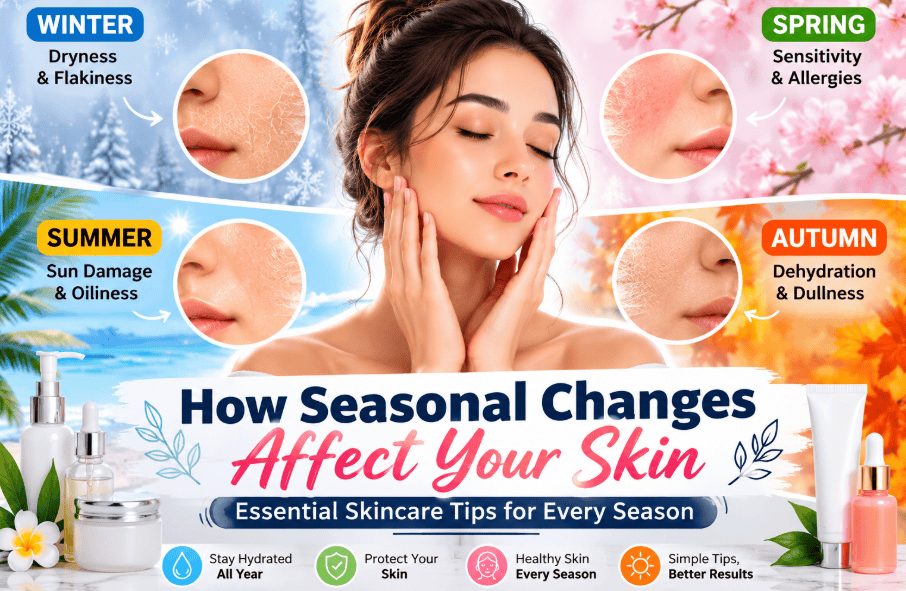
Winter: Protecting Skin From Dryness
Winter is often one of the most challenging seasons for skin. Cold outdoor air usually contains less moisture, while indoor heating can further reduce humidity.
As a result, your skin may become:
- Dry and rough
- Flaky or tight
- More sensitive
- Easily irritated
- More prone to visible fine lines
How to Care for Your Skin in Winter
A richer moisturizer can help support the skin barrier during cold weather. Look for products containing ingredients such as ceramides, glycerin, hyaluronic acid, or squalane.
Avoid using extremely hot water when washing your face or taking a shower because it can make dryness worse. Lukewarm water is generally a better choice.
A gentle cleanser can also help prevent unnecessary removal of natural oils.
Don’t forget sunscreen. UV exposure doesn’t disappear during winter, and exposed skin can still receive ultraviolet radiation on cloudy days or during outdoor activities.
Spring: Managing Sensitivity and Allergens
Spring brings warmer temperatures and increased humidity, but it can also introduce environmental factors that may irritate sensitive skin.
Pollen, dust, changing temperatures, and increased outdoor activity can contribute to irritation for some people.
During spring, you may notice:
- Redness
- Itching
- Increased sensitivity
- Small breakouts
- Changes in oil production
Spring Skincare Tips
Keep your routine simple if your skin becomes irritated. A gentle cleanser, lightweight moisturizer, and broad-spectrum sunscreen can provide a basic foundation.
If you spend more time outdoors, sunscreen becomes especially important. Reapply it according to the product’s directions, particularly when spending extended periods outside.
Spring can also be a good time to review your skincare products. If something consistently causes irritation, consider simplifying your routine instead of adding more products.
Summer: Managing Oil, Sweat, and Sun Exposure
Summer typically brings higher temperatures and, depending on where you live, increased humidity. Heat can increase sweating and make the skin appear oilier.
This can contribute to clogged pores and breakouts, especially if sweat, oil, makeup, and environmental debris remain on the skin for long periods.
The biggest summer skincare priority, however, is sun protection.
Why Sunscreen Matters in Summer
Ultraviolet radiation can contribute to sunburn, premature skin aging, and long-term skin damage.
A broad-spectrum sunscreen can help protect the skin from UVA and UVB radiation. Dermatologists commonly recommend using sunscreen with SPF 30 or higher and applying enough to adequately cover exposed skin.
Other helpful habits include wearing protective clothing, seeking shade, and limiting prolonged direct sun exposure during the strongest sunlight hours.
Summer Skincare Routine
A simple summer routine may include:
- Gentle cleanser
- Lightweight moisturizer
- Broad-spectrum sunscreen
- Reapplication of sunscreen when needed
If your skin becomes particularly oily during summer, a lightweight, non-comedogenic moisturizer may feel more comfortable than a heavy cream.
Autumn: Preparing for Cooler Weather
Autumn is a transition period. Temperatures begin to fall, humidity can decrease, and indoor heating may gradually return.
These changes can cause skin to lose moisture.
You might notice that your skin feels comfortable at the beginning of autumn but becomes increasingly dry as temperatures continue to drop.
Adjusting Your Routine
Start paying attention to how your skin feels rather than changing every product immediately.
If your skin becomes dry or tight, consider switching from a lightweight moisturizer to a more nourishing formula. Continue using sunscreen during the daytime because UV exposure remains relevant throughout the year.
Autumn is also a good time to reduce unnecessarily harsh exfoliation if your skin is becoming sensitive.
Seasonal Changes and Different Skin Types
Not everyone’s skin reacts to weather in the same way.
Dry Skin
People with dry skin may experience increased tightness and flaking during cold, dry seasons. A moisturizing cleanser and richer moisturizer may provide additional comfort.
Oily Skin
Oily skin can become even more noticeable during hot and humid weather. Lightweight products and gentle cleansing may help maintain a comfortable balance.
Combination Skin
Combination skin can become more difficult to manage when different areas of the face react differently to seasonal conditions. You may need to use lighter products on oily areas and more moisturizing products on dry areas.
Sensitive Skin
Sensitive skin may react strongly to sudden changes in temperature, humidity, or skincare products. A simple routine with gentle products can help reduce unnecessary irritation.
Why Your Skin Barrier Is Important
One of the most important factors in seasonal skincare is maintaining a healthy skin barrier.
The skin barrier helps reduce moisture loss and protects the skin from external irritants. When the barrier becomes compromised, the skin may feel dry, irritated, rough, or unusually sensitive.
Cold weather, excessive cleansing, harsh exfoliation, and very hot water can all contribute to barrier problems.
Supporting the skin barrier throughout the year can therefore be more useful than constantly changing your skincare routine.
Should You Change Your Skincare Routine Every Season?
Not necessarily.
You don’t need a completely different collection of products for winter, spring, summer, and autumn. Instead, consider making small adjustments based on how your skin responds.
For example, you might use:
Winter: More nourishing moisturizer
Spring: Gentle, simple products
Summer: Lightweight hydration and strong sun protection
Autumn: Gradually increase moisture as temperatures fall
The goal is to respond to your skin’s needs rather than follow a rigid seasonal routine.
The Importance of Hydration
Hydration is important throughout the year. Drinking enough fluids supports overall health, while topical moisturizers help reduce water loss from the skin.
Ingredients such as glycerin and hyaluronic acid can help attract and retain moisture. Ingredients such as ceramides can help support the skin barrier.
However, more skincare products don’t automatically mean better results. A simple routine that you can consistently follow may be more beneficial than a complicated routine filled with unnecessary products.
Don’t Forget Your Lips and Body
Seasonal skincare isn’t only about your face.
Cold weather can cause dry, cracked lips and rough skin on the hands, elbows, knees, and other areas. Using a moisturizing lip balm and body moisturizer can help keep these areas comfortable.
Hands may require extra attention because frequent washing and exposure to cold air can increase dryness.
During summer, remember to protect exposed areas of the body with sunscreen as well.
When Should You See a Dermatologist?
Occasional dryness, oiliness, or mild sensitivity can occur with seasonal changes. However, persistent or severe skin problems shouldn’t automatically be blamed on the weather.
Consider speaking with a qualified dermatologist if you experience ongoing:
- Severe redness
- Painful or persistent acne
- Significant itching
- Cracking or bleeding
- Swelling
- A rash that doesn’t improve
A dermatologist can help determine whether an underlying skin condition is contributing to the problem.
Final Thoughts
Seasonal changes can influence almost every aspect of your skin, from moisture levels and oil production to sensitivity and sun exposure. The best approach is to pay attention to how your skin responds and make small adjustments when necessary.
Winter may require extra moisture, summer usually demands greater attention to sun protection, and spring and autumn may require careful transitions as environmental conditions change.
A consistent skincare routine, gentle products, adequate hydration, and daily sun protection can help support healthy-looking skin throughout the year. Instead of completely changing your routine every few months, focus on maintaining your skin barrier and adapting your products to the conditions around you.
Healthy skin isn’t about following every beauty trend—it’s about understanding what your skin needs and caring for it consistently in every season.