
For years, hair care has focused mainly on the visible part of the hair. Shampoos, conditioners, oils, masks, and styling products have been marketed as the keys to achieving smooth, shiny, and healthy-looking hair.
But the beauty industry is increasingly paying attention to something that often gets overlooked: the scalp.
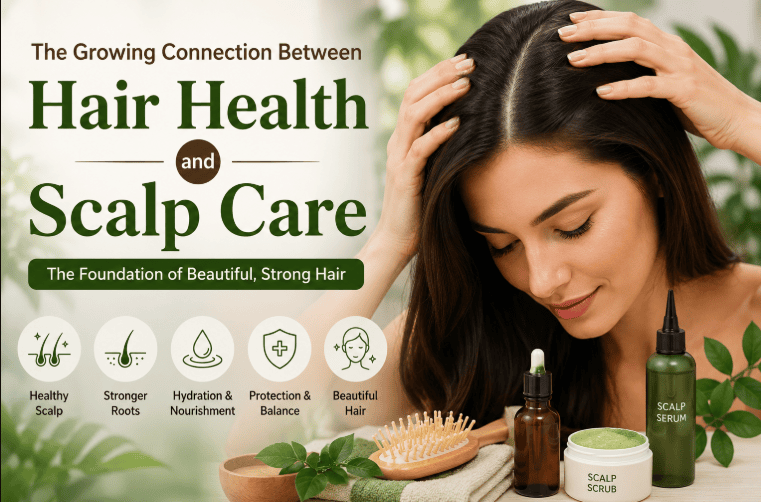
The scalp is the foundation from which hair grows, and its condition can influence the overall appearance and quality of hair. As consumers become more interested in healthier beauty routines, scalp care is becoming an important part of modern hair care.
From scalp cleansing and hydration to gentle exfoliation and personalized routines, the connection between scalp health and hair health is becoming increasingly important.
Why Scalp Health Matters
The scalp is skin, and like the skin on the rest of the body, it needs appropriate care.
A healthy scalp provides the environment where hair follicles can function normally. However, factors such as product buildup, excess oil, dryness, environmental pollution, and frequent styling can affect how the scalp feels and looks.
When people focus only on the hair strands, they may overlook the condition of the skin underneath.
This is why modern hair care is gradually shifting from simply improving the appearance of hair to creating a healthier overall scalp and hair routine.
Hair Health Starts at the Roots
Hair grows from follicles located within the scalp. While the visible hair shaft cannot repair itself in the same way living skin can, the condition of the scalp and hair follicles plays an important role in maintaining healthy-looking hair.
This has encouraged consumers to think beyond traditional hair products.
Instead of asking only, “Which shampoo makes my hair shiny?” people are increasingly asking questions such as:
- Is my scalp properly cleansed?
- Is my scalp too dry or oily?
- Am I using too many styling products?
- Does my hair routine match my scalp type?
- How often should I wash my hair?
These questions reflect a broader movement toward personalized hair care.
The Rise of Scalp Care
Scalp care has become an increasingly visible part of the beauty industry.
Products designed specifically for the scalp now include exfoliating treatments, scalp serums, cleansing products, oils, masks, and specialized brushes.
The goal is generally to keep the scalp clean, comfortable, and properly conditioned while avoiding unnecessary irritation.
Scalp-focused routines are also appearing in salons and beauty clinics, where consumers can receive scalp assessments and professional treatments.
This growing interest shows that hair care is becoming more holistic.
Scalp Exfoliation Is Gaining Attention
Exfoliation is another trend appearing in modern scalp care.
Just as facial exfoliation can help remove accumulated dead skin and product residue, scalp exfoliation is designed to help remove buildup from the scalp.
However, more is not necessarily better.
Over-exfoliating or using harsh products can irritate the scalp. A gentle approach that matches an individual’s needs is generally more appropriate than aggressively scrubbing the scalp.
Consumers should also pay attention to product instructions and stop using products that cause significant irritation.
Hydration Matters for the Scalp
Dryness can make the scalp feel uncomfortable and may contribute to visible flaking.
Modern beauty routines increasingly emphasize scalp hydration through appropriate shampoos, conditioners, serums, and other products.
However, scalp hydration does not mean applying heavy oils or products without considering individual needs.
Someone with an oily scalp may require a different routine from someone with a naturally dry scalp.
Understanding personal scalp characteristics is therefore becoming an important part of personalized hair care.
The Role of Hair-Washing Habits
How often someone should wash their hair depends on several factors, including scalp oil production, hair type, lifestyle, and the products they use.
There is no universal washing schedule that works for everyone.
People who exercise frequently or have an oily scalp may prefer more frequent cleansing, while individuals with dry or textured hair may choose a different routine.
The important point is to keep the scalp clean without unnecessarily stripping away its natural oils.
Choosing a shampoo that suits the scalp and hair type can make a significant difference to the overall hair-care experience.
How Product Buildup Can Affect Hair Care
Modern hair routines can involve multiple products, including styling creams, sprays, dry shampoo, oils, gels, and leave-in conditioners.
While these products can improve styling and appearance, frequent use can contribute to buildup.
When products accumulate on the scalp or hair, the hair may feel heavy or less fresh.
A suitable cleansing routine can help manage buildup. However, using extremely strong cleansing products too frequently may cause dryness or irritation.
Balance is therefore an important principle in scalp care.
Beauty Technology Is Entering Scalp Care
Technology is also influencing the way consumers approach hair and scalp health.
Some modern beauty devices and digital tools are designed to help consumers understand their scalp condition. Smart mirrors, imaging technologies, scalp cameras, and personalized beauty applications can provide information that may help users choose more suitable products and routines.
Artificial intelligence is also becoming increasingly important in personalized beauty.
AI-powered tools can analyze images, collect user information, and provide customized product or routine suggestions.
While these technologies can be useful, consumers should remember that digital recommendations are not a replacement for professional evaluation when they have persistent or serious scalp concerns.
Nutrition and Lifestyle Also Matter
Hair care is not only about external products.
Overall nutrition and lifestyle can also influence hair health. A balanced diet provides nutrients that the body needs for normal biological functions, including those involved in maintaining hair.
Sleep, stress management, physical activity, and general wellness are also becoming part of conversations about beauty and hair care.
This reflects a larger beauty-industry trend toward viewing appearance as part of overall wellness rather than treating it as a completely separate issue.
Scalp Care for Different Hair Types
Different hair types can require different approaches.
People with curly or textured hair may have different cleansing and moisturizing needs compared with people with straight hair.
Similarly, thick hair, fine hair, oily scalps, dry scalps, and color-treated hair can all require different routines.
Instead of following viral hair-care advice blindly, consumers are increasingly looking for routines based on their individual hair and scalp characteristics.
Personalization is likely to remain one of the biggest directions in the beauty industry.
Why Scalp Care Is Becoming a Long-Term Beauty Trend
The growing popularity of scalp care reflects a broader change in consumer behavior.
Beauty shoppers are becoming more educated about ingredients, routines, product claims, and individual needs. They are also moving away from quick beauty fixes and becoming more interested in long-term maintenance.
Scalp care fits naturally into this shift.
Rather than focusing only on making hair look better temporarily, consumers are increasingly interested in maintaining a healthy-looking scalp and building consistent routines.
The Future of Hair and Scalp Care
The connection between scalp health and hair health is likely to become even more important in the coming years.
Beauty brands are expected to continue developing specialized scalp products, personalized treatments, smart devices, and technology-driven recommendations.
At the same time, consumers may become more selective about the products they use and more interested in understanding their own scalp and hair needs.
The future of hair care may therefore be less about using dozens of products and more about choosing the right products for an individual’s specific needs.
Final Thoughts
Hair health and scalp care are closely connected, and the beauty industry is increasingly recognizing the importance of treating the scalp as part of a complete hair-care routine.
From proper cleansing and hydration to personalized products and beauty technology, scalp care is becoming a major part of modern beauty.
For consumers, the most important lesson is simple: healthy-looking hair starts with paying attention to the scalp as well as the hair itself.
As beauty continues moving toward personalization, wellness, and science-based routines, scalp care could become one of the defining hair-care trends of the coming years.