
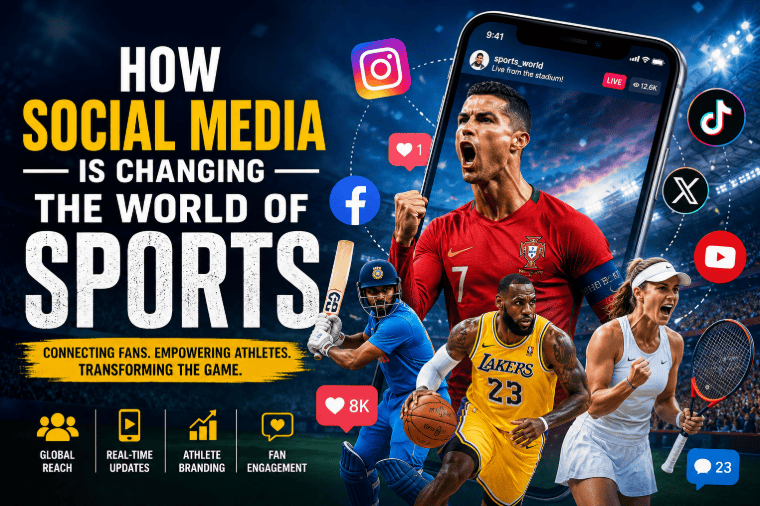
Social media has become one of the most powerful forces in modern sports. Platforms such as Instagram, TikTok, YouTube, Facebook, and X allow athletes, teams, leagues, and fans to connect instantly. What once depended heavily on television, newspapers, and sports websites can now reach millions of people through a single social media post.
In 2026, social media is not simply a place where sports fans discuss games. It has become an important part of sports marketing, fan engagement, athlete branding, news distribution, and even how sporting events are experienced.
Social Media Gives Athletes a Direct Voice
One of the biggest changes social media has brought to sports is giving athletes direct access to their fans.
In the past, athletes often communicated with the public through interviews, press conferences, or journalists. Today, they can share their thoughts, training routines, achievements, and personal experiences directly with millions of followers.
This allows athletes to build their own personal brands. A footballer, cricketer, basketball player, or tennis player can create content that shows audiences what happens away from the competition.
Athletes can share:
- Training and fitness routines
- Match-day experiences
- Behind-the-scenes moments
- Career achievements
- Personal interests
- Community activities
- Motivational content
This direct communication can make athletes feel more accessible and relatable to their fans.
Short-Form Video Is Changing Sports Content
Short-form video has become one of the most popular forms of social media content. Sports organizations are using short videos to capture important moments and reach audiences quickly.
A spectacular goal, six, dunk, knockout, save, or celebration can become viral within minutes.
Short-form videos are especially useful because fans do not always have time to watch an entire match. A short highlight can allow them to experience an exciting moment quickly.
Sports teams can also use short videos for player interviews, training clips, funny moments, tactical explanations, and fan reactions.
Fans Are Becoming Part of the Conversation
Social media has changed fans from passive viewers into active participants.
During a match, fans can comment on important moments, share opinions, create memes, post reactions, and communicate with other supporters around the world.
Hashtags and trending topics can turn a single sporting event into a global online conversation.
This creates a stronger connection between fans and sports organizations. A supporter can feel involved even when they are thousands of miles away from the stadium.
Social Media Helps Sports Reach Global Audiences
Sports have always had international audiences, but social media has made global access much easier.
A sports team can publish content that reaches fans in different countries within seconds. This is especially important for major sports such as football, cricket, basketball, tennis, and Formula 1.
For example, a team can share match highlights, player interviews, training videos, and announcements with international followers without depending entirely on traditional media.
This global reach can help sports organizations build larger fan bases and attract new audiences.
Social Media Is Transforming Sports Marketing
Social media has also changed how sports organizations promote themselves.
Teams, leagues, athletes, and sponsors can create targeted campaigns for specific audiences. Instead of relying only on television advertising, brands can use social platforms to reach people based on their interests and online behavior.
Sports marketing can include:
- Sponsored social media posts
- Athlete partnerships
- Brand collaborations
- Product promotions
- Video campaigns
- Influencer marketing
- Live social media events
This creates new opportunities for both sports organizations and businesses.
Athletes Can Build Businesses Through Social Media
Social media has made it easier for athletes to become entrepreneurs and build businesses outside their sporting careers.
A successful athlete can use their audience to promote clothing brands, fitness products, personal businesses, educational content, or other projects.
The athlete’s reputation and relationship with followers can become an important part of their business strategy.
This is one reason personal branding has become increasingly important for professional athletes.
Social Media Is Changing Sports News
Sports news can now spread much faster than before.
A transfer announcement, injury update, lineup change, contract signing, or breaking story can reach fans through social media almost immediately.
Many fans now follow official team accounts, athletes, journalists, and sports organizations for updates rather than waiting for traditional news broadcasts.
However, the speed of social media also creates challenges. False information can spread quickly, so fans should check important sports news through reliable and official sources before believing or sharing it.
Live Content Creates Real-Time Engagement
Live streaming and real-time social media updates have made sporting events more interactive.
Teams and sports organizations can post live updates during matches, while athletes and commentators can engage with fans during major events.
Live content can include:
- Match updates
- Player reactions
- Press conferences
- Training sessions
- Behind-the-scenes footage
- Fan interviews
- Post-match discussions
This allows fans to stay connected to an event even when they are unable to watch the full competition.
Social Media Creates New Opportunities for Sponsors
Sponsors can benefit significantly from the popularity of sports content on social media.
A traditional advertisement may appear for a few seconds during a broadcast. A social media partnership can create content that fans interact with, share, and discuss.
For example, a sports brand might collaborate with an athlete to create training content, while a technology company could sponsor behind-the-scenes videos from a team.
These collaborations can help brands reach highly engaged sports audiences.
Social Media Is Helping Promote Lesser-Known Sports
Another important benefit is the increased visibility of sports that may receive less attention from traditional media.
Social media allows smaller leagues, emerging athletes, and less-covered sports to publish their own content and develop communities.
An athlete does not necessarily need to compete in the world’s most famous league to build an online following. Strong content, consistent communication, and exciting performances can help athletes attract audiences independently.
This can make the sports world more diverse and accessible.
The Challenges of Social Media in Sports
Although social media provides many benefits, it also creates challenges.
Athletes and sports organizations can face online criticism, misinformation, privacy concerns, and pressure to maintain a constant online presence.
A controversial post can spread quickly and potentially affect an athlete’s reputation or a team’s public image.
For this reason, professional sports organizations increasingly need strong social media strategies and responsible communication policies.
Athletes also need to understand that their online activity can influence their personal brands and professional careers.
The Future of Social Media and Sports
The relationship between sports and social media is likely to become even stronger.
Artificial intelligence, personalized content, augmented reality, improved video technology, and new social platforms could create more interactive experiences for fans.
Sports organizations may increasingly use technology to personalize content based on individual interests. A cricket fan could receive more cricket highlights, while a basketball fan could receive content focused on their favorite team or players.
The goal will be to make sports content more personal, interactive, and accessible.
Conclusion
Social media has fundamentally changed the world of sports. It has given athletes a direct voice, helped teams reach global audiences, transformed sports marketing, accelerated news distribution, and allowed fans to become active participants.
Short-form videos, live content, creator partnerships, and athlete branding are creating new opportunities throughout the sports industry.
For athletes, teams, leagues, sponsors, and sports media companies, having a strong social media strategy is becoming increasingly important. As technology continues to develop, social media will likely remain one of the most influential tools shaping the future of sports.