
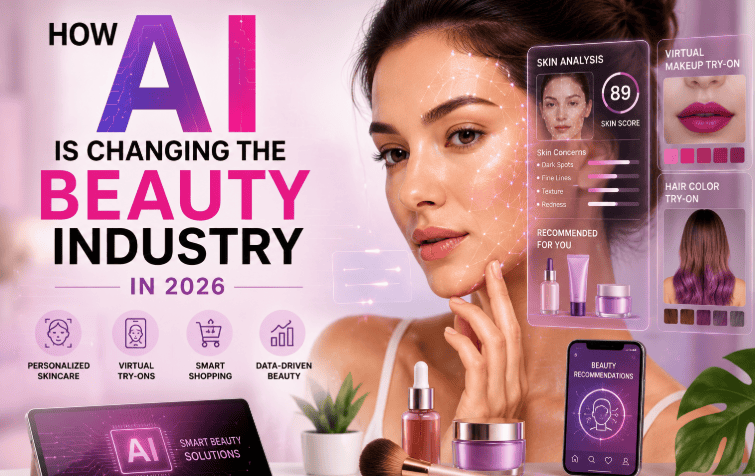
Artificial intelligence is transforming industries around the world, and the beauty industry is becoming one of the most exciting areas of technological innovation. From personalized skincare recommendations to virtual makeup try-ons and AI-powered beauty apps, technology is changing how consumers discover, choose, and use beauty products.
In 2026, beauty brands are increasingly using artificial intelligence to understand customer preferences, improve product development, create personalized experiences, and strengthen digital marketing strategies. At the same time, consumers are using AI-powered tools to make more informed beauty and skincare decisions.
The combination of technology, personalization, and social media is creating a new era for the global beauty industry.
AI Is Making Beauty More Personalized
One of the biggest changes AI is bringing to the beauty industry is personalization.
Traditional beauty products were often marketed to large groups of consumers. Today, artificial intelligence can analyze information such as skin concerns, product preferences, climate, lifestyle, and beauty routines to provide more personalized recommendations.
For example, an AI-powered beauty platform may ask users about their skin type and concerns before suggesting suitable skincare products. Some advanced tools can also analyze images to identify visible skin characteristics and recommend products based on those observations.
This allows consumers to move away from a one-size-fits-all approach and explore beauty routines that are more closely aligned with their individual needs.
Virtual Makeup Try-Ons Are Growing
Another important AI trend is virtual beauty try-on technology.
Consumers can use smartphones or computers to see how different makeup products may look before purchasing them. AI and augmented reality can digitally apply lipstick, foundation, eyeshadow, blush, and other products to a user’s image.
This technology is particularly useful for online beauty shopping because customers cannot physically test products before buying them.
Virtual try-ons can make online shopping more interactive while helping consumers compare different shades and styles. Beauty companies can also use these tools to increase customer engagement and reduce uncertainty during the purchasing process.
AI Is Changing Skincare Recommendations
Skincare is another area where artificial intelligence is becoming increasingly useful.
AI-powered applications can analyze information provided by consumers and, in some cases, images of their skin to identify visible concerns such as dryness, uneven appearance, or signs of irritation.
Based on this information, an application may suggest a skincare routine or recommend products.
However, consumers should understand that AI beauty tools are not a replacement for professional medical advice. Skin conditions can be complex, and people with persistent or serious concerns should consult qualified healthcare professionals.
For everyday beauty routines, however, AI can provide a convenient starting point for learning about products and ingredients.
Beauty Brands Are Using AI for Product Development
Artificial intelligence is also changing what happens behind the scenes.
Beauty companies can use data analysis and machine learning to understand consumer preferences and identify emerging trends. This information can help brands decide which types of products customers are interested in purchasing.
AI can analyze large amounts of consumer feedback, online discussions, search trends, and purchasing behavior. Brands can then use these insights when developing new products.
This can help companies respond more quickly to changing beauty preferences.
For example, if consumer interest in a particular skincare ingredient increases rapidly, brands can monitor the trend and evaluate opportunities for new products.
AI Is Transforming Beauty Marketing
Marketing has become another major area of AI adoption.
Beauty brands use artificial intelligence to analyze customer behavior and understand which content performs best across digital platforms. This is particularly important because beauty consumers are highly active on social media.
Platforms such as Instagram, TikTok, YouTube, and Pinterest have become important channels for discovering beauty products.
AI can help brands identify content trends, understand audience interests, and create marketing campaigns for specific consumer groups.
Instead of showing the same advertisement to everyone, businesses can use data-driven systems to deliver more relevant messages to different audiences.
Social Media and AI Are Working Together
The relationship between artificial intelligence and social media is especially important for the beauty industry.
Beauty trends can spread extremely quickly through short-form videos, tutorials, influencer content, and user-generated posts.
AI-powered analytics can help brands identify which beauty trends are gaining attention. Companies can monitor conversations, engagement levels, hashtags, and consumer reactions to understand what audiences are interested in.
This allows beauty businesses to respond more quickly to changing trends.
For example, a skincare routine that becomes popular on TikTok can attract significant attention within a short period. Brands can analyze this activity and adjust their content or product marketing accordingly.
AI Influencers and Virtual Beauty Content
Artificial intelligence is also creating new possibilities for digital creators.
Virtual influencers and AI-generated beauty content are becoming part of the online marketing landscape. Brands can experiment with digital characters, AI-generated images, and computer-generated campaigns.
These technologies can help companies create unique visual content without relying entirely on traditional photography.
However, transparency is becoming increasingly important. Consumers should be able to understand when content has been generated or significantly modified using artificial intelligence.
Authenticity remains a major factor in beauty marketing, particularly on social media.
AI Can Improve Online Shopping
E-commerce is another area where AI is changing the beauty industry.
Beauty websites can use AI-powered recommendation systems to suggest products based on previous searches, purchases, and customer preferences.
For example, an online store may recommend a moisturizer after a customer searches for skincare products. It can also suggest complementary products, such as cleansers or serums.
AI chatbots can answer common customer questions about product features, ingredients, shipping, and usage.
These tools can make online shopping faster and more convenient while allowing beauty brands to provide customer support around the clock.
AI Helps Brands Understand Consumers
Understanding consumers has always been important for beauty companies.
Artificial intelligence makes it possible to analyze much larger amounts of information than traditional research methods.
Brands can examine customer reviews, social media conversations, website behavior, and purchasing patterns to identify what consumers like and dislike.
This information can help companies improve existing products and develop new ones.
AI can also identify changes in consumer preferences. For example, increasing interest in sustainable packaging, minimalist skincare routines, or specific beauty ingredients can be detected through data analysis.
Sustainability and AI in Beauty
The beauty industry is also exploring how technology can support sustainability.
AI can help companies forecast demand more accurately, potentially reducing overproduction and unnecessary inventory.
Better demand forecasting can help businesses produce products closer to actual customer demand. This may reduce waste throughout the supply chain.
AI can also help companies analyze packaging options, optimize manufacturing processes, and identify opportunities to improve resource efficiency.
While AI itself is not a complete solution to sustainability challenges, data-driven technology can support companies as they attempt to make their operations more efficient.
Challenges of AI in the Beauty Industry
Despite its advantages, artificial intelligence also creates challenges.
Privacy is one major concern. Beauty applications may collect personal information, images, preferences, and other user data. Companies need to handle this information responsibly and provide clear explanations about how data is used.
Another concern is accuracy. AI-powered beauty recommendations are based on data and algorithms, which means they may not always provide perfect results.
There is also the risk of unrealistic beauty standards. AI-generated images can easily be edited or enhanced, potentially creating expectations that are difficult to achieve in real life.
Beauty brands therefore need to use AI responsibly and maintain transparency with their customers.
The Future of AI and Beauty
The future of artificial intelligence in the beauty industry looks promising.
As AI technology becomes more advanced, consumers may receive increasingly personalized recommendations and shopping experiences.
Virtual try-on technology could become more realistic, while AI-powered platforms may provide better product discovery and personalized beauty routines.
Beauty brands are also likely to use AI more extensively for product development, customer service, market research, and digital advertising.
The strongest companies will likely be those that combine technology with creativity and genuine understanding of their customers.
Conclusion
Artificial intelligence is changing the beauty industry from product discovery and skincare recommendations to virtual makeup experiences, social media marketing, and online shopping.
AI allows beauty companies to understand consumers more effectively and create personalized experiences. For customers, technology can make it easier to discover products and explore new beauty trends.
However, responsible use of AI will be essential. Privacy, transparency, accuracy, and realistic beauty standards should remain important considerations as the industry continues to evolve.
In 2026 and beyond, the combination of AI, beauty, e-commerce, and social media is likely to create even more opportunities for brands and consumers. Artificial intelligence is not simply changing how beauty products are marketed—it is helping reshape how people discover, experience, and interact with the beauty industry.